

What are the benefits of using perforated aluminium with powder coating for industrial applications?
Perforated aluminium with powder coating combines aluminium’s low weight and corrosion resistance with a hard, durable finish. For industrial applications, this can provide long-lasting protection, consistent appearance and practical airflow or screening performance while reducing the need for frequent replacement or refinishing.
Using perforated aluminium with powder coating can give industrial components a combination of controlled open area, design flexibility and a specified surface finish. The perforations provide ventilation, visibility, screening or light transmission, while the powder-coated surface adds functional characteristics that can be selected for the operating environment and intended use.
Key benefits for industrial applications include:
- Controlled airflow and heat dissipation: Perforated sheet can be designed to allow air to pass through equipment guards, enclosures, plant screens and ventilation panels. The hole pattern, open area and sheet thickness can be matched to the required balance between airflow, protection and visual screening.
- Reduced enclosure weight: Removing material through a planned perforation pattern can reduce the amount of solid sheet used while retaining a suitable panel structure. This can simplify handling, installation and support requirements, subject to the panel dimensions and structural loading involved.
- Improved visibility and safety: Perforated panels can shield moving parts, machinery or stored materials while allowing operators to see through the guard. This is useful where inspection access and visual monitoring are needed without leaving equipment fully exposed.
- Light management and privacy: The pattern and size of the openings can control how much light passes through a screen or façade panel. Smaller or denser perforations can provide greater visual separation, whereas larger openings can prioritise visibility and ventilation.
- Consistent identification of components: Powder coating allows different parts, access panels or equipment zones to be distinguished by colour. This can support site organisation, equipment identification and visual separation between functional areas, provided the selected coating system is suitable for the service conditions.
- Smoother, easier-to-clean surfaces: A correctly applied powder coating creates an even finish over the accessible surfaces of the aluminium. This can make dust and general industrial deposits easier to remove than from an untreated or poorly finished surface. The cleaning method should still be chosen to suit the coating specification and the substances encountered.
- Choice of surface texture and appearance: Industrial projects may require a particular gloss level, texture or colour for visual coordination, safety marking or architectural integration. Powder coating can provide a repeatable finish across batches when the aluminium preparation, powder specification and curing conditions are properly controlled.
- Potential electrical separation: A powder coating is generally electrically insulating once cured. Where a coated aluminium panel is used near electrical equipment, this may be useful for separating the metal surface from surrounding components. It must not, however, be treated as a substitute for an engineered electrical protection system, and earthing or bonding points may need to be masked or restored.
These benefits depend on designing the perforation and coating specifications together. Hole diameter, pitch, pattern, edge distance and sheet gauge affect rigidity, airflow, visibility and the risk of distortion during handling. The coating specification should also account for the intended exposure, cleaning regime, temperature and any contact with oils, chemicals or other industrial substances.
Fabrication details require particular attention. Cut edges, folded sections, fixing points and areas that must remain conductive may need specific preparation or masking. Coating can slightly alter the dimensions of holes and mating surfaces, so close-tolerance assemblies should be reviewed before production. Contact between aluminium and dissimilar metals may also require suitable isolation to reduce the risk of galvanic action.
For batch-produced parts, a defined powder, colour, texture, pretreatment and curing schedule helps maintain consistency between components. Inspection can include checking the coverage of faces and edges, the condition of perforations, coating adhesion, colour consistency and the fit of finished parts. These controls are particularly relevant where panels form part of machine guarding, industrial enclosures, ventilation systems or building installations.
In practice, the most suitable solution is the one that balances the required open area and mechanical performance with the coating system’s environmental and operational requirements. Powder-coated perforated aluminium is therefore well suited to industrial designs that need a combination of screening, ventilation, access visibility and a specified finish, provided the material, pattern, preparation and coating are selected as one system.
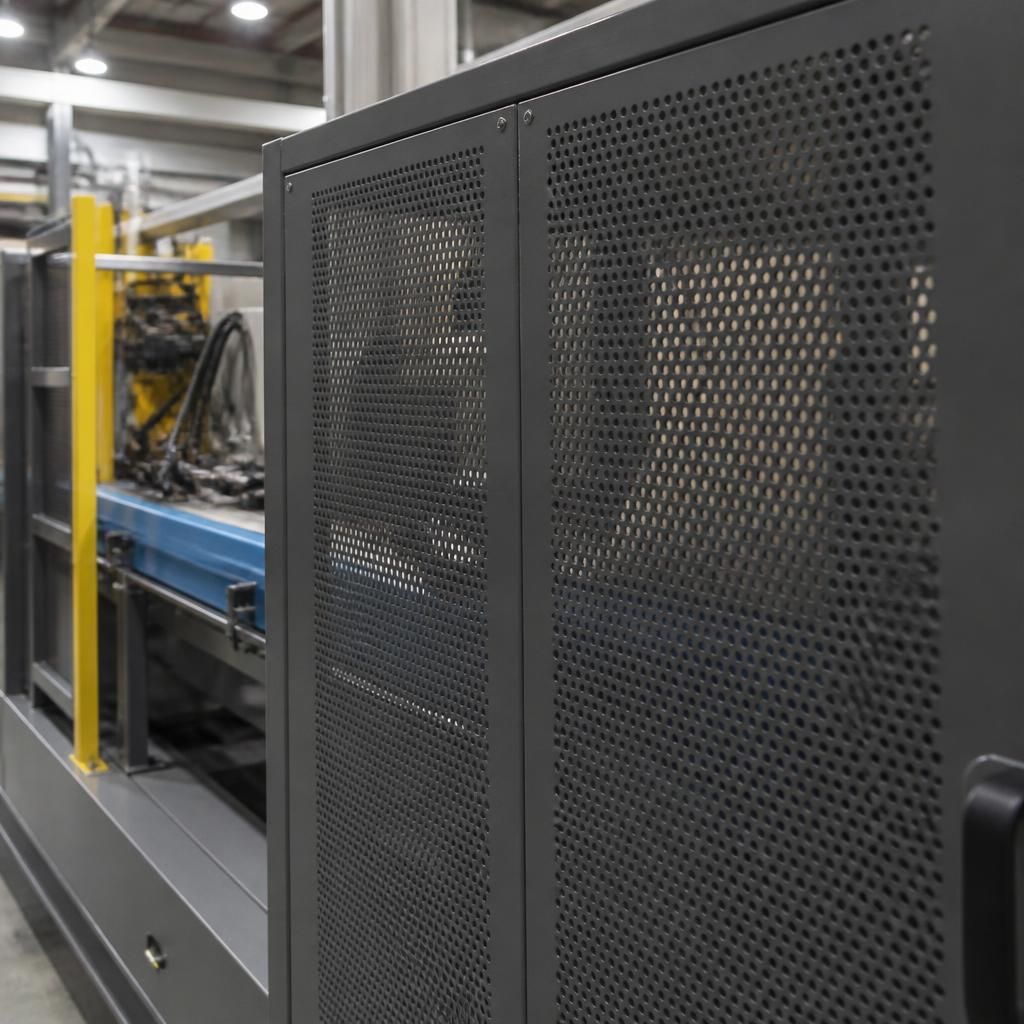
A further benefit is the ability to manage reflected light around machinery and plant areas. A suitable low-gloss or textured powder-coated finish can reduce harsh reflections from aluminium panels, which may help maintain clearer viewing conditions where operators inspect equipment through perforated guards or screens.
This consideration should be assessed alongside the perforation pattern, lighting arrangement and cleaning requirements. The finish must remain appropriate for the level of handling, contamination and exposure expected in the installation.