

What are the benefits of choosing matte clear and white powder coatings for aluminium in industrial settings?
Matte clear and white powder coatings give aluminium components a durable, uniform finish while helping protect the surface from abrasion, weathering and corrosion. Matte clear retains more of aluminium’s natural appearance, whereas white provides an opaque, consistent finish that can support design uniformity and easier visual inspection.
Choosing matte clear or white powder coating for aluminium can improve the component’s appearance, reduce unwanted glare, support consistent identification and simplify specification across production batches. The most suitable option depends on the part’s operating environment, required colour and appearance, surface preparation, and the performance requirements of the selected powder system.
Matte clear powder coating benefits
- Preserves the character of aluminium: A clear finish allows the substrate’s metallic appearance to remain visible rather than covering it with a solid colour. This is useful where the material itself forms part of the intended design.
- Reduces reflected glare: The low-sheen surface reflects less direct light than a bright or high-gloss finish. That can be useful on panels, housings, trims and equipment installed under strong artificial lighting or in visually sensitive areas.
- Provides a restrained industrial appearance: Matte clear can give components a more subdued finish while retaining a clean, manufactured look. It is often appropriate where a coating is required without making the aluminium appear heavily painted.
- Supports visual consistency: When aluminium parts are produced in batches, using the same clear powder specification and preparation process helps maintain a consistent level of sheen between components. Surface condition still needs to be controlled, as variations in the aluminium can remain visible through a clear coating.
White powder coating benefits
- Creates a clear visual identity: White provides a defined surface colour that can help standardise enclosures, fabricated assemblies, architectural elements and equipment across a project.
- Improves visibility in enclosed spaces: White surfaces can make the interior of cabinets, guards and housings appear lighter, which may assist visual checks and make dirt, marks or contamination easier to notice during inspection.
- Can help manage surface temperature in some applications: White reflects more incident light than darker colours. Where aluminium components are exposed to sunlight, this may help limit solar heat absorption, although the result depends on the part’s orientation, ventilation, surrounding materials and coating specification.
- Supports identification and zoning: A defined white finish can distinguish equipment, panels or component groups within a larger installation. It can also be combined with labels, markings or contrasting parts where visual organisation is important.
Benefits shared by both finishes
- Efficient application to complex metal parts: Powder coating can be applied to many aluminium profiles, sheet components, brackets, frames and fabricated assemblies. The coating is cured to form a continuous finish, provided the part is suitable for the process and correctly supported during application.
- Repeatable specification: Defining the colour, gloss level, coating type and preparation requirements in advance makes it easier to reproduce the intended finish on future batches. This is particularly important where replacement components need to match existing aluminium work.
- Reduced reliance on wet-paint solvents: Powder is applied as a dry material, so the process does not use the same liquid carrier system as conventional wet painting. Overspray handling and recovery depend on the equipment and process arrangement, so these points should be confirmed with the coating provider.
- Compatibility with lightweight aluminium fabrication: Aluminium offers a high strength-to-weight ratio in many applications, while powder coating adds a finished surface without requiring a separate decorative covering or bonded facing material.
The finish selected should match the component’s actual conditions of use. Aluminium parts exposed to chemicals, high moisture, industrial pollutants or frequent cleaning may require a powder formulation and pretreatment system suited to that environment. Edges, welds, drilled areas, folded sections and concealed faces also need to be considered because coating performance depends on complete and appropriate preparation, not colour choice alone.
It is also important to agree the required appearance before production. Matte finishes are defined by their lower sheen, but the exact visual result can vary with powder formulation, film build, substrate texture and curing conditions. A clear finish will show more of the aluminium beneath it, while white will conceal the underlying metal and provide a more uniform visual base. For repeat work, an approved sample or agreed reference can help establish the expected colour and sheen.
For industrial aluminium components, matte clear is generally most appropriate when retaining a metallic appearance and reducing reflectivity are priorities. White is generally more suitable when a defined colour, brighter visual environment or straightforward equipment identification is required. In both cases, the benefit comes from matching the finish and coating system to the aluminium grade, component design, exposure conditions and production requirements.
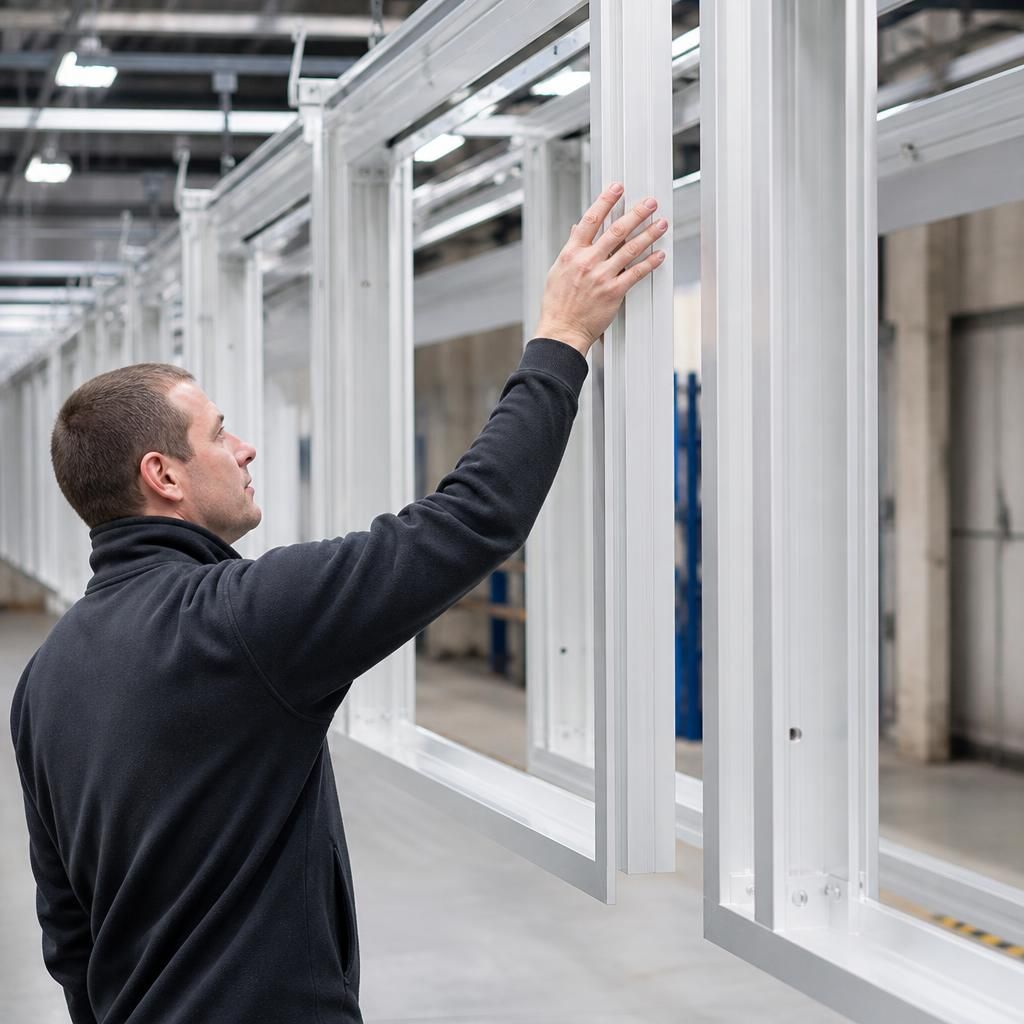
Another benefit is that the selected finish can help align appearance requirements with the component’s functional role. Matte clear is suitable where the aluminium itself is part of the specification, while white can provide a neutral base for applied labels, warning notices and contrasting fittings. This allows the coating to support both the visual design and the way the finished component is identified or used within an industrial assembly.
For this benefit to be reliable, the powder system must be assessed alongside the aluminium grade, pretreatment and intended exposure. A clear finish makes differences in the underlying metal more apparent, so surface condition is especially important; white gives a more visually uniform base but still requires suitable preparation around welds, edges and machined areas. Agreeing the required appearance and service conditions before coating helps ensure that the chosen finish is appropriate for the complete component rather than colour being treated as the only selection criterion.
Discuss the right matte clear or white coating for your aluminium components
Discuss your aluminium components, operating conditions and required appearance with a powder-coating specialist to identify a suitable matte clear or white coating specification. Providing drawings, sample parts or existing finish references can help clarify the requirements before production.