

What materials can be powder coated alongside aluminium?
Alongside aluminium, powder coating is commonly applied to steel, iron and other suitably prepared metal components. The correct coating system depends on the substrate, its surface condition, the intended environment and the performance requirements of the finished part.
The practical range extends across most heat-tolerant metal substrates, including mild steel, galvanised steel, stainless steel, cast iron, zinc-coated components, copper and brass. Each material needs a preparation and coating process suited to its surface chemistry, cleanliness, porosity and service environment; a powder that performs well on aluminium is not automatically suitable for every other metal.
Mild and carbon steel: These are among the most commonly powder coated substrates. Abrasive cleaning or blasting removes mill scale, rust, oil and previous finishes, while a suitable pretreatment helps the coating bond and reduces the risk of corrosion developing beneath the film. The coating specification may need to reflect whether the part will be used indoors, outdoors or in a chemically demanding setting.
Galvanised and zinc-coated steel: These materials can receive a powder finish, but the zinc surface requires careful handling. Excessively aggressive preparation can damage the protective zinc layer, whereas insufficient preparation may leave contaminants that affect adhesion. Galvanised parts can also release gases during oven curing, creating pinholes or small surface defects. Cleaning, controlled preparation and, where appropriate, a compatible primer or outgassing procedure are important for achieving a consistent result.
Cast iron: Cast iron is suitable when its porous surface is properly prepared. It can retain oil, moisture and casting residues, and these contaminants may emerge during heating. Thorough degreasing, suitable blasting and inspection of the casting are therefore necessary before coating. The geometry of the component also matters, particularly around recesses, sharp edges and areas where powder coverage may be uneven.
Stainless steel: Stainless steel can be powder coated when a decorative or additional protective finish is required. Its relatively passive surface may not provide sufficient key without the correct mechanical or chemical preparation. The coating system should also account for the environment, especially where the component will be exposed to moisture, cleaning chemicals or industrial contaminants.
Copper and brass: These non-ferrous metals can be coated, although they conduct heat differently from steel and aluminium and may have surface oxidation, tarnishing or residues that interfere with adhesion. Preparation must remove these contaminants without unnecessarily altering the component. Copper and brass are often selected for electrical, architectural or specialist engineering parts, so masking and coating thickness may need to preserve contact points, threads or other functional features.
Zinc die-cast components: Zinc-based castings can accept powder coating, but their low melting point and tendency to contain trapped gases make process control particularly important. Any oils, release agents or casting defects must be addressed before coating. Components should also be assessed for whether the curing temperature and cycle are compatible with the substrate and its dimensions.
Other specialist metal substrates: Some nickel-plated, chromed or previously coated components may be powder coated, but the existing surface generally needs assessment. A smooth, hard or poorly bonded layer can prevent reliable adhesion, so it may need to be removed or mechanically keyed. Previously treated metal should not be coated simply because the new powder appears compatible; the complete layer system, including the old finish, must be considered.
Materials that are usually unsuitable: Standard powder coating requires the component to tolerate preparation, handling and oven curing. Most untreated plastics, rubber, timber, foam and other heat-sensitive materials are therefore not suitable for a conventional process. Specialist low-temperature or alternative coating methods exist for some non-metallic products, but they involve different materials and process controls and should be assessed separately.
Material selection is only one part of the specification. The intended use, exposure to water or chemicals, required appearance, electrical contact areas, joint tolerances and the possibility of galvanic interaction between dissimilar metals can all affect the coating system. Components are normally coated before assembly, with threads, bearing seats, earth points and close-fitting interfaces masked where the added film could affect function.
For mixed batches containing aluminium and other metals, the parts should be identified by substrate rather than treated as one uniform group. This allows preparation, pretreatment, powder selection and curing requirements to be checked for each material. A Midlands industrial powder coating specialist can assess the component design and surface condition before confirming whether the proposed combination is suitable for a durable finish.
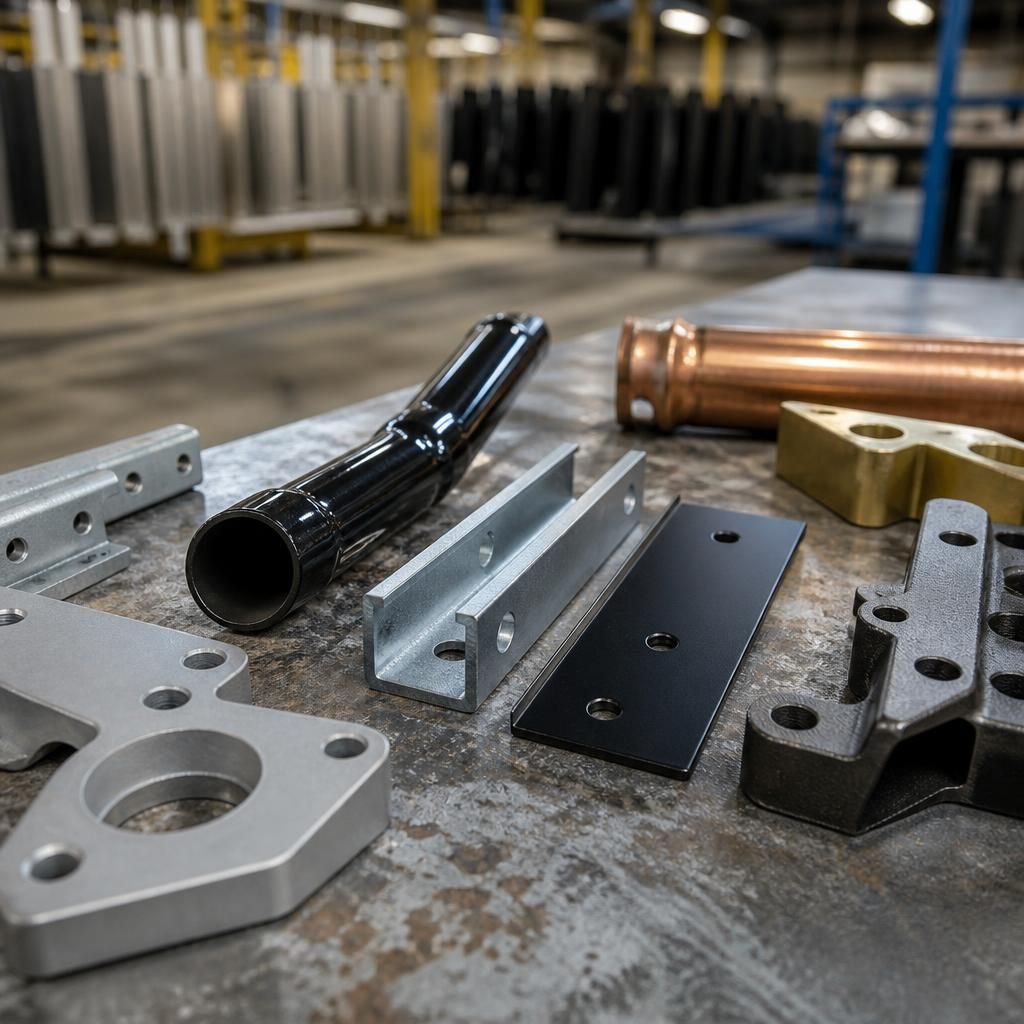
Aluminium and other compatible metals can be powder coated to a similar colour, but a shared powder specification does not always produce an identical visual result. The substrate, surface texture, component shape and preparation method can influence gloss, texture and colour perception after curing.
Where parts made from different metals must appear consistent, finish samples should be assessed under the intended lighting before a full batch is processed. This is particularly useful for assemblies combining aluminium with steel, stainless steel or zinc-based components, where small differences in surface character may remain visible even when the same powder is used.
Discuss powder coating for aluminium and other metals
If your batch combines aluminium with other metals, provide the substrate details, component dimensions and intended service environment for a coating assessment. This helps establish suitable preparation, powder selection and curing requirements before production.