

What pretreatment methods are necessary before applying aluminium powder coating?
Before aluminium powder coating, the surface must be cleaned and degreased to remove oil, dirt and other contaminants, then rinsed, lightly etched where required, and dried thoroughly. A suitable conversion coating is typically applied afterwards to improve powder adhesion and corrosion resistance before the aluminium enters the spraying process.
The necessary pretreatment methods for aluminium powder coating depend on the alloy, its previous use, the condition of the surface and the environment in which the finished component will operate. In addition to basic washing and degreasing, reliable preparation may require inspection, oxide removal, desmutting, controlled mechanical preparation, conversion coating, masking and documented quality checks.
- Substrate inspection: Aluminium parts should be examined before entering the pretreatment line. The coater needs to identify alloy variations, casting porosity, heavy oxidation, embedded debris, previous paint or anodising, weld contamination and areas that may retain chemicals. These conditions can affect adhesion or create defects even when the coating equipment is correctly set.
- Removal of oxide and smut: Aluminium forms an oxide layer naturally, and alloying elements can leave behind residues known as smut after chemical treatment. A suitable deoxidising and desmutting stage may therefore be required. The chemistry must be matched to the alloy, because an aggressive treatment can attack the substrate or alter its surface texture.
- Mechanical preparation where required: Light abrasion, blasting or other controlled mechanical methods can help remove firmly attached corrosion, old finishes and manufacturing residue. The abrasive and pressure must be suitable for aluminium. Excessive blasting can distort thin sections, embed unsuitable media or leave a surface profile that is too pronounced for the intended finish.
- Conversion coating: A conversion layer provides a chemically receptive surface between aluminium and the powder film. It can improve adhesion and provide additional protection at points where the coating may later be damaged. Chromate and non-chromate systems are available, and the choice is influenced by the required corrosion performance, environmental controls, customer specifications and the component’s end use. Correct chemical concentration, contact time and bath condition are essential to produce a consistent layer.
- Attention to joints and geometry: Welds, folded edges, recesses, threaded holes and overlapping sections can retain pretreatment chemicals or contaminants. Parts should be designed or positioned to allow proper drainage and access. Drain holes, vents and suitable racking can prevent trapped liquid from later leaking into the oven or appearing as staining beneath the powder.
- Masking and racking: Areas such as earth points, bearing seats, machined faces and threaded features may need to remain free from powder. Masking materials must tolerate the pretreatment and curing stages without leaving residue. Racking should provide secure electrical contact during spraying while exposing as much of the component as possible to the preparation stages.
Alloy identification is particularly important. Wrought aluminium, castings and heavily alloyed grades do not always respond in the same way to chemical preparation. A process suitable for one component may produce staining, uneven conversion or excessive attack on another. Mixed loads should therefore be assessed carefully rather than treated as though every item has identical surface chemistry.
Previous coatings and contamination require separate consideration. Existing paint, adhesive, silicone, cutting fluid or corrosion products may need to be removed by a method compatible with the aluminium and the subsequent pretreatment. Silicone is especially problematic because small traces can cause craters, fisheyes and areas of poor film formation. Parts should also be protected from bare-hand contact after preparation, since fingerprints can introduce contaminants onto otherwise suitable surfaces.
Preparation should be verified before powder is applied. Useful checks include visual inspection for water-retentive residues, stains, untreated areas and handling marks, together with checks that the conversion stage is operating within its specified conditions. Where the specification requires it, coating weight, adhesion and corrosion-related testing can be used to confirm that the pretreatment is appropriate for the service environment.
The final requirement is controlled handling between pretreatment and spraying. Aluminium should not be stored or transported in a way that allows dust, moisture or workshop contaminants to settle on the prepared surface. Any delay, rework or visible contamination may require the part to be prepared again rather than coated immediately. This control is as important as the chemical stages because powder cannot compensate for an unsuitable substrate.
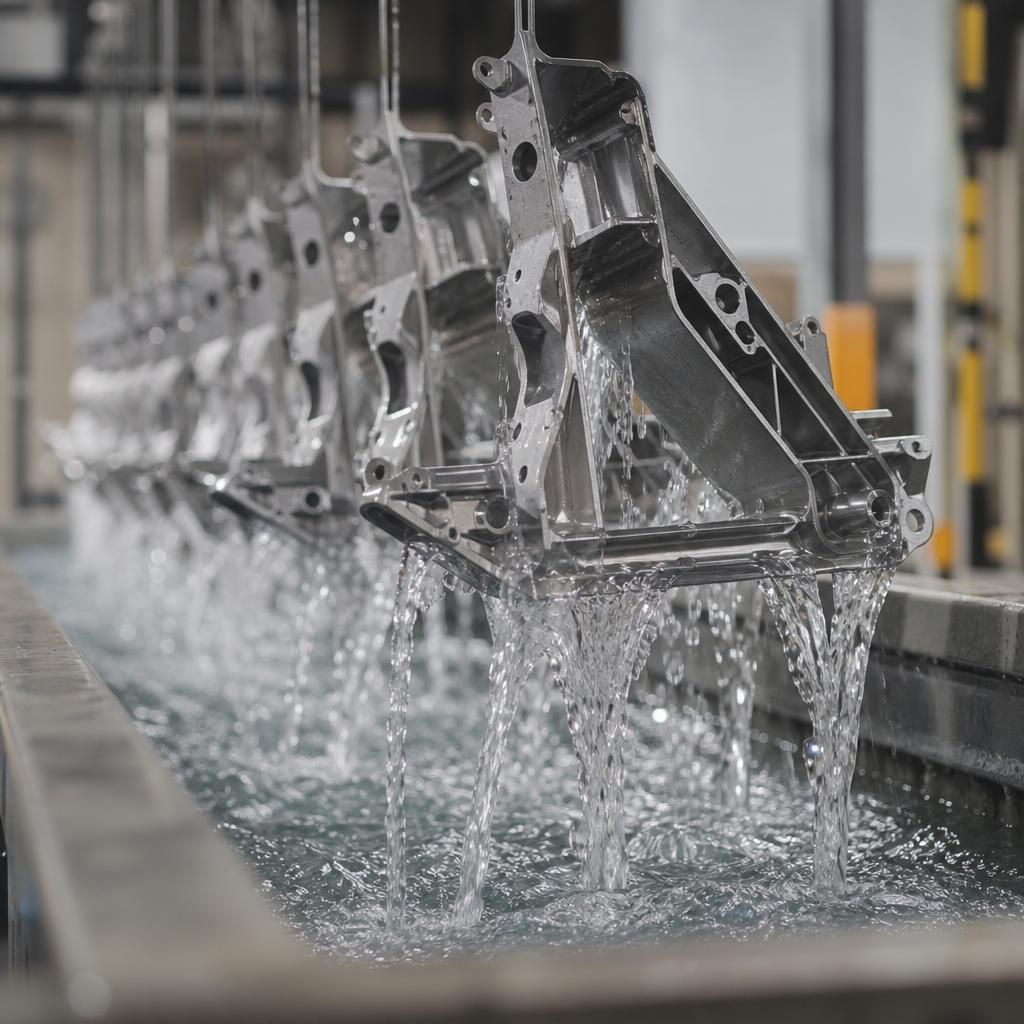
Rinsing between pretreatment stages is essential because leftover cleaner, acid or conversion chemicals can interfere with powder adhesion and contribute to staining, blistering or corrosion beneath the coating. Aluminium components should be positioned so liquid drains fully from recesses and joints, with each rinse removing residues from the preceding bath. A final clean-water rinse and complete drying help prevent salts or moisture being sealed beneath the powder film. The rinse stages should be checked as part of the pretreatment process, particularly where components have complex geometry or narrow cavities.
Discuss Your Aluminium Powder Coating Pretreatment Requirements
Discuss your aluminium powder coating pretreatment requirements with the team, including the alloy, previous finish, component geometry and intended service environment. This helps establish a suitable preparation process before coating begins.