

What are the key benefits of using electrostatic powder coating equipment for metal parts?
Electrostatic powder coating equipment applies electrically charged powder to earthed metal parts, helping produce an even, durable finish with efficient powder transfer. It can reduce overspray and material waste while supporting consistent results across individual components and production batches.
Electrostatic powder coating equipment benefits metal-part production by combining controlled application, strong coating performance and a cleaner process than many liquid alternatives. The equipment is particularly useful where components require a repeatable finish, resistance to service conditions and an efficient method of applying coating across a production run.
- Improved coating durability: Once cured, powder coating forms a hard film that can resist abrasion, impact, corrosion and exposure to many chemicals. The appropriate powder and cure schedule must be selected for the component’s environment, but the resulting finish is suitable for many industrial, construction, automotive and fabricated-metal applications.
- Reliable process control: A powder spray gun and control unit allow operators to adjust settings such as voltage, current, powder output and air flow. Controlling these variables helps match the application to the part’s size, profile and coating specification, rather than relying on an uncontrolled spray pattern.
- Efficient coverage of metal surfaces: The electrostatic attraction helps powder adhere to the exposed surface before curing. This can support coverage of edges, profiles and shaped sections that would otherwise require careful manual spraying. Results still depend on correct earthing, gun positioning, application technique and preparation.
- Clean, dry application: Powder is applied without the liquid solvents used in conventional wet paint systems. This reduces solvent-related handling requirements and avoids the need to manage liquid paint thinners during normal application. Appropriate extraction, housekeeping and personal protective equipment remain essential because airborne powder must not be inhaled or allowed to accumulate.
- Flexible finish selection: Equipment can be used with powders offering different colours, gloss levels, textures and functional properties. This allows the coating specification to be matched to appearance, grip, concealment, corrosion protection or resistance to particular service conditions. Powder compatibility and the manufacturer’s curing requirements should be checked before changing materials.
- Suitable for repeatable industrial work: When gun settings, part positioning, powder type and oven conditions are documented, the process can be reproduced across similar components. This is useful for manufacturers and fabricators working to a defined coating specification, especially where parts must match an existing finish or be processed in batches.
- Reduced drying-stage handling: Powder coating does not require a solvent to evaporate before curing. After the coating has been correctly cured and cooled, the part can generally proceed to inspection, assembly or packing without the extended handling considerations associated with wet paint drying. The coating must still reach the specified cure conditions; surface appearance alone is not proof of a complete cure.
- Potential for reclaim within a controlled system: In suitable spray-booth arrangements, unused powder can be collected and managed through a reclaim system. This can improve material utilisation, although reclaimed powder may need filtering, blending or segregation according to the coating specification. Powder from different colours or formulations should not be mixed indiscriminately.
These benefits do not remove the need for preparation. Oil, rust, scale, moisture and previous coating defects can compromise adhesion, so cleaning, blasting or another approved pre-treatment may be required. Parts must also be electrically conductive and properly earthed for the electrostatic effect to work effectively.
There are practical limits to consider. Deep recesses and narrow internal corners can experience the Faraday cage effect, where the electric field makes powder penetration more difficult. Operators may need to alter gun distance, voltage, air flow and spray angle, or use supplementary application methods. The part must also tolerate the curing temperature, which makes the process unsuitable for some heat-sensitive materials and assemblies.
For damaged metal parts being recoated, the equipment is most beneficial when the existing finish is assessed rather than simply covered. Loose coating should be removed, corrosion treated and the surface profile made suitable for the new system. The selected powder, pre-treatment and cure cycle should be compatible with the part’s material, intended use and any remaining sound coating.
In practice, the key decision is not just whether electrostatic equipment can apply powder, but whether the complete process is appropriate for the component. Gun control, earthing, booth extraction, powder handling, curing capacity, operator technique and inspection all affect the final result. When these elements are matched to the metal parts and coating specification, the equipment provides a controlled route to durable, consistent and serviceable finishes.
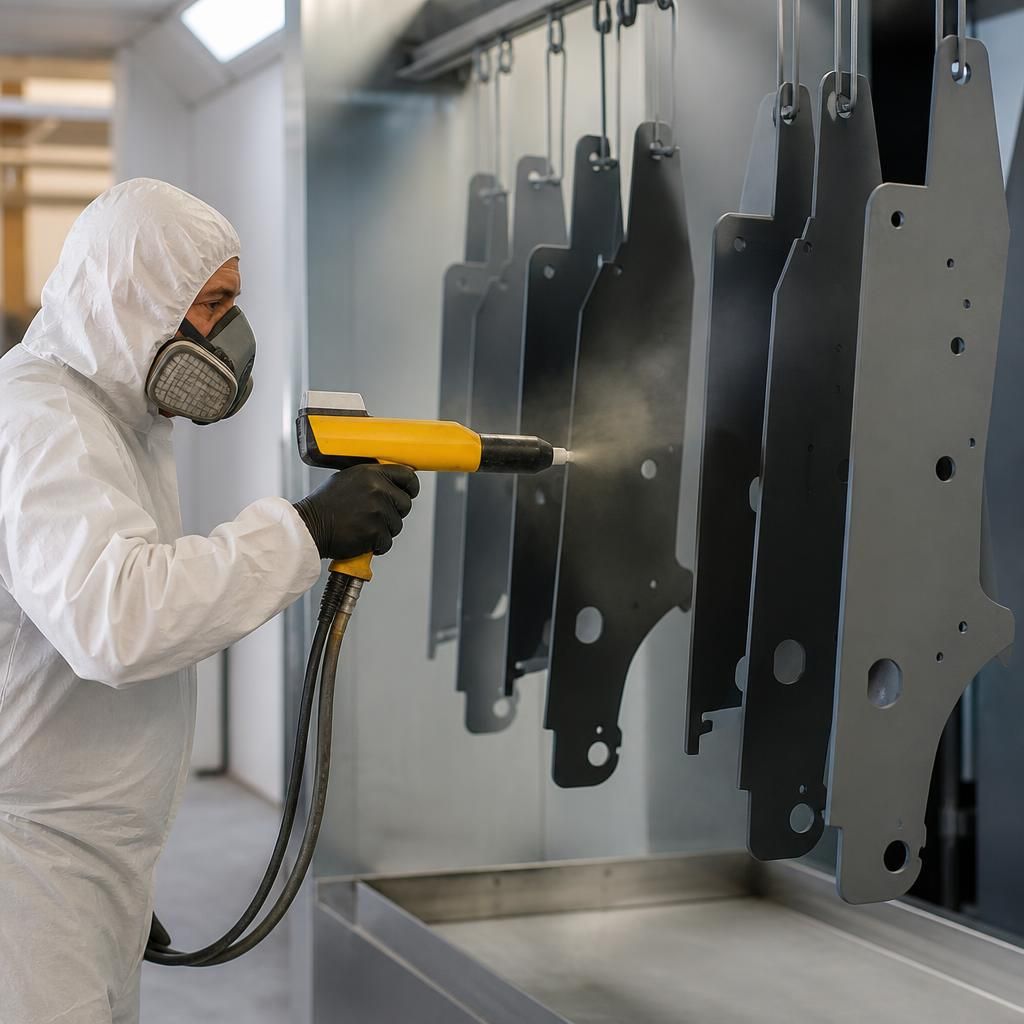
More predictable film formation: Electrostatic powder coating equipment helps place a controlled layer of dry powder on the metal before curing. Unlike liquid paint, the powder does not flow in the same way while it is being applied, so problems such as runs and sags are less characteristic of the application stage. The coating still needs the correct powder output, gun movement and film thickness, because excessive or uneven deposition can affect the finished appearance.
During curing, the powder melts and forms a continuous film across the prepared surface. This gives operators a clearer distinction between application and curing: first the powder is deposited, then the coated part is heated according to the product specification. For manufacturers and fabricators, that separation can make defects easier to identify and process conditions easier to document across similar metal parts.