

What are the key steps involved in the 2-coat powder coating repair process?
The 2-coat powder coating repair process involves removing contamination and failed coating, preparing the exposed metal, applying a compatible protective primer, applying the powder topcoat, and curing each layer under controlled conditions. Inspection after curing confirms that the repaired area has an even, properly bonded finish suitable for the component’s service environment.
A 2-coat powder coating repair is a controlled restoration process in which a compatible primer and powder topcoat are rebuilt over a localised area of damaged or defective metalwork. The key steps are assessment, preparation of the repair boundary, controlled application of both coating layers, staged curing and final quality checks.
- Assess the damage and define the repair area. The coating system is first examined to establish whether the defect is limited to the finish, extends into the primer, or has exposed the substrate. The surrounding coating is checked for lifting, corrosion, poor adhesion or contamination so that unstable material is not left beneath the repair. The repair boundary is then marked, with the extent determined by the condition of the coating rather than simply the visible size of the blemish.
- Confirm coating-system compatibility. The repair materials must be suitable for the metal substrate, the retained coating and the component’s service conditions. This includes checking the primer and topcoat chemistry, required performance characteristics, colour, gloss and texture. Compatibility is particularly important where only part of a component is being treated, because the new layers must bond reliably to the prepared areas and integrate visually with the existing finish.
- Control the transition between old and new coating. The perimeter of the repair is managed so there is no abrupt, weak edge around the restored section. Loose or poorly bonded coating is removed, while sound adjacent material is protected from unnecessary damage. Masking may be used to keep coating away from threads, apertures, machined faces, electrical contact points and other areas where build-up could affect assembly or operation.
- Prepare the substrate to an appropriate standard. Preparation is selected according to the metal type, the condition of the exposed area and the required performance of the repair. Residues from handling, oils, corrosion products, dust and previous coating work must be removed. The surface also needs a suitable profile or degree of keying for the primer to grip. After preparation, the area is kept clean and dry until coating begins; otherwise contamination can become trapped between the layers.
- Apply the protective primer evenly. The primer provides the first restored coating layer and helps separate the substrate from the environment. Application is controlled to avoid thin spots, runs, excessive build and uncoated edges. Particular attention is required around corners, welds, recesses and changes in section, where powder can distribute unevenly. The primer is then cured in accordance with its technical requirements before the second coat is applied, unless the approved coating system specifies another sequence.
- Apply the powder topcoat to achieve the required finish. The topcoat supplies the visible appearance and contributes to resistance against wear, moisture, chemicals and other service exposures relevant to the component. Powder coverage is checked across the repair, including edges and less accessible faces. The application settings and powder choice need to reflect the component’s geometry and the desired finish, while avoiding excessive film thickness that could affect appearance, fit or performance.
- Cure the completed coating under controlled conditions. Curing converts the applied powder into a continuous film with the intended mechanical and protective properties. The cure schedule must take account of the component rather than relying only on the surrounding air temperature, since heavy sections can heat differently from thin ones. Insufficient cure may leave the finish weak or poorly resistant, whereas excessive heat can affect appearance, substrate condition or adjacent materials.
- Inspect and release the repaired component. The finished area is examined for coverage, colour and gloss consistency, texture, edge definition, visible defects and signs of incomplete cure. Where appropriate, checks may also consider coating thickness, adhesion and continuity around corners or masked features. Any fault identified at this stage is assessed before the component is returned to service, because correcting a defect after release is more disruptive than addressing it during the repair process.
For industrial work, the repair method should also be recorded against the component or batch. Useful information includes the preparation method, materials used, application sequence, curing conditions and inspection results. This creates traceability and helps ensure that later repairs use a compatible system rather than introducing an unsuitable third layer over the original coating.
The exact procedure varies with the metal, component size, damage mechanism, existing finish and intended operating environment. A sound repair therefore depends on treating the coating as a complete system: the substrate condition, primer, topcoat, curing cycle and inspection standard must all work together.
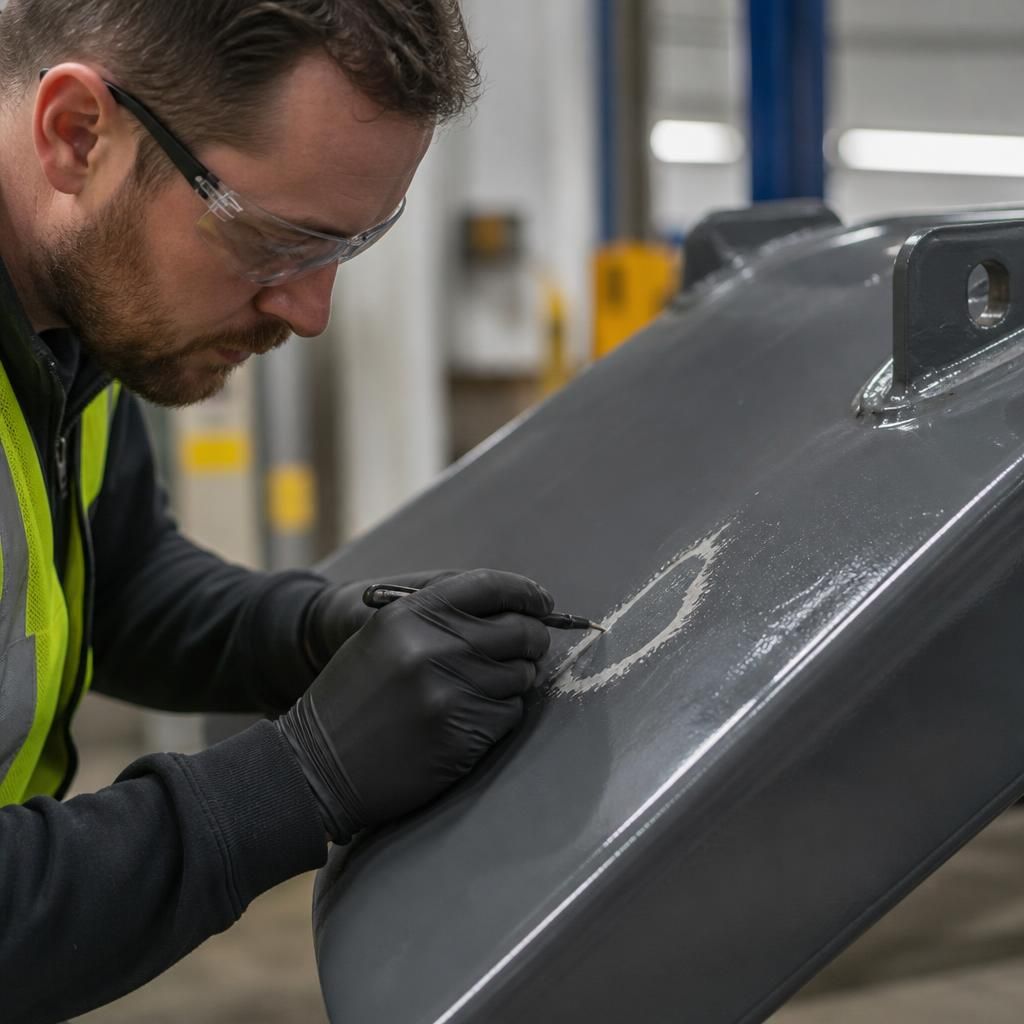
A key decision in a 2-coat powder coating repair is whether the damage is genuinely localised. A spot repair is appropriate only when the surrounding coating remains stable and firmly bonded. If corrosion, delamination or adhesion failure extends beyond the visible defect, repairing the centre alone can leave weakened material at the edge of the new coating.
Where the failure is widespread, the more suitable process may involve removing a larger area of coating or treating the complete component before rebuilding the two-coat system. This decision prevents a sound-looking patch from being applied over an unstable surrounding finish and helps ensure that the repair method matches the actual condition of the metalwork.
Discuss Your 2-Coat Powder Coating Repair Requirements
If you need to establish whether a damaged component is suitable for a 2-coat powder coating repair, discuss its condition, substrate and service requirements with the Powder-coatings.co.uk team. Collection and delivery options are available for businesses across the Midlands and surrounding areas.