

What types of metal surfaces are suitable for shot blasting?
Shot blasting is suitable for many robust metal surfaces, including steel, iron and suitably assessed aluminium components, where old coatings, rust or surface contamination need to be removed. The abrasive type, blasting pressure and technique must be selected for the specific metal so the coating is removed without distorting or damaging the component.
Shot blasting is generally suitable for sound, robust metal components that can withstand controlled impact from metallic abrasive media. It is most predictable on substantial ferrous parts, while thin, soft, highly finished or easily distorted metals require a carefully selected process, lower intensity or an alternative preparation method.
Commonly suitable ferrous surfaces
- Mild and carbon steel: These are among the most suitable substrates for shot blasting. The process can remove rust, mill scale, old powder coating, paint and embedded contamination, leaving a clean, keyed surface for subsequent treatment.
- Structural steelwork: Frames, brackets, beams, fabricated assemblies and heavy plate can usually tolerate the impact involved, provided the blasting method accounts for welds, edges, corners and any distortion already present.
- Cast iron: Castings are commonly blasted to remove foundry residue, corrosion and previous coatings. Their irregular profiles and recessed areas need particular attention because abrasive can collect in pockets and may not reach every internal feature evenly.
- Wrought iron: Robust wrought-iron components can generally be treated effectively, although decorative sections, thin scrollwork and sharp edges need more controlled blasting than heavy, plain sections.
- Stainless steel: Stainless components may be blasted, but the abrasive and equipment must be clean and suitable for stainless work. Cross-contamination with ordinary steel particles can introduce surface contamination and undermine the intended corrosion resistance.
Non-ferrous metals require greater control
Aluminium, zinc, copper, brass and similar non-ferrous metals can be suitable in some circumstances, but they are more vulnerable to marking, embedding of abrasive, loss of detail and dimensional change than heavy steel. Aluminium sheet, extrusions and die-cast parts may need reduced impact and a finer or softer medium. Copper and brass are relatively soft, so aggressive treatment can alter their surface profile or appearance. Zinc and zinc-coated components also require care because excessive blasting can remove the protective layer rather than simply prepare it.
For these materials, suitability depends on the alloy, thickness, hardness, existing finish and the condition of the component. A process that is appropriate for a thick aluminium casting may be unsuitable for a thin pressed panel made from a similar alloy. Small test areas or representative sample components can help establish whether the coating can be removed without unacceptable marking or distortion.
Surfaces that need special assessment
- Thin sheet and light-gauge sections: Broad, thin panels can flex or deform under repeated impact. Their shape, unsupported spans and existing stresses should be assessed before treatment.
- Precision-machined parts: Bearing seats, threads, sealing faces, bores and close-tolerance surfaces may need masking or exclusion from the blast stream. Even when the base metal remains intact, changing a critical surface can affect how parts fit or function.
- Complex fabrications: Box sections, narrow gaps and enclosed cavities can trap abrasive and make inspection difficult. Drainage holes, access points and post-blast cleaning requirements should be considered before work begins.
- Heat-affected or repaired components: Welded, brazed, cast or previously straightened areas may respond differently from the surrounding metal. Existing cracks, laminations, distortion and weak joints should be identified before abrasive treatment.
- Coated or plated surfaces: A thick, sound coating may require an initial assessment to determine whether metallic shot will remove it efficiently. Some finishes may be better addressed with a different abrasive or preparation technique, particularly where the underlying metal is soft.
What determines whether a surface is suitable?
The decision is not based on the metal name alone. The operator should consider substrate hardness, component thickness, geometry, the required surface profile, the type and thickness of the existing coating, and the finish required afterwards. Edges, welds and corners receive more concentrated impact than broad flat areas, while recessed features may receive less. These variations affect both coating removal and the consistency of the prepared surface.
Inspection should also identify oil, grease, moisture, deep corrosion and loose material. Shot blasting is a mechanical preparation process, not a substitute for correcting contamination or repairing defective metal. If corrosion has reduced the section or if the component has already lost dimensional accuracy, blasting will expose that condition rather than restore it.
For industrial components, the appropriate approach is normally established from the material specification, drawings and intended finish, followed by a controlled trial where the substrate or geometry presents a risk. After blasting, the surface should be checked for remaining coating, embedded particles, visible damage and areas that have not been reached. Components can then proceed to the next coating stage only when the prepared surface meets the required specification.
In practice, heavy steel, iron and substantial fabricated components are the most straightforward candidates. Stainless steel and non-ferrous metals can also be treated, but they require material-specific controls. Thin, delicate, highly machined or enclosed parts should be assessed individually rather than assumed to be suitable for standard shot blasting.
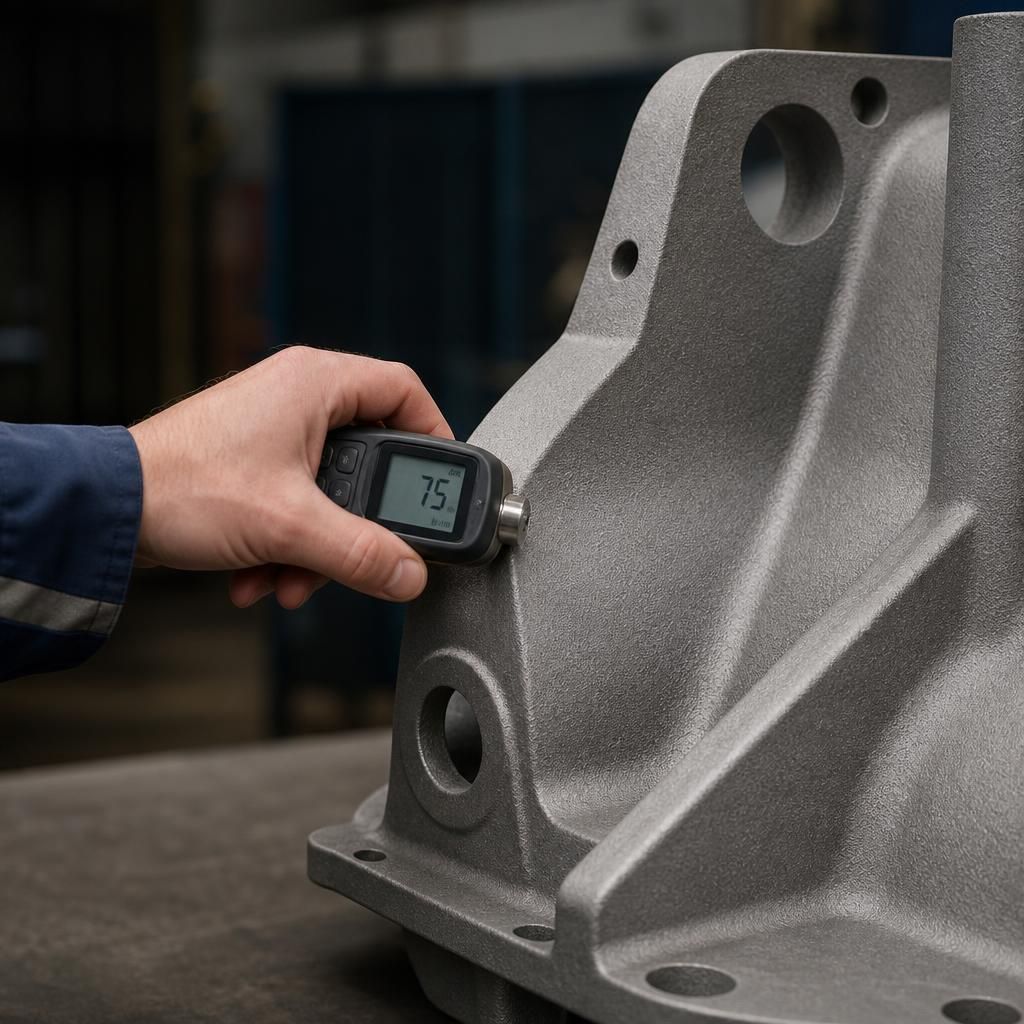
A suitable metal surface must also accept the profile created by shot blasting. The resulting texture should provide enough key for the replacement coating to bond, without producing sharp peaks, excessive roughness or exposed areas that the new coating cannot cover consistently. For this reason, the prepared surface is assessed against the requirements of the coating system being applied, rather than judged solely by how clean it appears.
Ask Whether Your Metal Surface Is Suitable for Shot Blasting
If you are unsure whether a component is suitable for shot blasting, discuss its material, dimensions, geometry and existing coating with the powder-coating specialists before work begins. A pre-treatment assessment can help identify the appropriate preparation method and any areas requiring protection or further inspection.