

What types of metal surfaces can be effectively sandblasted for powder coating repair?
Steel, aluminium and cast iron can generally be effectively sandblasted before powder coating repair, provided the abrasive and blasting pressure are matched to the metal. Other ferrous and non-ferrous components may also be suitable after assessing their condition, thickness and existing coating.
The most suitable surfaces are sound metal components that can tolerate controlled abrasive impact without losing their shape, dimensions or essential protective layer. In powder coating repair, the decision depends not only on the metal itself, but also on its thickness, geometry, existing coating, corrosion level and the finish required afterwards.
- Wrought iron and robust fabricated sections: These generally withstand abrasive cleaning well, particularly where rust, mill scale or failed coating has built up around welds, corners and joints. Blasting can expose the underlying profile and reveal whether corrosion is superficial or has reduced the section.
- Stainless steel: Stainless components may be blasted where the surface needs cleaning or where a suitable texture is required for recoating. The abrasive and equipment must be free from ordinary steel contamination, as embedded ferrous particles can create discolouration or undermine the corrosion resistance of the finished surface. The treatment should also match whether the component needs a uniform matt appearance or a more controlled repair area.
- Galvanised and zinc-coated metal: These surfaces require particular care because the zinc layer is part of the corrosion protection. Light, controlled blasting may be appropriate when the coating is being prepared for a new finish, but aggressive treatment can remove too much zinc and leave the substrate exposed. The repair specification should therefore establish whether the existing zinc is to be retained, locally removed or replaced through a compatible coating system.
- Copper, brass and bronze: These non-ferrous metals can be treated, but they are comparatively softer and can mark, deform or acquire an uneven profile if the process is too aggressive. Fine abrasive selection, lower impact and careful control are important where the component has visible surfaces, thin sections or a requirement to preserve detail.
- Die-cast zinc and other cast non-ferrous parts: These can sometimes be prepared successfully, although porosity, casting imperfections and trapped contamination need to be considered. Blasting may open small pits or expose defects that were hidden beneath the old coating. A test area is useful where the component has a complex casting or a high-quality cosmetic requirement.
Large frames, brackets, enclosures, guards, brackets, railings and fabricated assemblies are often practical candidates because their surfaces are accessible and their construction can tolerate the preparation method. Perforated sheet, expanded metal and components with recesses can also be treated, although the operator must ensure that abrasive and removed coating are cleared from the reverse side, cavities and drainage points. Hollow sections need special attention because retained media or contamination can later affect the coating process.
The condition of the existing finish is equally important. Sandblasting can remove loose powder coating, corrosion products and other firmly attached contamination, while also exposing areas where the old coating has lifted at an edge. Where only part of a component is being repaired, preparation has to extend far enough into sound material to prevent a new finish being applied over unstable coating. The boundary may then require controlled feathering or another approved transition treatment rather than an abrupt edge.
Metal thickness and shape determine how much impact the surface can safely accept. Thin sheet, delicate fins, sharp decorative profiles and precision-machined faces may distort, lose tolerances or develop an unsuitable surface profile if blasted with excessive pressure or an overly aggressive abrasive. Threads, bearing seats, mating faces, hinges, seals, electrical contacts and machined bores also need masking or an alternative preparation method where their dimensions and fit must be preserved.
Heat, oil, moisture and embedded salts can affect the result even when the metal appears clean. Welded areas may contain spatter or residues, while crevices can retain contaminants that later cause blistering or adhesion failure. After blasting, the prepared surface should be inspected for remaining corrosion, sharp edges, contamination and an appropriate profile before powder is applied. Any delay between preparation and coating should also be managed so that the clean metal is not allowed to deteriorate again.
In practice, a surface is a good candidate when it is structurally sound, accessible, thick enough for the selected process and compatible with the required coating system. A professional assessment is particularly important for zinc-coated, stainless, soft, thin-walled, porous or precision components, because successful repair may depend on using a different abrasive, reduced impact or local masking rather than treating every area identically.
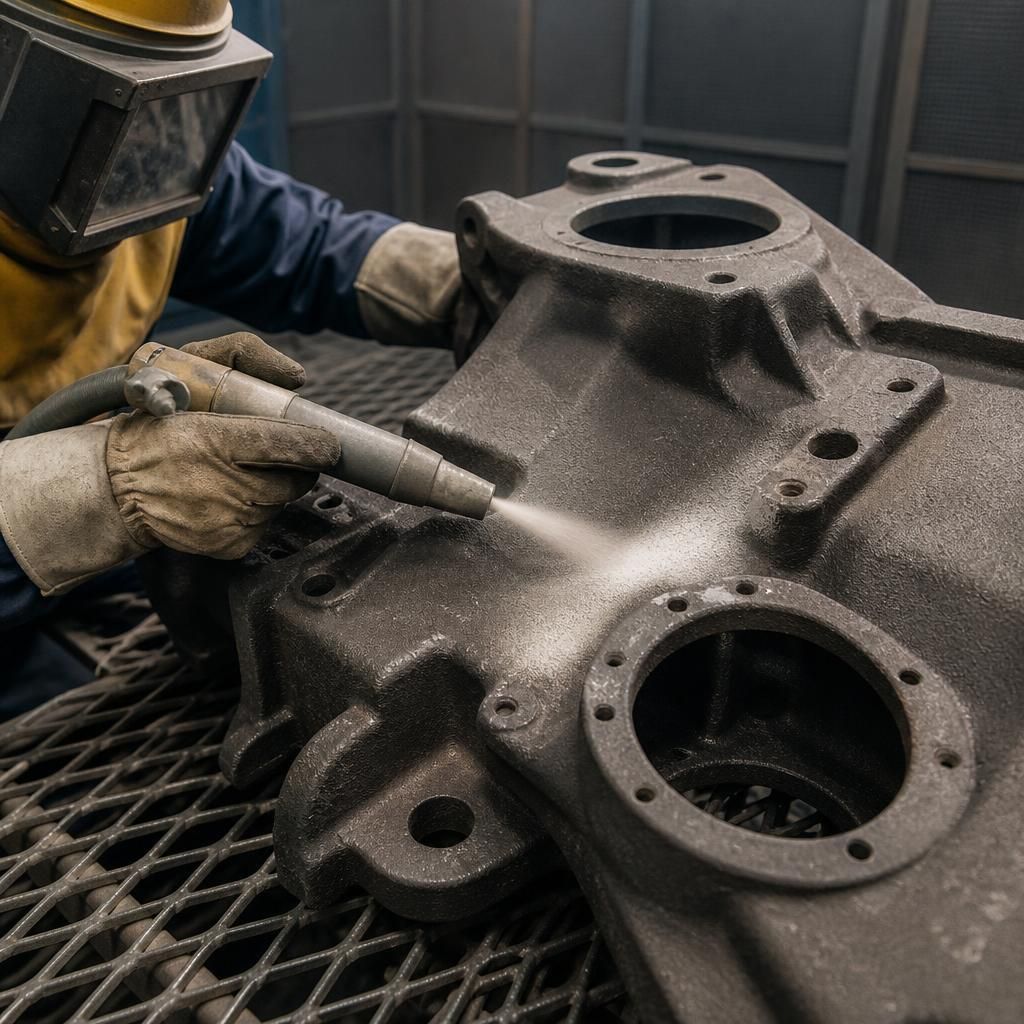
Cast iron is often suitable for sandblasting during powder coating repair, but its surface can behave differently from rolled steel. The material may contain pores, casting marks and retained oil, particularly around older or heavily used components. Blasting can reveal these features rather than remove the underlying cause, so the part should be checked for renewed staining, pinholes or contamination before recoating.
A practical assessment should therefore consider how the component was made as well as which metal it contains. A solid cast bracket, for example, may accept preparation more readily than a thin pressed panel made from a similar alloy. Where the substrate or its previous service history is uncertain, a small test area can confirm whether blasting produces a clean, consistent surface without exposing defects that would affect the repaired powder finish.
Discuss Your Metal Surface for Powder Coating Repair
If you are unsure whether a component is suitable for sandblasting before powder coating repair, discuss its material, dimensions, existing finish and service condition with our team. We can help identify the appropriate preparation approach for your metalwork.