

What is the nylon coating curing process in batch production?
The nylon coating curing process in batch production involves preparing metal components, applying the coating, heating the loaded batch to fuse and cure the nylon, then cooling and inspecting the finished parts. Controlled temperature, heating time and part positioning help produce a consistent, durable coating across each batch.
The nylon coating curing process in batch production is the controlled heating and cooling cycle that fuses nylon powder into a continuous protective film on prepared metal components. Unlike many thermoset powder coatings, nylon is generally a thermoplastic material: it softens, melts and flows when heated, then solidifies as it cools. The correct cycle therefore depends on the nylon grade, coating thickness, component material and the way heat reaches the parts.
Batch curing is more than setting an oven temperature. The oven must bring every component to the required coating temperature for the required dwell period. Air temperature alone is not sufficient, because large, dense or irregularly shaped components absorb heat more slowly than small, lightweight parts. The effective curing period normally begins when the coating or metal has reached the specified temperature, rather than simply when the batch enters the oven.
A typical production cycle includes the following controls:
- Material and process review: The nylon powder specification is checked for its recommended melt or curing range, required film thickness and any limitations relating to the substrate.
- Load assessment: Components are grouped so that their size, weight and thermal behaviour are compatible. Overloading the oven can restrict airflow and increase the difference between the first and last parts to reach temperature.
- Thermal monitoring: Oven controls are used alongside suitable temperature checks where necessary. This helps establish how the actual workpiece heats, rather than relying only on the displayed air temperature.
- Dwell control: The batch remains within the required thermal range long enough for the nylon to flow fully and form a continuous film. Excessive heat or dwell can be just as undesirable as insufficient heating.
- Controlled cooling: After the coating has fused, the parts are allowed to cool in a manner that avoids contact damage, contamination and distortion. Handling before the coating has stabilised can mark the surface.
Part geometry has a direct effect on curing. Hollow sections, deep recesses, thick brackets and assemblies with different metal thicknesses may heat at different rates. Edges and exposed surfaces can also behave differently from shielded areas. For this reason, batch planning considers the heaviest and most thermally demanding components, not just the average part in the order. Where a batch contains markedly different geometries, separating the load or validating the cycle against the most demanding item can provide better control.
Film thickness must also be controlled. A thicker nylon layer requires more heat to reach the intended flow condition and may retain heat for longer during cooling. Uneven application can produce differences in appearance, coverage and performance, even if the oven cycle itself is consistent. Consistent preparation, powder application and rack loading are therefore important parts of curing control rather than separate concerns.
For two-coat nylon systems, the first layer must be sufficiently fused and suitable for the second application without being damaged during handling. The second cycle must then achieve the specified finish without causing excessive flow, runs or loss of definition at edges and features. The exact sequence should follow the coating system’s technical instructions, as nylon formulations and application methods can differ.
Quality checks after curing focus on evidence of adequate fusion and uniformity. Depending on the specification, checks may include visual examination for dry areas, pinholes, bubbles, runs, contamination and uneven texture, together with film-thickness measurements and adhesion or performance testing where required. A well-cured surface should be continuous and properly bonded to the prepared substrate; appearance alone cannot always confirm that the coating has reached the required condition.
Reliable batch production also depends on recording the variables that can affect the result. Useful records include the powder identification, load description, oven settings, measured workpiece temperatures where taken, dwell information and inspection findings. If a defect appears, these records help distinguish between an application problem, an oven uniformity issue, an unsuitable load arrangement or a substrate-related cause.
There is no universal temperature and time combination for every nylon coating. The coating manufacturer’s technical data, the component design and the production oven must be considered together. A specialist powder coater can establish and maintain a repeatable batch cycle by validating the process against representative components, controlling the load and checking the finished film against the agreed specification.
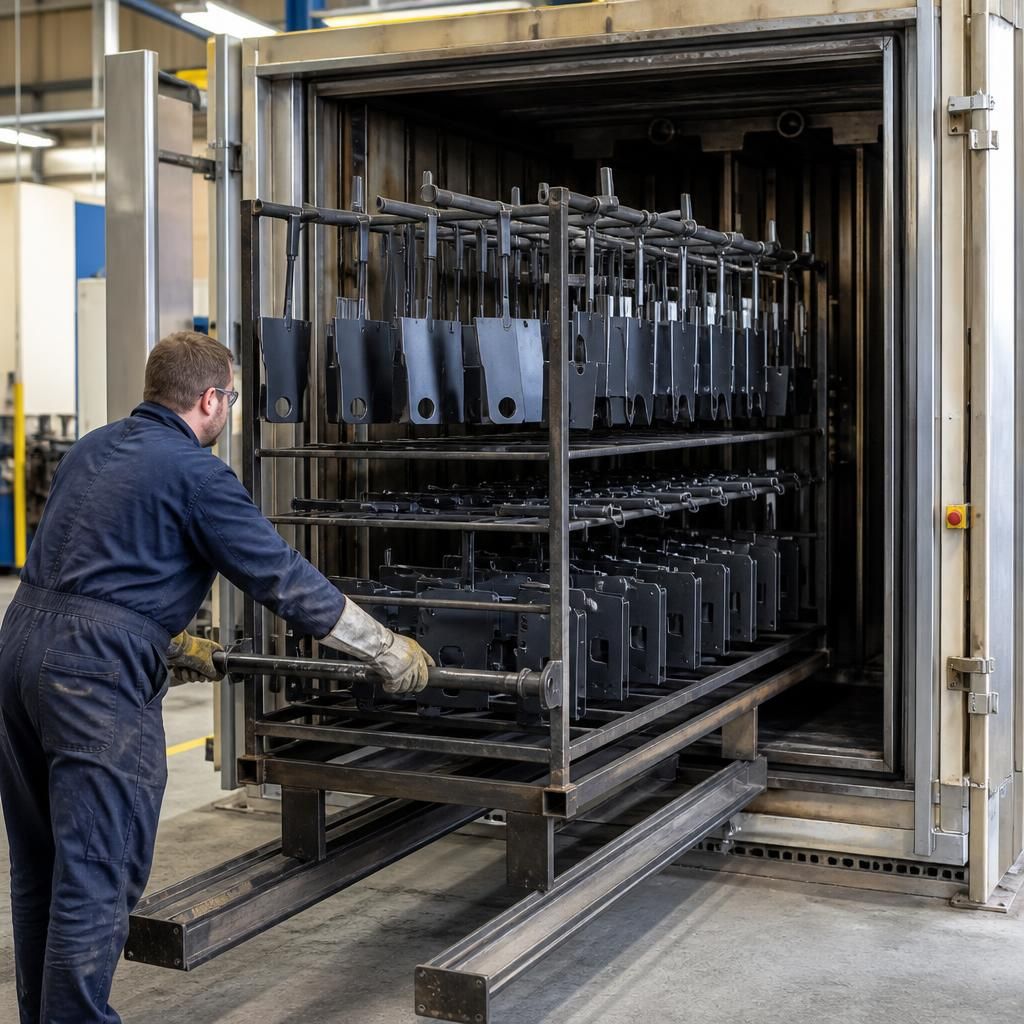
In batch production, the practical aim of nylon curing is to keep the coating within its usable melt-flow window. If the coating does not receive sufficient heat, the powder may remain textured, porous or poorly fused. If it is exposed to excessive heat or prolonged dwell, it may flow away from edges, soften detail or develop an altered appearance. These signs should be assessed alongside film thickness and adhesion results, because appearance alone does not identify the exact cause.
Process adjustments should therefore be controlled rather than based on a single visual defect. A rough finish may indicate inadequate heat transfer, an application issue or contamination, while runs or loss of definition may indicate excessive flow or an unsuitable coating build. Reviewing the affected component position within the batch, its geometry and the recorded cycle conditions helps separate an oven-related issue from a preparation or application fault.