

What common issues should I look for to determine if my powder coating needs repair?
Inspect the coating for peeling, flaking, blistering, cracking, chips, deep scratches, exposed metal and rust or other corrosion. Also check for fading, uneven coverage and loss of adhesion, as these signs may indicate that the powder coating needs repair rather than simple cleaning.
A powder coating needs repair when its protective or functional performance is no longer reliable, even if the visible defect appears small. Look for evidence that the coating has been affected by its working environment, has failed around edges or joints, is allowing the substrate to deteriorate, or is interfering with the component’s fit and use.
Some problems are easier to identify during operation than during a basic visual inspection. Pay particular attention to the following signs:
- Pinholes and small voids: Tiny openings can expose the substrate and allow moisture, chemicals or contaminants to reach the metal. They may be easier to see under strong, angled lighting than under general workshop lighting.
- Chalking: A powder coating that leaves a dusty residue when lightly wiped may be undergoing surface degradation. This is commonly associated with prolonged exposure to sunlight or weather and can indicate that the finish is losing its intended surface properties.
- Discolouration or staining: Marks caused by oils, cleaning agents, process chemicals or standing water may indicate chemical attack rather than ordinary dirt. If the surface remains stained after suitable cleaning, the coating may have been altered.
- Softness, swelling or tackiness: A coating that feels unusually soft, rubbery or raised can have been affected by solvents, heat, incompatible chemicals or prolonged contact with another material.
- Damage at edges, corners and joints: These areas are more exposed to impact and may have thinner coverage than broad, flat surfaces. Inspect folded edges, welds, apertures, seams, brackets and the areas around fasteners carefully.
- Rust or staining that returns after cleaning: Recurring marks around joints, seams or fixings can suggest that moisture is entering beneath the coating or that corrosion is progressing from an inaccessible area. This requires more investigation than simply touching up the visible mark.
- Rack or masking marks: Contact points used during coating may leave bare areas, sharp witness marks or unprotected sections. These can be acceptable only where they are specified and positioned away from areas requiring corrosion protection or a finished appearance.
- Thermal damage: Discolouration, loss of surface texture or distortion of the finish after exposure to heat may indicate that the coating has exceeded its service conditions. Repeated heating and cooling can also place stress on the coating and substrate.
- Wear in contact areas: Sliding components, hinges, loading points and surfaces exposed to repeated handling may show polished patches, scuffing or a loss of texture. Where the coating is part of a wear-resistant system, this may affect its intended function.
- Problems with fit or assembly: Excess coating on mating faces, threads, bores or locating surfaces can prevent components from assembling correctly. A repair may require controlled removal and restoration rather than adding more coating.
Defects should also be assessed in relation to the component’s environment. A finish used indoors in a clean, dry area is exposed to different risks from one used outside, near roads, in a manufacturing process or in contact with oils and cleaning chemicals. The same mark may be cosmetic on one component but a significant protective failure on another.
Inspect the entire component rather than concentrating on the first defect found. Check the underside, internal faces, recesses, drain points, welds, corners and areas hidden by brackets or fittings. Defects often develop at changes in shape or at places where water, dirt or chemicals can collect. Compare affected sections with an undamaged area of the same component where possible.
Cleaning should be part of the assessment, but it must be carried out carefully. Use a method known to be suitable for the coating and avoid aggressive solvents, abrasive pads or excessive pressure that could create new damage. Once the surface is clean and dry, record the location, size and pattern of each defect. A defect that is isolated and stable may be suitable for local repair, while repeated or spreading defects usually require a broader assessment.
Where the cause is uncertain, a coating specialist may use checks such as coating thickness measurement, adhesion assessment, surface inspection and examination of the substrate. An adhesion test can mark or damage the finish, so it should be selected and carried out appropriately rather than applied indiscriminately. If corrosion, contamination or an incompatible previous coating is present beneath the surface, simply applying fresh powder over the affected area is unlikely to provide a sound repair.
A local repair may be considered when the surrounding coating is firmly bonded, the substrate is in good condition, the defect is limited and the repair material can be made compatible with the existing system. More extensive preparation, stripping and recoating may be appropriate where damage is widespread, corrosion has developed beneath the finish, the original coating is failing in several locations or the component has a demanding service requirement.
Specialist finishes, including nylon or other protective systems, need particular care because their surface characteristics and repair compatibility can differ from standard powder coatings. The existing coating, substrate, preparation method, operating environment and required appearance should all be established before selecting a repair approach.
As a practical rule, arrange a professional assessment when a defect exposes the substrate, is growing, returns after cleaning, affects assembly or occurs on a component whose coating provides important protection. Providing details of the metal substrate, original coating if known, operating environment, chemicals or heat involved, and photographs of the affected areas will help a Midlands powder coating specialist determine whether local repair or complete recoating is the more suitable option.
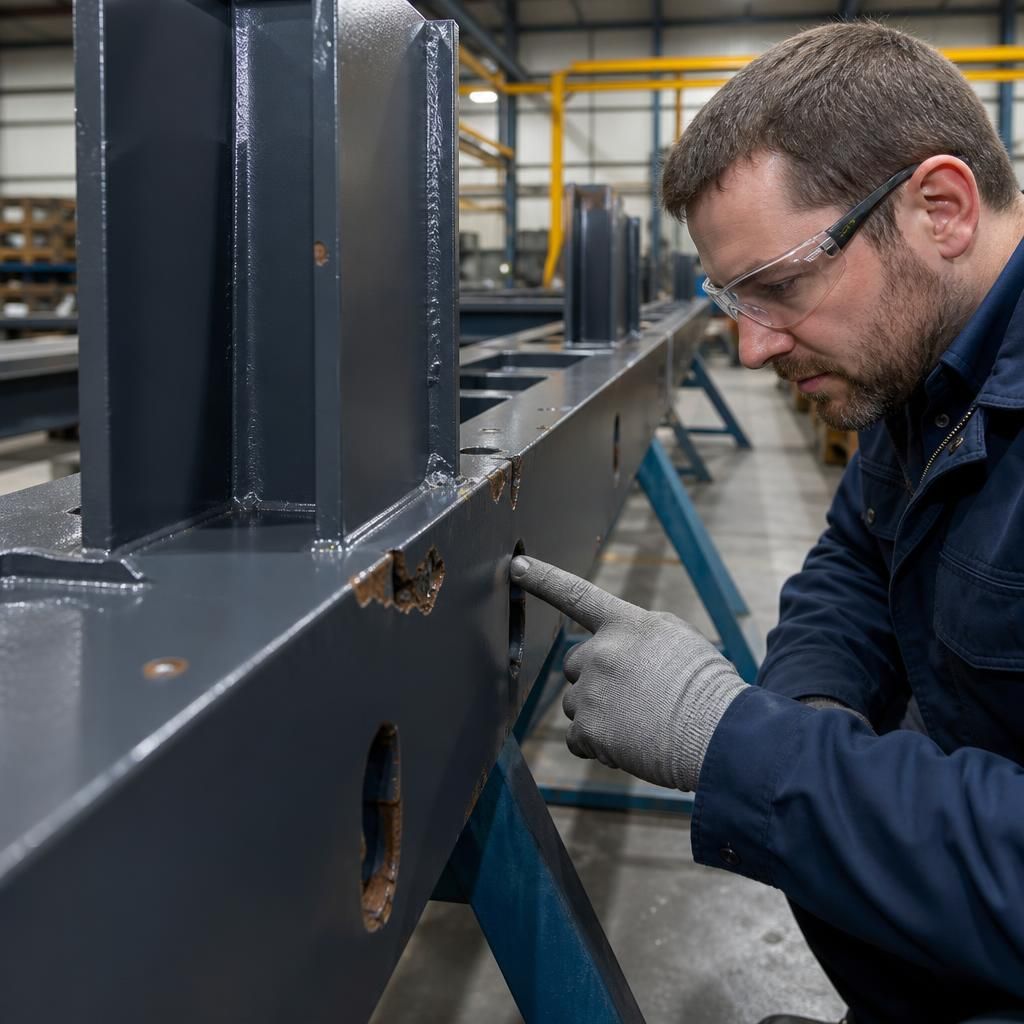
Assess whether the defect is isolated or part of a recurring pattern across similar components. If the same issue appears on matching parts, in the same position or after the same process stage, the cause may relate to preparation, handling, masking or service conditions rather than one-off impact damage. This distinction matters because repairing one visible area may not address defects developing elsewhere.
For batch-manufactured components, compare affected and unaffected items from the same production run. Note whether the damage is concentrated around handling points, contact areas or locations exposed to a particular chemical or heat source. This evidence helps establish whether a local repair is appropriate or whether the coating system and preparation method need broader investigation.
Arrange a Powder Coating Repair Assessment
If the coating is exposing metal, losing adhesion or affecting assembly, arrange an assessment before attempting further touch-up work. Provide photographs and details of the substrate, coating and operating conditions so Powder-coatings.co.uk can advise on the appropriate repair approach.