

What are the benefits of choosing Nylon & Rilsan powder coatings for industrial applications?
Nylon and Rilsan powder coatings provide metal components with a tough, flexible finish that resists abrasion, impact, chemicals, moisture and corrosion. They can extend coating performance in demanding industrial environments while also providing electrical insulation and a smooth, protective surface.
Nylon and Rilsan powder coatings offer more than a protective layer for industrial metalwork: they provide a functional polymer surface that can reduce friction, limit metal-to-metal contact, improve handling characteristics and support consistent performance in demanding service conditions. The main benefit is the ability to specify a coating according to how the component is used, rather than relying on a purely decorative finish.
Important advantages include:
- Reduced friction and surface wear: The comparatively smooth polymer surface can help components move, slide or rotate with less direct metal contact. This is useful for parts such as guides, rollers, handling equipment and contact surfaces where abrasion between uncoated materials could affect operation.
- Noise and vibration reduction: A polymer coating creates a softer interface than bare metal. It can reduce rattling, impact noise and harsh contact in assemblies where coated parts meet other components.
- Improved handling and protection of adjoining parts: Coated edges and contact areas are less likely to mark, scratch or damage materials that come into contact with them. This can be valuable for racks, supports, fixtures and equipment used to handle finished or easily marked products.
- A clean, uniform finish: Nylon and Rilsan coatings can provide a continuous surface with a consistent appearance. The finish may also be easier to wipe down than rough, heavily textured or mechanically damaged metal surfaces, depending on the coating specification and the operating environment.
- Useful design flexibility: The coating can be selected for components with different shapes, profiles and functional requirements. This allows the same general coating approach to be considered for structural items, moving parts, contact surfaces and fabricated assemblies, subject to suitability checks for the substrate and service conditions.
- Protection of edges and difficult areas: When the component is correctly prepared and the coating is applied to the required specification, the polymer layer can provide coverage around profiles, edges and formed sections that may be difficult to protect with conventional rigid finishes. Component geometry and coating thickness still need to be assessed before production.
The choice between a standard nylon coating and Rilsan nylon 11 should be based on the component’s operating conditions rather than on the name of the coating alone. Relevant factors include the expected temperature range, contact with oils or process chemicals, exposure to moisture, mechanical loading, required surface texture and whether the part needs a low-friction or softer contact surface. Rilsan is a nylon 11 coating option and may be considered where its particular performance specification matches the application.
Substrate condition is also important. Oil, rust, mill scale, previous coatings and contamination can prevent the powder coating from forming a sound bond, so cleaning and preparation must be matched to the metal and the intended use. The design should allow suitable access for preparation and coating, while masking may be needed where threads, mating faces, tolerances or electrical contact points must remain uncoated.
For manufacturers and fabricators, the practical benefit is that Nylon and Rilsan coatings can combine surface functionality with a finished appearance in one specified treatment. They are most appropriate where a component needs more than basic colour or visual improvement, particularly when friction, contact noise, handling damage, surface cleanliness or interaction with adjacent parts are relevant to its performance.
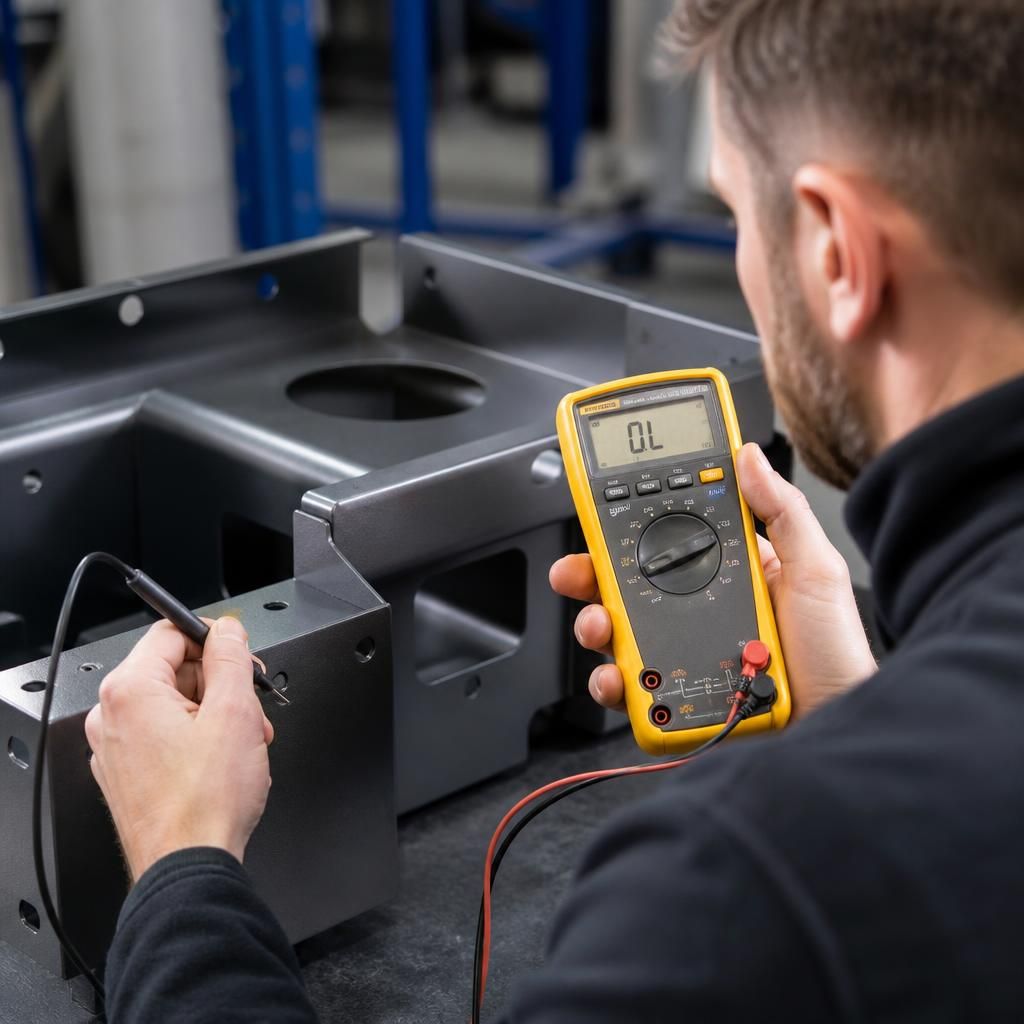
One important benefit of Nylon and Rilsan powder coatings is their ability to provide electrical insulation between a metal component and surrounding parts. The polymer layer can help prevent direct metal-to-metal contact, making it useful for selected supports, housings, brackets and other components where accidental conductivity or surface contact needs to be controlled.
This benefit depends on the coating remaining continuous and being applied to the required specification. Threads, earth points, mating faces and other areas that must retain electrical contact should be identified before coating, while the operating voltage, temperature, coating thickness and substrate condition should be assessed as part of the specification. Where electrical performance is critical, the finished component should be checked against the relevant design and testing requirements rather than relying on coating type alone.