

What are the key benefits of sand blasting before applying high-temp coatings?
Sand blasting removes rust, scale, old coatings and other contaminants while creating a consistent surface profile for the high-temperature coating to grip. This improves coating adhesion and helps produce more uniform, durable protection when the finished metal is exposed to heat and thermal cycling.
Sand blasting before a high-temperature coating provides a controlled, inspectable substrate that is suitable for the coating system and the service conditions the finished component will face. In addition to preparing the surface for coating, it helps identify defects, improves process consistency and reduces the risk of applying a heat-resistant finish over a weak or unsuitable base.
It helps reveal the true condition of the metal
Preparation exposes pitting, corrosion damage, weld irregularities, sharp edges and areas of previously failed coating. These conditions can be difficult to assess when concealed beneath scale or old finishes. Identifying them before coating allows the part to be assessed, repaired or rejected before further processing, rather than allowing a defect to remain beneath a new high-temperature system.
It supports a more predictable coating process
High-temperature coatings are sensitive to surface condition, application thickness and curing requirements. A controlled blasting operation gives the coater a known starting point, making it easier to set an appropriate coating specification and assess whether the prepared component is ready for application. This is particularly useful when processing repeated batches, where variation between individual parts can affect the finished result.
It improves access to difficult areas
Blasting equipment can prepare many areas that are awkward to treat by hand, including weld zones, recesses, edges and complex profiles. Proper attention to these locations helps prevent untreated patches that could become weak points in the overall coating system. The equipment, nozzle selection and blasting technique still need to be matched to the component so that delicate sections are not unnecessarily damaged.
It reduces the risk of incompatible residues
Some preparation methods can leave chemical residues, loose particles or other substances that interfere with a heat-resistant coating. Abrasive blasting, when correctly controlled, provides a dry mechanical preparation route without introducing a wet chemical treatment into the process. The abrasive must be suitable and clean, and the prepared surface should be inspected for remaining dust or contamination before coating.
It helps manage coating failure risks at operating temperature
Heat can expose weaknesses that are not obvious at room temperature. If a coating is applied over poorly bonded material, trapped contamination or unstable corrosion products, thermal exposure may contribute to blistering, flaking or local breakdown. Thorough preparation removes these potential weak interfaces and gives the coating system a more reliable foundation during service.
It can make quality checks more meaningful
After blasting, the surface can be checked for cleanliness, visible defects and the specified roughness or surface profile before the coating is applied. These checks create a clear process stage at which problems can be corrected. Recording preparation requirements and inspection results also helps maintain consistency across components and production batches.
Sand blasting is not a substitute for correct coating selection or curing. The abrasive, air pressure, blasting angle and degree of preparation should reflect the metal, component geometry and temperature duty. After preparation, the surface needs protection from renewed contamination and oxidation before coating, with the high-temperature product then applied and cured according to its technical requirements. Used in this controlled way, blasting is a practical means of making the subsequent coating process more dependable and easier to verify.
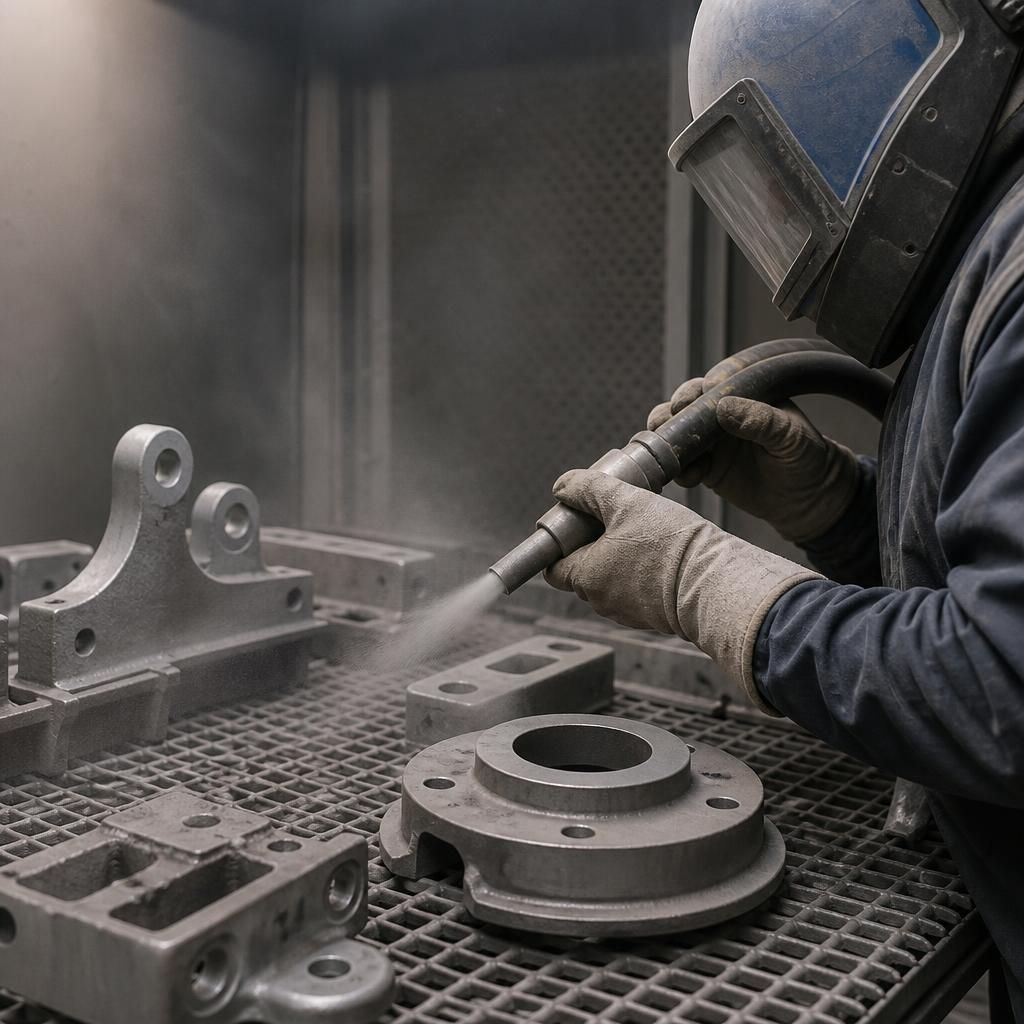
Sand blasting can reduce the number of separate preparation operations needed before a high-temperature coating is applied. In a controlled process, one abrasive treatment can remove tightly bonded surface material and establish the required texture, rather than relying on several unrelated cleaning or stripping stages. Fewer preparation stages can mean less movement and handling of the component, reducing the opportunity for damage or renewed contamination between operations.
This is particularly useful for batch work and fabricated parts that must follow the same preparation route. The blasting specification can be matched to the metal and coating system, then repeated consistently across the component or production run before the parts move to coating.