

What is the ideal temperature range for curing high temp powder coatings?
There is no single ideal temperature range for all high-temperature powder coatings; the correct setting is the coating manufacturer’s specified cure schedule, based on the metal’s actual temperature and required dwell time. Set and verify the oven profile so the coated component reaches the specified temperature consistently without overheating the substrate or finish.
The ideal curing temperature for a high-temperature powder coating is the range specified in the coating manufacturer’s technical data sheet, measured at the metal component rather than simply at the oven controls. High-temperature performance describes the coating’s service resistance after curing; it does not automatically mean that the powder requires a higher cure temperature than a standard formulation.
Each formulation has a defined cure window. This normally combines a target metal temperature with a minimum dwell period. The component must remain within that window for long enough to complete the resin reaction and develop the intended film properties. An oven air reading alone is not sufficient, because the metal may take longer to reach the required temperature, particularly when parts are thick, densely loaded or thermally conductive.
When selecting the correct setting, consult the product data sheet for:
- the specified metal temperature;
- the required dwell time at that temperature;
- the acceptable operating tolerance, if one is provided;
- whether the schedule applies to the particular film thickness being used; and
- any restrictions relating to the substrate, primer or coating system.
The coating’s specified range should be treated as a process window rather than an invitation to use the highest permitted setting. A lower temperature may leave the film under-cured if the component does not receive sufficient heat or dwell time. Under-cured powder can have reduced hardness, adhesion and resistance to chemicals or heat. Excessive temperature or prolonged exposure can cause discoloration, loss of appearance, embrittlement or damage to the substrate, especially where the part includes heat-sensitive sections, inserts or previous treatments.
Part design has a direct effect on the practical oven setting. Thin sections reach the target temperature quickly, while heavy fabrications and large thermal masses need a longer heat-up period. Assemblies with both light and heavy sections may require a carefully controlled profile so that the lighter areas are not overheated while the heavier areas are still reaching the cure condition. The load arrangement, spacing between components and movement of heated air also influence the result.
For this reason, the oven should be assessed by measuring the temperature profile of representative components. Temperature probes attached to different areas can show when each section reaches the target and how long it remains there. This helps distinguish oven air temperature from actual part temperature and identifies cold spots, excessive heat exposure or uneven heating across a batch.
The correct range can also change according to the powder chemistry, colour, gloss level, applied film thickness and use of a primer or additional coating layer. Two products described as high-temperature coatings may therefore have different cure schedules. The technical data sheet for the exact powder should take precedence over a general rule or a setting used for another product.
A practical curing process should follow these steps:
- Confirm the powder’s specified cure schedule and the basis on which it is stated.
- Prepare the metal correctly and apply the coating within the recommended film thickness.
- Allow for the component’s size, thickness, shape and loading pattern when setting the oven.
- Use temperature profiling to verify the metal temperature at representative points.
- Adjust the oven conditions so the complete part receives the required heat exposure without unnecessarily overheating lighter sections.
- Inspect the cured finish and investigate any variation before processing a full production batch.
Visual appearance alone cannot confirm complete curing. Where performance is critical, checks may include adhesion, hardness, film thickness and resistance testing appropriate to the coating specification. If results are inconsistent, possible causes include inaccurate temperature measurement, unsuitable profiling, uneven loading, inadequate preparation or an incorrect cure schedule for the powder.
In summary, the ideal range is the formulation-specific cure window that gives every part the required metal temperature and dwell time while limiting unnecessary heat exposure. For production work, the reliable reference is the powder data sheet supported by measured component temperatures, rather than a generic oven temperature.
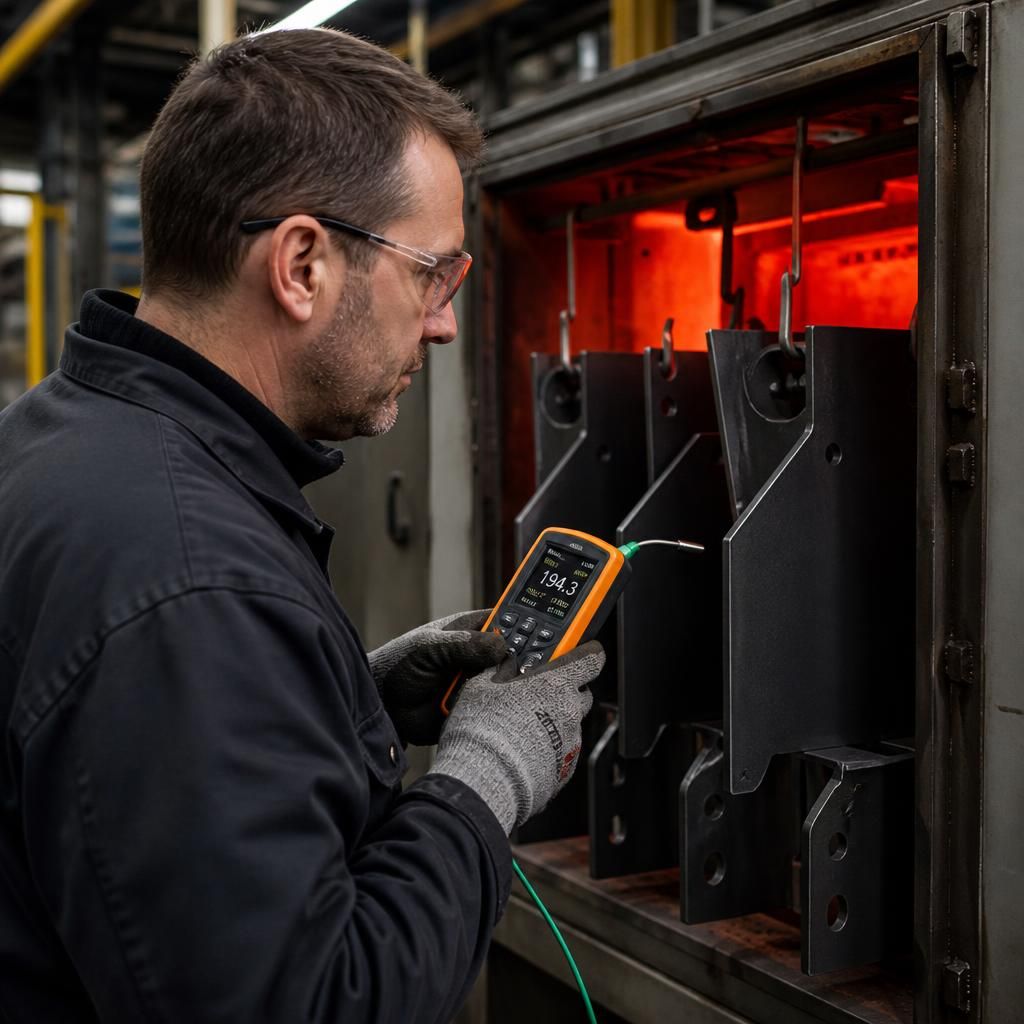
The specified curing range should be validated against the most thermally demanding part in the production load, not only an easy-to-heat sample. A heavy section, enclosed fabrication or densely arranged batch may take longer to reach the coating’s required metal temperature than thinner components.
After establishing a suitable profile, repeat the check if the part design, batch arrangement, film thickness, powder formulation or oven loading changes. These factors can alter heat transfer and may shift the time needed to complete the cure. Keeping the profile records with the batch documentation also provides a useful reference when investigating differences in finish or performance.