

What are the optimal curing temperatures for different types of powder coatings?
Optimal curing temperatures vary by powder chemistry and formulation, so the coating manufacturer’s specified part-temperature and dwell-time profile should be followed rather than relying on the oven air temperature alone. Epoxy, polyester, hybrid and specialist powders can each require different cure conditions, which should be confirmed through the product technical data sheet and checked on the component.
The optimal curing temperature for a powder coating is the temperature at which the coated metal reaches the coating system’s specified cure condition for the required dwell time. There is no single setting that suits every powder. The correct profile depends on the resin chemistry, formulation, film thickness, component mass, oven airflow and production method, so the product technical data sheet should be the starting point for every coating specification.
Epoxy powder coatings generally require a controlled cure to develop their intended hardness, adhesion and chemical resistance. They are commonly selected for components used indoors or where resistance to chemicals and corrosion is more important than long-term exposure to sunlight. The oven must deliver enough heat into the metal for the complete coating film to cure. Excessive heat or dwell can cause changes in colour, gloss or surface appearance, while insufficient heat may leave the film soft, poorly bonded or vulnerable to chemical attack.
Polyester powder coatings are formulated for a wide range of applications, including components exposed to weather and ultraviolet light. Their cure requirements vary between standard, low-temperature, fast-cure, textured and other specialist grades. Two polyester products may therefore require different temperature-and-time profiles even when they are applied to similar parts. The specified condition should be assessed using the temperature of the component rather than treating the oven air setting as the cure temperature.
Epoxy-polyester hybrid powders combine two resin types and are often used for interior metalwork where a balance of finish, adhesion and general resistance is required. Hybrids still need their own validated cure schedule. Applying the settings for a different epoxy or polyester product can produce an apparently acceptable surface while leaving the coating’s full performance undeveloped.
Specialist powders need particular care. Low-bake and fast-cure products are designed to achieve cure under conditions that differ from conventional systems, while heavy-texture, metallic, bonded-metallic, clear and thick-film products can have narrower processing requirements. Nylon and other protective coating systems may also require a different preparation and heating approach from standard thermoset powders. The relevant product documentation should state the permitted cure range, the required metal temperature and the corresponding dwell period.
Part temperature is the critical measurement. An oven display may show the air temperature near the sensor, but the coated component may be cooler, particularly when it is thick, densely loaded or made from a material with substantial thermal mass. A reliable process therefore considers:
- the time taken for the coldest part of the component to reach the specified temperature;
- the period for which the component remains at that temperature;
- differences between the front, centre and rear of the oven;
- the effect of the load arrangement on air circulation; and
- the influence of component shape, thickness, hangers and contact points.
A temperature profile or oven survey can identify whether the required cure condition is being achieved consistently. Temperature probes attached to representative parts, together with a data logger, can show the heating curve and reveal cold spots that an oven controller may not detect. Testing should include the heaviest or most thermally demanding components in the batch, not only a small, lightweight sample.
Oven air temperature and cure temperature are not interchangeable. Raising the oven setting may shorten the time needed for the metal to heat, but it does not automatically produce a better coating. If the part becomes too hot, the powder may over-cure, discolour, lose gloss, develop defects or suffer changes in appearance. If the part does not reach the required condition for long enough, the coating may show poor adhesion, reduced hardness, inadequate flexibility or weak resistance to solvents and chemicals.
Part geometry also affects the correct process. Thin sections heat rapidly, whereas thick sections, boxed sections and assemblies with concealed areas can lag behind the surrounding air. Recesses may receive less powder or less effective airflow, and contact points can create coating variations. The cure schedule should be established for the finished component and loading pattern rather than copied from an unrelated job.
Before production, confirm the following information from the powder supplier’s documentation:
- the recommended metal temperature;
- the acceptable cure window and its relationship with dwell time;
- any lower-temperature or rapid-cure option;
- the permitted coating thickness;
- whether the finish is sensitive to over-baking, yellowing or gloss change; and
- any special requirements for primers, multi-coat systems or reclaimed powder.
Where a two-coat system is used, each layer can affect the next stage. A primer may have a separate gel or partial-cure requirement, while the topcoat may need to complete its cure without degrading the underlying layer. The combined process should be confirmed for the complete system rather than selecting an isolated temperature for each product.
Process validation should combine temperature records with coating-performance checks. Visual inspection can identify changes in gloss, colour, texture, pinholes or other defects, but appearance alone does not prove that the resin has fully cured. Depending on the specification, checks may include adhesion, hardness, flexibility, impact resistance and resistance to an appropriate solvent or chemical. Results should be considered alongside film thickness and surface preparation, since poor performance is not always caused by the oven.
When a coating appears under-cured, investigate the actual part temperature, probe position, oven loading, airflow, line speed and film thickness before simply increasing the heat. When it appears over-cured, check the same factors and consider whether the component is remaining above the specified condition for too long. Correcting the process at its source is more reliable than compensating for an unsuitable profile with a higher or lower controller setting.
In practice, the best curing temperature is the one supported by the powder’s technical data, verified on the component and maintained consistently throughout the load. Keeping records of powder batch, film thickness, oven settings, part temperature and inspection results helps establish a repeatable process when different coating chemistries or component sizes are processed in the same industrial powder coating oven.
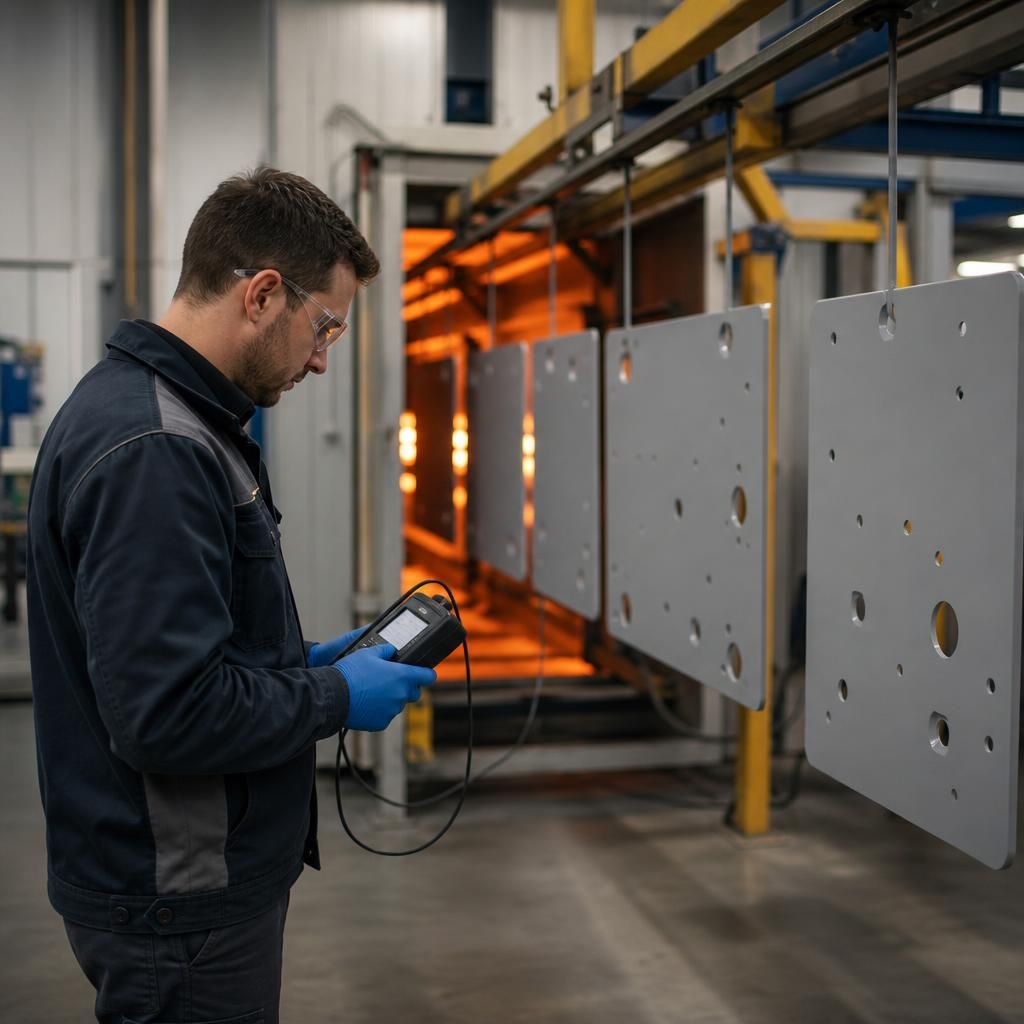
Nylon powder coatings should not be assessed using the same curing model as epoxy, polyester or hybrid thermoset powders. Nylon is a thermoplastic coating: it softens and flows when heated, then forms its final film as it cools, rather than completing a cross-linking reaction in the oven. The relevant processing temperature therefore depends on the specific nylon grade, application method, substrate temperature and required film build.
For nylon systems, the coating supplier’s technical data should define whether the component is heated before application, whether a post-heating stage is required, and how long the part must remain within the specified temperature range. The process must provide sufficient heat for the powder to melt and form a continuous film without degrading the polymer. Excessive heat can affect colour, surface texture and performance, while inadequate heat may result in incomplete flow, uneven coverage or poor adhesion.
Because nylon may be applied to components with different shapes and thermal masses, process trials should examine film continuity at edges, recesses and contact points as well as the appearance of the main surface. Cooling conditions can also influence the final finish, so the complete heating, coating and cooling sequence should be validated rather than selecting an oven setting in isolation.