

What types of surfaces and metals can epoxy powder coating be applied to?
Epoxy powder coating is primarily applied to prepared metal surfaces, including mild steel, stainless steel, galvanised steel and aluminium. It can also protect fabricated components, panels, frames and other specialist metal parts, provided the substrate is suitably cleaned, pre-treated and able to withstand the curing process.
Epoxy powder coating is best suited to clean, electrically conductive surfaces that can tolerate the heat required for curing. It is commonly selected for a wide range of ferrous and non-ferrous metal components, including structural parts, fabricated assemblies, enclosures, brackets, panels, frames, guards and machine components. The correct choice depends not only on the metal itself, but also on its condition, geometry, intended environment and exposure to sunlight or chemicals.
Metal substrates that may be suitable include:
- Cast iron: suitable for items such as housings, covers and engineering components when casting porosity, residues and surface contamination are properly addressed.
- Copper and brass: these can be coated, although their high thermal conductivity and surface characteristics require controlled preparation and curing.
- Zinc-based components: zinc die-cast parts and zinc-coated surfaces may accept epoxy powder coating, but trapped gases, alkaline residues and differences in surface chemistry can affect the finish if not managed correctly.
- Specialist metal alloys: nickel alloys, titanium and other engineered metals can sometimes be coated, subject to confirmation that the surface can be prepared without damaging the component and that the curing temperature is suitable.
Epoxy powder coating can be applied to both flat and three-dimensional metal surfaces. Typical examples include cabinets, electrical enclosures, shelving, brackets, machine guards, support frames, trays, covers, fabricated panels and smaller precision components. Recesses, sharp edges, threaded holes, welds and overlapping joints need particular attention because they can affect powder coverage, drainage, masking and final film thickness.
The substrate’s previous condition is also important. Existing paint, oil, grease, mill scale, corrosion, welding residues and embedded contaminants can interfere with adhesion. Where a component has already been coated, the old finish must be assessed for compatibility rather than automatically covered. Areas that must remain uncoated, such as earth points, bearing seats, threads or mating faces, may require suitable masking before application.
Epoxy powder coating is generally more appropriate for components used indoors or where resistance to corrosion, moisture, oils and many industrial chemicals is the main requirement. It is not usually the first choice for surfaces exposed continuously to direct sunlight, because epoxy films can lose colour or develop a chalky appearance under prolonged ultraviolet exposure. For external components, a different powder chemistry or a compatible topcoat may be considered where colour retention and weathering performance are important.
Non-metallic materials, including most plastics, rubber, timber and composite boards, are not normally treated in the same way as conductive metal. They may soften, distort, release gases or fail to provide the electrical characteristics needed for conventional powder application and oven curing. Specialist low-temperature powders or alternative coating processes exist for some heat-sensitive materials, but their suitability must be established for the specific product and service conditions.
For a reliable specification, assess the base metal, component dimensions, wall thickness, existing surface condition, required masking, operating temperature and likely exposure before selecting the powder system. This ensures that the coating is compatible with the substrate and that the finished component is suitable for its intended industrial use.
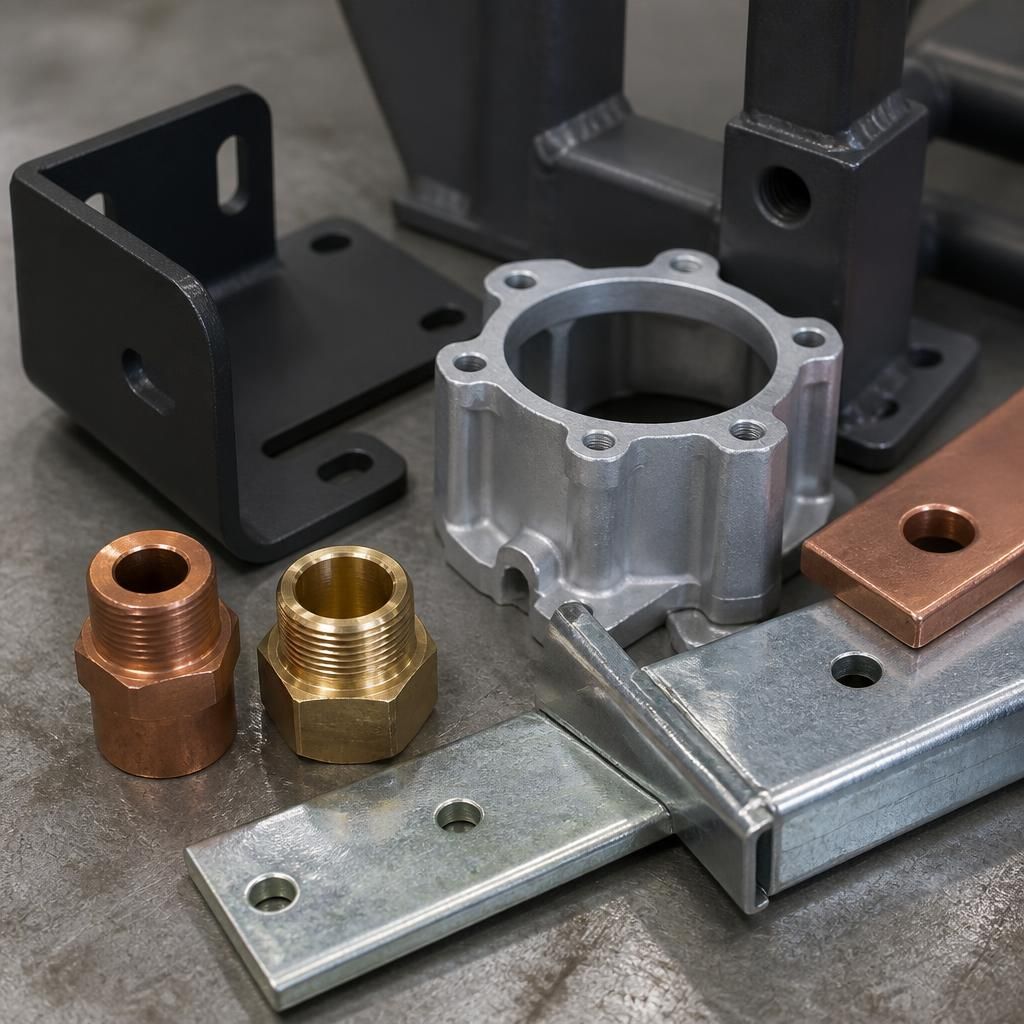
Where a component combines different metals, suitability should be assessed for each substrate rather than treating the assembly as one surface. Steel, aluminium, zinc-coated parts and copper-based fittings can require different cleaning or pre-treatment methods, and their differing thermal behaviour may affect the cured finish.
Coating parts separately before assembly can also provide more consistent coverage at joints, edges and concealed faces. If an assembled item must be coated, interfaces, fasteners and contact points should be reviewed for trapped contamination, drainage and areas that need to remain free from powder. This is particularly important where dissimilar metals are joined and moisture could remain at the interface.
Discuss Your Metal Substrate and Coating Requirements
Discuss your metal substrate and coating requirements with Powder-coatings.co.uk to assess whether epoxy powder coating is suitable for the component, finish and operating conditions. Provide the metal type, dimensions, existing finish and intended environment so the coating specification can be reviewed accurately.