

What are the benefits of using RAL colours for powder coatings in industrial applications?
RAL colours provide a standardised reference for specifying powder coating shades, making requirements clearer across drawings, orders and production batches. This supports more consistent colour selection, simplifies communication between manufacturers and coaters, and makes future replacement or additional components easier to match.
RAL colours benefit industrial powder coating by giving a recognised colour code that can be used to define, check and reproduce the intended shade. This creates a practical reference for design, procurement, quality control and future maintenance, without relying on subjective descriptions such as “dark blue” or “light grey”.
Clearer technical specifications
A RAL reference can be included in engineering drawings, schedules, purchase orders and coating instructions. This gives the coating requirement a precise identifier and reduces the risk of different parties interpreting a colour description differently. It is particularly useful where a project involves several metal components, suppliers or production stages.
Simpler procurement and product comparison
Using a recognised RAL code makes it easier for a buyer to request quotations and compare coating proposals on a like-for-like basis. The colour requirement can be separated from other specifications, including the powder type, gloss level, texture, film thickness and performance requirements. This helps prevent colour being treated as the only definition of the finished coating.
More effective quality control
RAL references provide a starting point for checking whether coated parts are visually in line with the agreed specification. In practice, colour assessment should take place under suitable lighting and against an approved physical sample where appearance is critical. Inspection should also consider gloss, texture, coverage and surface defects, as these can affect how the colour is perceived.
Useful across repeat production
For manufactured products and fabricated assemblies produced in stages, a RAL code gives future coating work a defined colour target. It can help maintain a consistent visual identity across additional parts, replacement items or separate production runs. The original powder specification and any approved sample should also be retained, because the same RAL reference can look different when applied with a different finish or process.
Suitable for coordinated assemblies
Industrial projects often combine parts made by different fabricators or supplied at different times. Specifying one RAL colour can help coordinate these components before they are assembled. It is still important to confirm whether all parts will have the same gloss, texture and coating system, since two products with the same colour reference may not appear identical if their surface finishes differ.
Supports colour coding and visual identification
RAL colours can be used as part of a visual identification scheme for equipment, enclosures, frames and other industrial items. A selected colour may help distinguish assets, areas or components, but a colour reference alone should not be assumed to satisfy a legal or industry safety requirement. Where colour has a safety, warning or identification function, the relevant project standards and statutory requirements must be checked separately.
Helps preserve design intent
RAL selection allows architects, engineers and product designers to communicate a defined appearance while the coating system is developed. It can be applied to machinery, architectural metalwork, fabricated products and other components where appearance matters alongside protection. The chosen shade should be reviewed with the intended substrate, coating finish and viewing conditions in mind.
RAL colour does not define the complete coating
A RAL number identifies a colour, not the powder coating’s chemical performance or application requirements. The correct specification may also need to cover:
- the powder chemistry, such as polyester or another suitable system;
- gloss level and surface texture;
- corrosion, chemical, weather or heat resistance;
- the metal substrate and its pre-treatment;
- required film thickness and coverage; and
- the conditions in which the coated component will be used.
Colour can also vary because of application settings, curing conditions, batch differences, substrate effects and the angle or lighting used for inspection. For that reason, critical projects should approve a sample or control panel and define how colour acceptance will be assessed. A RAL reference is most effective when it forms part of a complete powder coating specification rather than being used on its own.
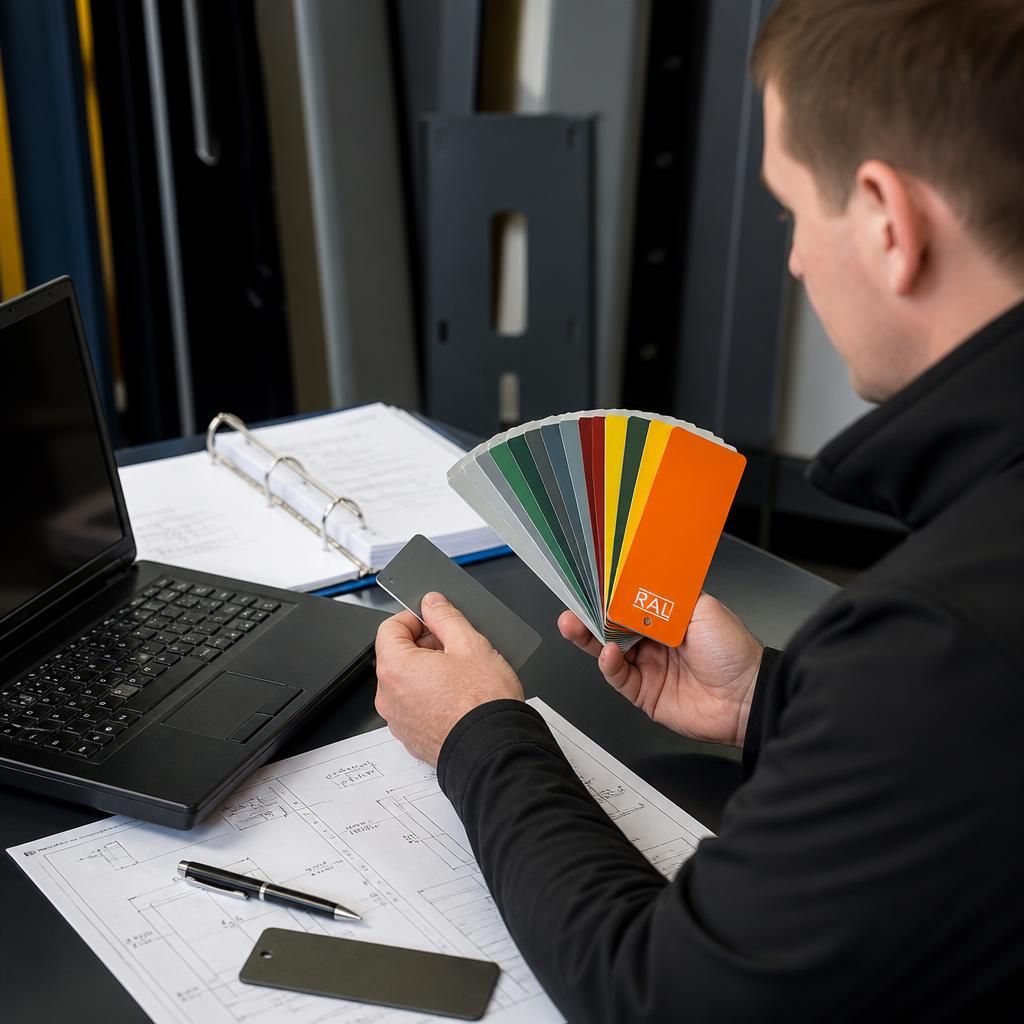
RAL colours also support controlled design changes. If a project’s approved shade is revised, the original and replacement RAL references can be recorded clearly in drawing revisions, schedules and approval records. This gives manufacturers, fabricators and coating contractors an auditable colour history, reducing the risk of an outdated shade being used on a later production run.