

What are the main differences between matt and gloss black powder coatings?
Matt black powder coatings have a low-reflective, understated appearance that helps disguise minor surface marks, while gloss black coatings create a smoother, more reflective finish with stronger visual impact. The choice is mainly aesthetic, but it can also affect how readily surface dust, handling marks and imperfections are noticed on the finished metal component.
Matt and gloss black powder coatings differ primarily in the way their cured surfaces reflect light, but the choice also affects cleaning, perceived colour, surface feel, specification and the visibility of wear. Matt black has a subdued sheen and diffuses incident light, whereas gloss black has a smoother, higher-sheen surface that reflects more light directly. Neither finish is automatically more durable: performance depends on the powder formulation, metal preparation, application quality and curing process.
Appearance and colour perception
A gloss black finish can make the colour appear deeper and more intense because reflected light gives the surface greater visual depth. This can be useful where the component is intended to have a polished, high-impact appearance or where the finish forms part of a product’s visual identity. Matt black absorbs and disperses more of the available light, producing a flatter appearance that is often selected for architectural, equipment or component designs requiring a restrained finish.
Lighting conditions can change how the two finishes are perceived. Gloss surfaces produce highlights and reflections that may vary substantially with the viewing angle. Matt surfaces tend to give a more consistent visual impression across changing angles, although they can appear slightly different under strong direct light compared with diffuse indoor lighting. For components installed alongside existing parts, a physical sample is more reliable than relying on a digital image or colour description alone.
Surface feel and practical cleaning
Gloss coatings usually present a smoother surface, so loose dust and many light contaminants can be removed relatively easily with an appropriate soft cloth and a compatible cleaning method. Matt coatings have a less reflective surface structure and, depending on the product, may be more susceptible to showing areas that have been polished by repeated rubbing or contact. Aggressive cleaning, abrasive pads and unsuitable chemicals can alter the sheen of either finish, but changes are often particularly noticeable on a uniform matt surface because a newly polished area contrasts with the surrounding coating.
This does not mean that matt black is unsuitable for industrial use. It means that the cleaning regime, handling method and likely contact points should be considered when specifying the finish. Components exposed to frequent manual handling, sliding contact or regular removal and refitting may require a finish selected for those conditions rather than on appearance alone.
Durability and resistance
Matt and gloss are finish characteristics, not standalone measures of corrosion resistance, impact resistance or weathering performance. A suitable pretreatment system, correctly specified powder and controlled curing cycle are more important to the coating’s protective performance than whether the surface is matt or gloss. The intended environment should therefore be assessed separately, including exposure to moisture, chemicals, abrasion, ultraviolet light and temperature changes.
Surface wear can present differently. Gloss black may reveal scratches, scuffs and local damage through changes in reflection, while a matt surface can develop shiny contact marks where friction has altered the texture or sheen. The coating’s resistance to those effects depends on its formulation and the component’s service conditions. A finish that looks appropriate on a static enclosure may be less appropriate for a part that is frequently handled or subjected to rubbing.
Specification and quality control
“Black” and “matt” do not describe a complete coating specification. A purchase or production specification should identify the required colour reference, gloss level or finish category, coating performance requirements, substrate and pretreatment expectations, and any relevant service conditions. Gloss is normally assessed using standardised measurement methods, but visual acceptance remains important because texture, film build, lighting and substrate condition can affect the perceived result.
Matt and gloss black components should not be assumed to be interchangeable simply because they use the same colour reference. Differences in sheen can make adjacent parts look mismatched, even where the underlying black colour is nominally the same. This is particularly relevant when components are manufactured in separate batches, supplied by different processes or assembled where the parts are visible together.
Application and finishing considerations
Both finishes require sound preparation of the metal. Oil, grease, mill scale, corrosion, weld contamination and surface irregularities can compromise adhesion or remain visible after coating. Gloss can emphasise changes in surface profile through reflected highlights, while matt can reduce some visual reflections without correcting defects in the substrate. Neither finish should be used as a substitute for suitable preparation, repair or dimensional checks.
The powder manufacturer’s application guidance should be followed for the specified product, including film thickness and cure requirements. Altering the cure or combining products without confirmation can change the final sheen and may affect coating performance. Where a component is being recoated or matched to an existing black finish, a retained reference sample or approved production sample helps establish the acceptable appearance.
Which finish is appropriate?
- Choose matt black where a restrained appearance, reduced highlight effect or a less reflective visual presentation is required, provided the expected handling and cleaning conditions are compatible with the finish.
- Choose gloss black where a smooth, high-sheen appearance, stronger colour depth and straightforward surface wiping are important, while accepting that reflections can make local surface variation more apparent.
- Review both options where the component is exposed to abrasion, repeated handling, outdoor conditions or chemical contamination, because the coating specification and substrate preparation will influence service performance more than sheen alone.
For industrial metalwork, the most reliable selection process is to define the required appearance alongside the operating environment and maintenance method, then approve a representative sample before a batch is coated. A powder coating specialist can also advise whether the proposed matt or gloss product is suitable for the substrate, component geometry and required protective performance.
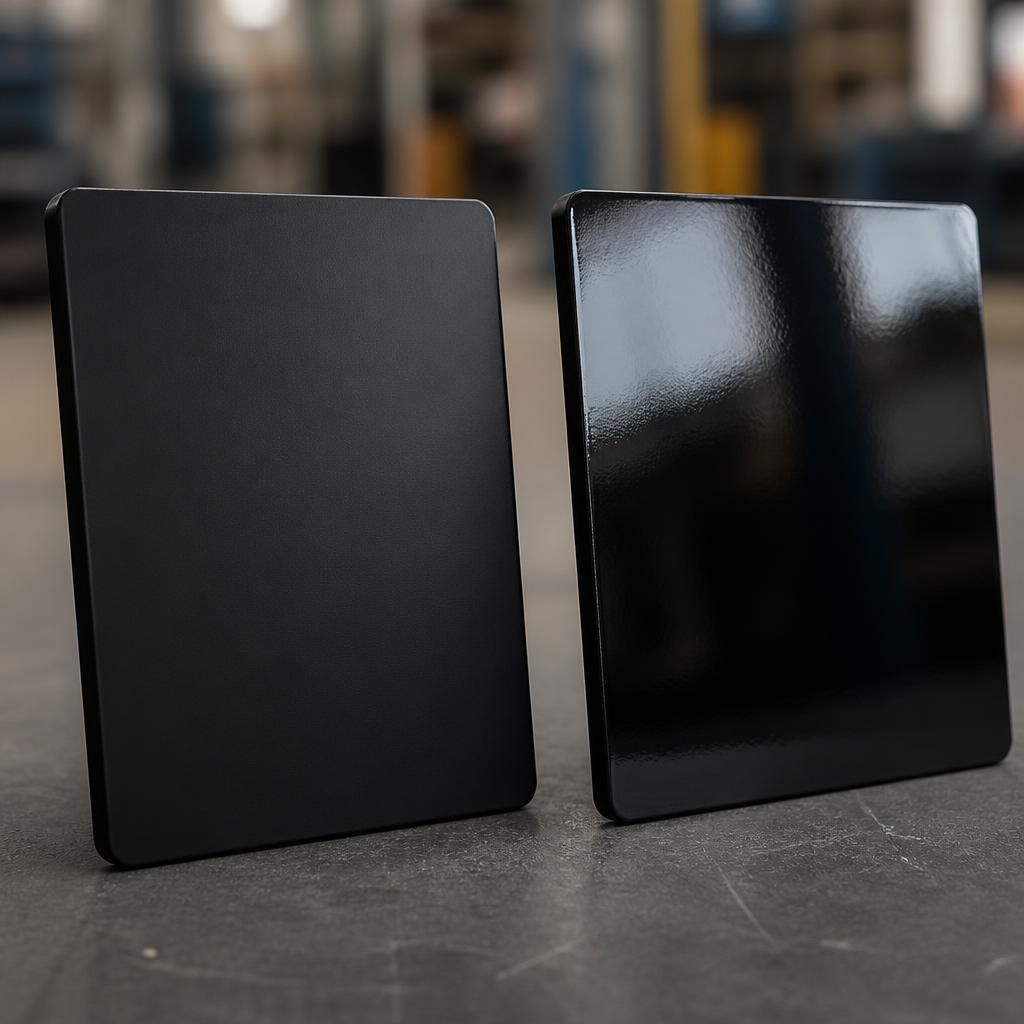
Matt and gloss describe the level of sheen, not necessarily the physical texture of the coating. A smooth matt finish can have a relatively even surface while reflecting little light, whereas a textured finish may have a visible or tactile grain in either a matt or higher-sheen appearance.
This distinction matters when comparing samples or specifying replacement parts. If the required result depends on both reflectivity and surface feel, state the desired gloss level and texture separately. Doing so helps prevent a smooth matt component being supplied when a textured surface, or a different tactile effect, is required.
Discuss your matt or gloss black coating requirements
If you are deciding between matt and gloss black for a production run, discuss the component’s substrate, service conditions and required appearance with our powder-coating specialists. We can help you identify the appropriate finish and arrange a representative sample or quotation.