

What are the main differences between thermoplastic and thermoset powder coatings?
Thermoplastic powder coatings melt and flow when heated, so they can be softened or remoulded; thermoset powders chemically cross-link during curing and cannot be melted again. This fundamental difference affects their repairability, flexibility, chemical resistance, heat performance and suitability for particular industrial components.
Thermoplastic and thermoset powder coatings differ mainly in how their resin behaves during heating, which affects application, film properties, repair and service temperature. Thermoplastics form a coating by melting and solidifying, while thermosets undergo an irreversible chemical cure. Neither category is universally superior: the suitable option depends on the substrate, operating environment, required finish and production process.
Application and curing
- Thermoplastic coatings are applied as powders that melt onto the component. Common methods include fluidised-bed coating, hot flocking and specialist spray processes. The component may need to be preheated so that the powder melts and bonds effectively. There is no separate chemical cross-linking stage.
- Thermoset coatings are commonly electrostatically sprayed onto a prepared metal surface before being heated in an oven. The heat activates the resin and curing agent, creating the final cross-linked film. Correct control of metal temperature and cure time is essential because an under-cured coating may not achieve its intended performance.
This distinction is important for large fabrications, assemblies containing heat-sensitive materials and components with inserts or tightly controlled dimensions. The coating process must suit the complete part, not just the powder specification.
Film thickness and physical behaviour
Thermoplastic systems are often selected where a relatively substantial, continuous protective layer is required. Their thickness and flexibility can help them absorb impacts, accommodate minor movement and provide a strong barrier over edges and exposed areas. They are useful where the coating may experience abrasion, handling or mechanical contact.
Thermoset coatings generally produce a thinner, hard, uniform film with good surface definition. The cross-linked structure can provide high hardness, scratch resistance and dimensional stability. However, a very rigid coating may be less tolerant of severe deformation than a flexible thermoplastic system. The correct balance between hardness and flexibility depends on the part’s shape and how it will be used.
Impact, abrasion and flexibility
Thermoplastics are frequently chosen for components that need impact resistance and flexibility. If the underlying metal flexes within the coating’s design limits, a suitable thermoplastic may remain intact rather than cracking immediately. This makes resin selection and film thickness particularly relevant for fabricated parts, guards, pipes and components subject to knocks.
Thermosets can offer excellent resistance to surface wear and scratching, especially where a hard decorative or protective finish is required. Their performance depends on the resin chemistry, preparation quality and cure. Excessive bending, forming or impact after curing can damage a thermoset film if the coating has not been selected for that level of movement.
Chemical, moisture and corrosion protection
Both coating families can protect metal from moisture and corrosive exposure when the surface is properly prepared and the film remains continuous. The difference is not simply that one category is chemically resistant and the other is not. Resistance varies with the specific polymer, coating thickness, cure, temperature and chemicals involved.
Thermoplastic films can provide an effective physical barrier and are often considered where resistance to moisture, salts, abrasion or aggressive handling is important. Thermoset powders offer a wide range of resin chemistries, allowing the formulation to be matched to indoor, outdoor, chemical or general industrial conditions. The coating supplier should assess the actual substances, concentration, contact time and operating temperature rather than relying on the generic thermoplastic or thermoset label.
Heat performance
Thermoplastic coatings soften when exposed to temperatures near their softening range. This does not mean that every thermoplastic coating fails at the same temperature, but it does mean that sustained heat and repeated heating cycles must be checked carefully.
Thermoset coatings retain their cross-linked structure after curing and are often preferred for applications requiring greater resistance to heat-related softening. They can still degrade, discolour or lose other properties if exposed beyond the limits of the particular formulation. Maximum service temperature, thermal cycling and the temperature reached by the metal component should all be considered during specification.
Repair, recoating and end-of-life handling
A damaged thermoplastic surface may be softened or reflowed with controlled heat, depending on the resin and the extent of damage. This can make local treatment or reshaping possible in circumstances where the coating is compatible with the repair method. Heating must be controlled to avoid distortion, contamination or damage to the substrate.
A thermoset coating cannot be melted back into a fluid state after it has cured. Repairs normally involve removing unsound material, preparing the exposed area and applying a compatible repair coating or treatment. If a complete recoat is required, the existing film may need suitable mechanical or chemical removal before the new system is applied.
Thermoplastic powder can be remelted during processing, but this does not automatically mean that all overspray or removed coating can be reused without sorting and quality control. Thermoset powder also cannot be remelted after cross-linking. Waste management and recyclability therefore need to be assessed for the specific powder, contamination level and production route.
Appearance and design options
Thermoset powders are widely used where a controlled decorative finish, smoothness, colour consistency, texture or gloss level is important. They are available in formulations designed for different levels of hardness, weathering and chemical exposure.
Thermoplastics can also provide functional and decorative finishes, but their appearance may be influenced more noticeably by application temperature, powder particle size, film build and cooling conditions. A thicker coating may produce a different edge profile or surface texture from a thin thermoset film. Trial panels or sample components can help confirm the visual result where appearance is critical.
How to choose between them
- Choose a thermoplastic system where flexibility, impact absorption, a substantial barrier layer or the ability to soften the coating during a controlled repair is valuable.
- Choose a thermoset system where hardness, scratch resistance, a uniform decorative finish, dimensional stability or resistance to coating softening at elevated temperatures is more important.
- Check the component’s maximum and minimum service temperatures, including repeated heating and cooling cycles.
- Identify exposure to water, salt, oils, solvents, cleaning chemicals, sunlight and abrasion, then compare the data for the individual resin rather than the coating category alone.
- Consider the component size, geometry, required film thickness, oven or preheating constraints and whether the part can tolerate the proposed process.
- Confirm the required surface preparation, adhesion method, edge coverage and repair procedure before specifying the powder.
For industrial metalwork, the most reliable comparison is therefore between complete coating systems: substrate preparation, powder chemistry, application method, film build, curing or melting conditions and expected service environment. A coating specialist can use those details to narrow the choice between a thermoplastic and thermoset finish without treating either type as a universal solution.
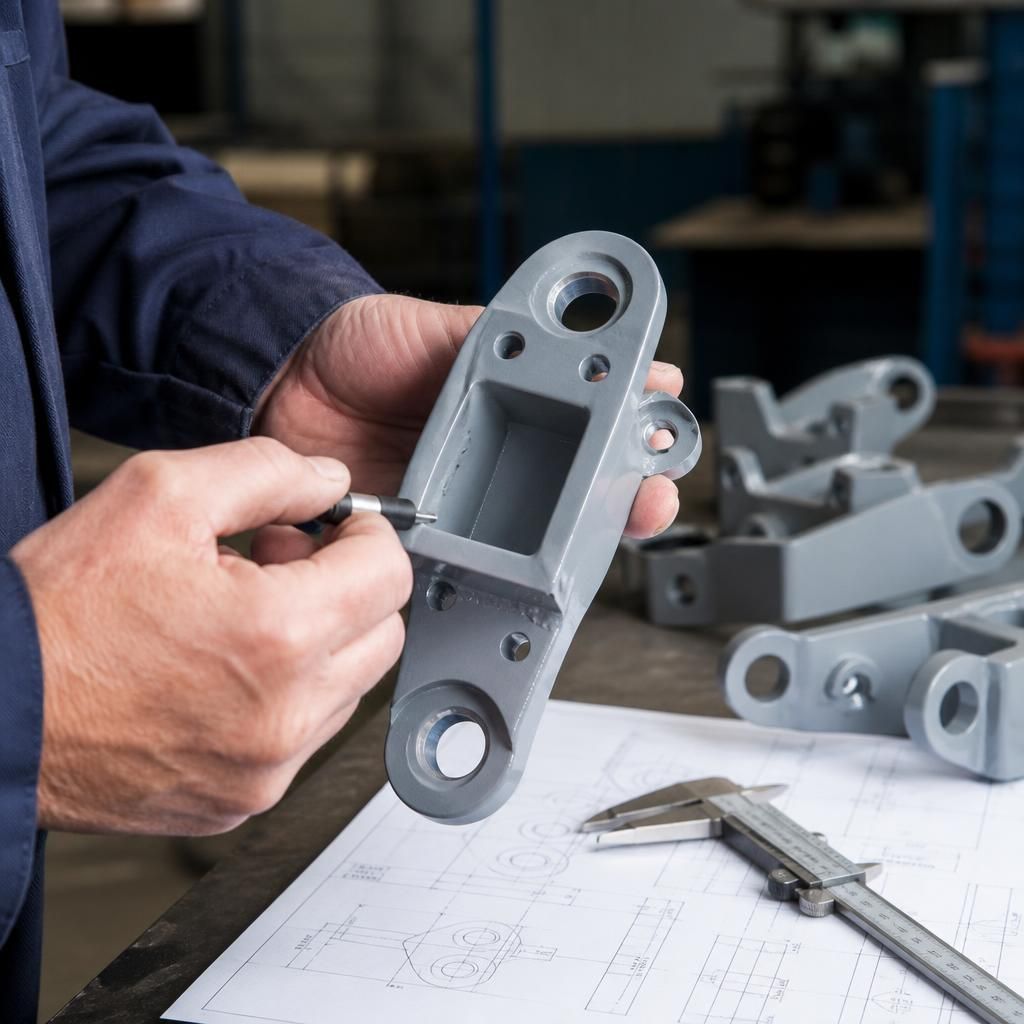
The resin category also affects how a coated component should be designed and checked against dimensional tolerances. A thermoplastic coating’s relatively substantial film build may need to be allowed for around threads, apertures, bearing seats and mating faces. A thermoset system usually offers a thinner, more uniform layer, but its final dimensions still depend on the specified film build and application control.
For parts with close-fitting interfaces, the coating specification should identify surfaces that must remain masked or uncoated. Trial components can then confirm clearance, edge coverage and assembly fit before full production. This practical check helps distinguish a technically suitable powder from a coating system that is unsuitable for the component’s tolerances.