

What are the benefits of powder coating metal components of a vehicle?
Powder coating protects a vehicle’s metal components with a hard, even finish that resists corrosion, wear and everyday environmental exposure. It can also improve appearance and provide consistent coverage across batches of parts, making it suitable for components such as brackets, frames and other fabricated metalwork.
Powder coating benefits metal vehicle components by combining a cured protective layer with controlled finish quality, strong adhesion and flexible appearance options. When the substrate is correctly prepared and the powder is applied and cured to the manufacturer’s specification, the result is a robust finish suited to many brackets, supports, housings, frames and other fabricated automotive parts.
Improved resistance to mechanical damage
A correctly specified powder coating can help components withstand handling, rubbing, abrasion and minor impacts during vehicle assembly, servicing and use. This is particularly useful for parts that may be exposed to road debris, workshop contact or repeated cleaning. Performance depends on the powder chemistry, film thickness, substrate preparation and curing conditions, so a coating should be selected for the component’s actual operating environment rather than for appearance alone.
Strong adhesion to prepared metal
Powder coating is not simply a dry layer placed over bare metal. The component normally undergoes cleaning and pre-treatment before application, helping the coating bond effectively to the surface. Proper preparation can also remove contaminants, oils and oxidation that would otherwise cause defects such as poor adhesion, lifting or premature failure. Welds, sharp edges, recessed areas and existing damage need particular attention because they can affect the final result.
Practical finish and colour flexibility
Automotive components can be specified with different colours, gloss levels and textures to suit the vehicle design, the position of the part or the requirements of a production batch. A textured finish may help disguise minor surface irregularities, while a smoother finish can be preferable where dirt removal is important. The selected finish should also take account of exposure to sunlight, heat, oils, cleaning chemicals and road contaminants, as resistance varies between powder formulations.
Easier routine cleaning
A sound, continuous finish gives dirt and residue fewer opportunities to reach the metal surface. Many powder-coated parts can therefore be cleaned using suitable non-abrasive methods without the additional maintenance associated with exposed or poorly finished metal. Aggressive solvents, abrasive tools and unsuitable pressure-washing practices can still damage a coating, particularly if the surface has already been chipped or cut.
Consistent results for repeat production
For manufacturers and fabricators, powder coating supports a controlled production process. Application equipment can distribute powder across accessible areas in a repeatable way, and curing produces the finished film as part of a defined process rather than relying on extended air drying. This makes the method suitable for repeat orders where colour, texture and coating performance need to remain consistent, provided the parts, preparation and curing requirements are kept under control.
Efficient material application
Powder is applied as a dry material, so the process does not rely on solvent evaporation to form the coating. Overspray may be recoverable in suitable systems, although recovery and reuse depend on the equipment, colour and process controls. Powder coating still requires careful energy management for curing, and it is not automatically the best option for every component or production method.
Potentially lower environmental impact than solvent-based alternatives
Because powder coatings are solvent-free, they can reduce the use of volatile organic compounds associated with many liquid coating systems. This is one reason the process is widely considered where environmental controls and material efficiency are important. The overall impact also depends on pre-treatment, oven energy, powder manufacture, application equipment and how waste is managed.
Where the benefits depend on specification
- The metal grade and condition must be suitable for pre-treatment and curing.
- Parts must tolerate the oven temperature required by the chosen powder.
- Threaded holes, bearing seats, mating faces and tight tolerances may need masking.
- Deep recesses and enclosed sections may require special consideration because electrostatic application works best on accessible surfaces.
- Edges, welds and joints should be reviewed before coating to reduce weak points.
- Any requirement for resistance to heat, chemicals, sunlight or heavy abrasion should be stated before the powder is selected.
Powder coating is therefore most beneficial when the coating system is matched to the component’s material, geometry and service conditions. Automotive businesses can provide drawings, part samples or batch details to a specialist coating provider so that preparation, masking, finish selection and curing requirements are assessed before production.
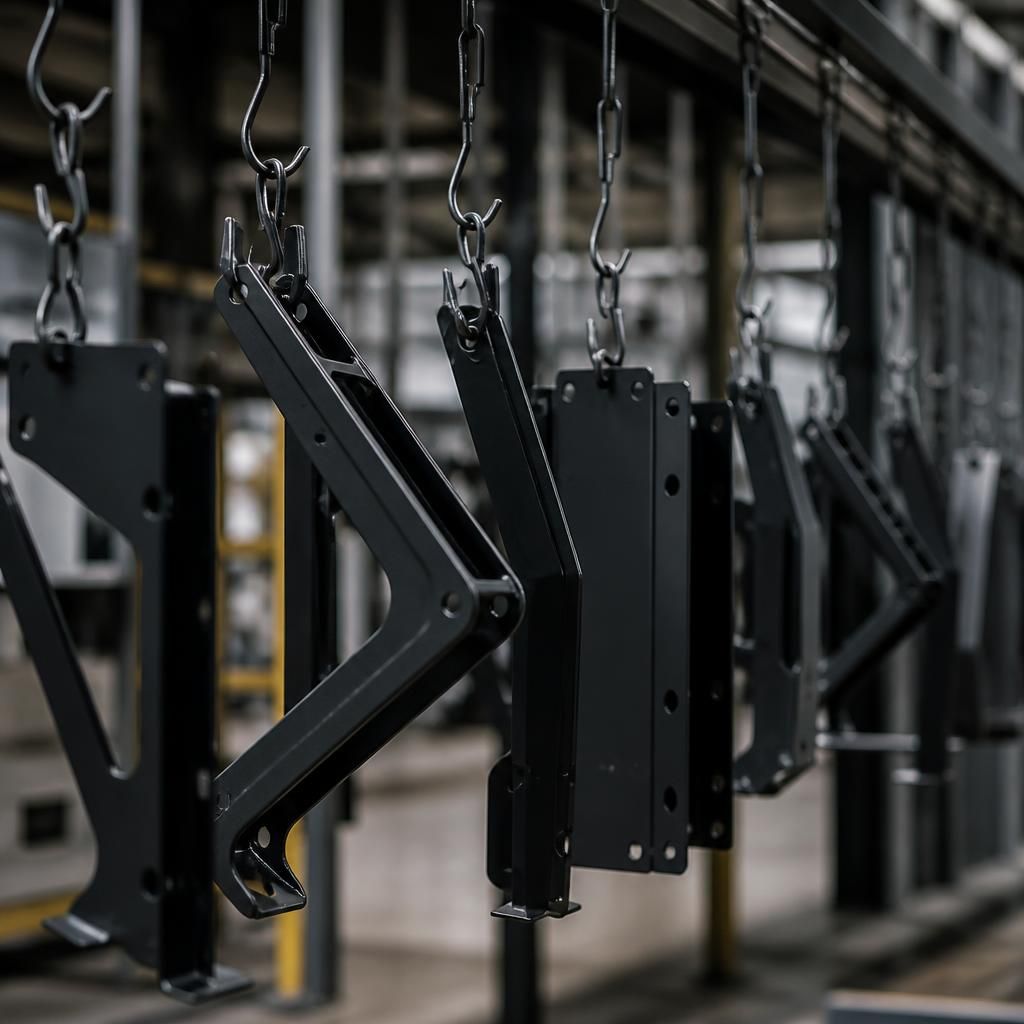
Powder coating can help preserve the intended specification of a vehicle component throughout its service life. A consistent film thickness and defined colour or texture make it easier to identify parts, maintain a uniform appearance across an assembly and check that components meet the required finish standard before fitting. This is particularly useful when several brackets, supports or fabricated pieces form part of the same vehicle system.
Discuss powder coating for your vehicle components
If you are assessing powder coating for a vehicle component, discuss the part’s intended use and specification with Powder-coatings.co.uk. This allows the proposed coating approach to be considered against the requirements of your automotive application.