

What is the recommended pre-treatment process before powder coating steel?
The recommended pre-treatment for steel powder coating is to remove oil, grease, dirt, rust and mill scale, typically through degreasing and abrasive blasting or chemical cleaning. After thorough rinsing and drying, a suitable conversion treatment is applied where specified, followed by inspection to confirm the surface is clean, dry and ready for powder application.
The recommended pre-treatment process for steel powder coating is a controlled surface-preparation system selected according to the steel condition, the intended service environment and the required corrosion protection. Its purpose is not only to make the surface visibly clean, but also to create a stable, chemically suitable key for the powder coating and remove contaminants that could cause poor adhesion, blistering or premature corrosion.
1. Assess the steel before preparation
Steel should be examined for mill scale, existing coatings, corrosion, welding residues, sharp edges, laminations, oil contamination and embedded salts. The condition of the material affects the preparation method. New mild steel, heavily corroded steel and previously painted components may require different levels of treatment. Welds should be continuous and free from spatter, while fabrication defects that could remain visible through the coating should be corrected before the part enters the preparation line.
Component design also matters. Crevices, unsealed overlaps and narrow gaps can retain preparation chemicals or moisture, leading to defects after coating. Drainage and vent holes may be needed in hollow fabrications, and parts should be presented so that liquid can drain rather than collect during rinsing and drying.
2. Select the preparation method for the exposure conditions
A basic indoor application may require a different pre-treatment system from steel used outdoors, in a humid atmosphere, near roads or in an industrial environment. The specification should therefore identify the anticipated corrosion category, the required durability and whether the part will experience abrasion, impact, chemicals or frequent handling.
For demanding applications, a multi-stage chemical system or a duplex approach using a suitable primer may be considered. This should be agreed as part of the coating specification rather than selected after production has started. The pre-treatment chemistry must be compatible with the powder system, the steel grade and any subsequent primer or topcoat.
3. Establish the correct surface profile
Where abrasive preparation is used, the objective is a consistent surface profile that gives the coating an effective mechanical key without unnecessarily removing sound material. Excessively aggressive preparation can create sharp peaks, leave abrasive residue or alter dimensions on precision components. Insufficient preparation can leave tightly adherent corrosion or scale that later breaks away beneath the coating.
Edges deserve particular attention because powder can form a thinner film over sharp corners. Removing burrs and producing a suitable edge condition helps the coating cover the component more consistently. This is especially important where the edge is exposed to handling, impact or corrosive conditions.
4. Control rinsing, drying and handling
After chemical stages, rinsing must remove residues rather than redistribute them across the component. Water quality, drainage and the condition of rinse stages all influence the result. Parts should be dried fully before coating; trapped moisture in joints, hollow sections or threaded areas can produce outgassing, pinholes or adhesion problems during curing.
Prepared steel should then be handled with clean equipment and suitable gloves. Contact with bare hands, workshop dust, silicone products, cutting fluids or dirty lifting gear can reintroduce contamination. If prepared parts cannot be coated immediately, they should be protected from condensation and airborne contamination, with the allowable holding period defined by the chosen process.
5. Use conversion treatment where the specification requires it
A conversion layer can improve the interface between steel and powder by helping inhibit corrosion at the metal-coating boundary. The treatment must be applied evenly and controlled within the chemical supplier’s stated operating range. Excessive carry-over, poor rinsing or an incompletely dried layer can be as damaging as omitting the treatment altogether.
For higher-performance systems, the specification may call for a pre-treatment designed specifically for ferrous substrates, followed by a compatible protective primer. The complete system should be assessed as one coating scheme, since the preparation, primer and powder layer work together.
6. Inspect before powder application
Pre-treatment should be verified before the component is released for coating. Practical checks include:
- the surface is free from visible oil, dust, scale, corrosion residue and preparation debris;
- there is no standing water or moisture in joints, recesses or hollow sections;
- edges, welds and difficult-to-reach areas have received the required preparation;
- the surface condition and profile meet the project specification;
- the conversion layer, where specified, is uniform and free from obvious residue; and
- the prepared part has not been contaminated during storage or movement.
For work requiring documented quality control, inspection records can include the steel condition, preparation method, chemical stages, process checks and any corrective action. Surface cleanliness and preparation requirements should be agreed before production, using the relevant project specification or recognised surface-preparation guidance.
Common causes of failure include coating over residual oil, inadequate preparation around welds, flash corrosion after preparation, poor drainage of hollow sections, contaminated handling equipment and using a treatment intended for a different substrate. These issues are usually easier and less costly to correct before powder application than after curing.
For a B2B coating project, the most useful information to provide at quotation or technical review stage is the steel type, component dimensions, previous finish, intended environment, required appearance and any corrosion-performance specification. A coating specialist can then confirm whether the proposed preparation is suitable, identify areas of the fabrication that need adjustment and define the inspection requirements before the steel is powder coated.
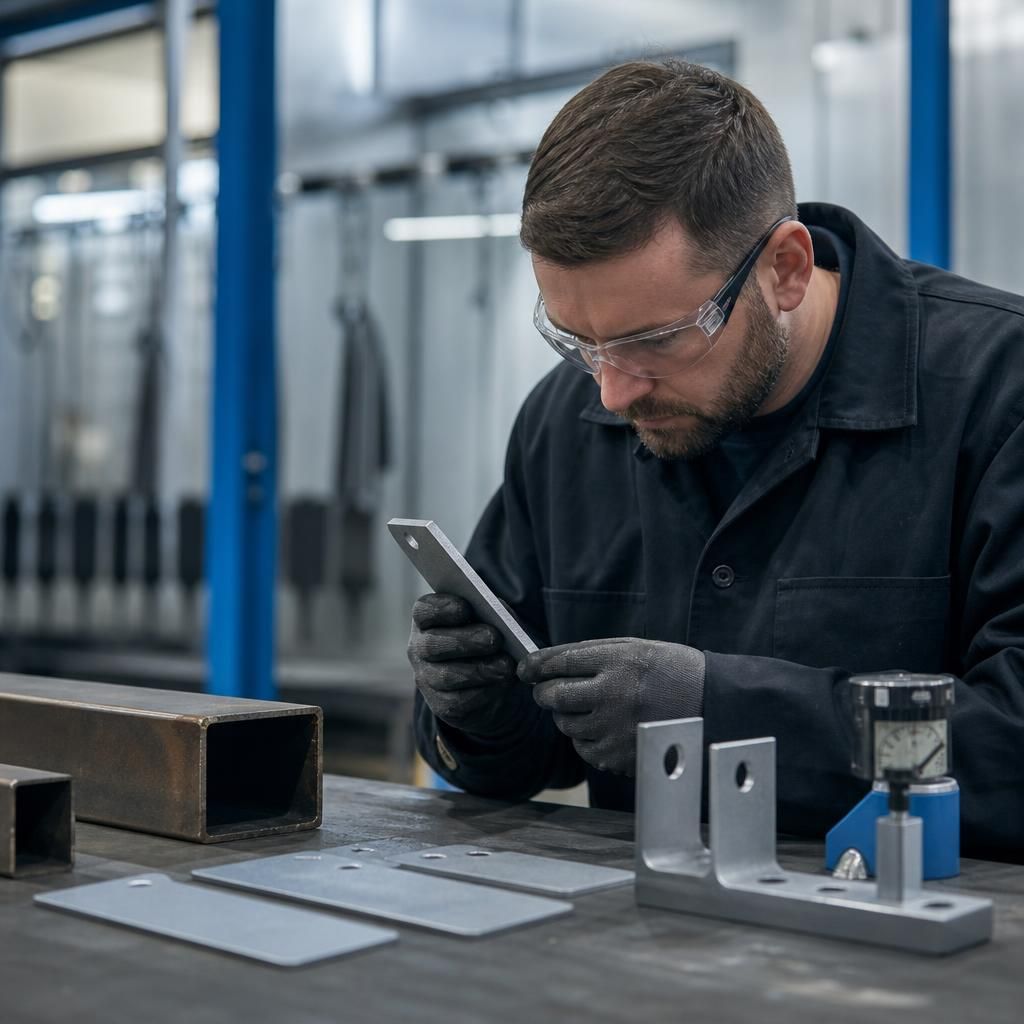
For critical or demanding steel applications, the pre-treatment process should be validated on a representative test piece before batch production begins. This allows the proposed preparation and coating system to be checked for adhesion, appearance and compatibility with the fabricated component, including welds, edges and recessed areas. Any acceptance criteria should be agreed in the coating specification so that the same process can be applied consistently throughout production.