

What is the range of finishes available for anti-rust powder coating?
Anti-rust powder coating is available in a broad range of colours, gloss levels and surface textures, from smooth matt and satin finishes to higher-gloss and textured options. The appropriate finish depends on the required appearance, cleaning needs, surface use and level of protection required for the metal component.
Anti-rust powder coating finishes range from practical protective systems to decorative topcoats, with the final specification determined by the metal substrate, exposure conditions and required appearance. The visible finish is only one part of the system: corrosion resistance also depends on preparation, primer selection, film build, edge coverage and the quality of curing.
Common finish systems include:
- Single-layer protective powder coating: Used where the component has a suitable substrate and the expected environment does not require a more complex coating build-up. It can provide an economical combination of protection and appearance when correctly applied.
- Primer and topcoat systems: A corrosion-resistant primer is applied beneath a separate powder topcoat. This approach adds another protective barrier and allows the topcoat to provide the specified colour and appearance. It is often considered for components exposed to moisture, pollutants or demanding industrial conditions.
- Zinc-rich or zinc-bearing primer systems: These are designed to provide additional corrosion protection beneath a compatible powder topcoat. The exact suitability depends on the substrate, preparation method and the coating manufacturer’s technical specification.
- Epoxy-based finishes: Epoxy powders can offer strong adhesion and chemical resistance, making them useful for internal components and parts that need protection from oils, solvents or other contaminants. They are not generally the first choice for continuously exposed external surfaces because ultraviolet exposure can affect their appearance over time.
- Polyester-based finishes: Polyester powders are commonly selected for external metalwork because they provide better resistance to weathering and ultraviolet exposure than standard epoxy systems. They are available in a wide range of decorative and protective specifications.
- Hybrid epoxy-polyester finishes: Hybrids combine properties from both resin types and are frequently used for interior applications, including equipment, fittings and fabricated components that require a durable decorative coating.
Within these systems, the surface effect can be specified in more detail. Smooth coatings produce a clean, even appearance and are generally straightforward to wipe down. Fine-textured and heavily textured finishes can help disguise minor visual irregularities in the metal while creating a more tactile surface. Wrinkle, hammer-effect and other special-effect powders may be selected where a particular visual character is required, provided the finish remains compatible with the component’s use and cleaning regime.
Metallic and pearlescent finishes can create a reflective or subtly varied appearance, while clear powder coatings may be used over a suitable base where the underlying colour or surface effect is intended to remain visible. Clear coatings still require careful preparation: they do not conceal contamination, uneven preparation or defects in the base layer.
Colour choice should be considered alongside the resin type and exposure conditions. A colour selected for an indoor component may not be suitable for an external application unless the powder has the appropriate weathering specification. Dark colours, bright colours, metallic effects and textured finishes can also differ in how they show handling marks, dirt and local variations in film thickness.
For parts exposed to abrasion, impact or repeated handling, the coating specification should address more than appearance. A tougher formulation, suitable primer, increased system build or specialist protective coating may be more appropriate than a purely decorative powder. Components that come into contact with chemicals, oils, cleaning products or salt-laden moisture need a finish tested or specified for those conditions.
The metal itself also affects the available options. Mild steel, galvanised steel, aluminium and other alloys may need different preparation methods to achieve reliable adhesion and corrosion protection. Welds, sharp edges, recesses and joints require particular attention because these areas are more vulnerable to incomplete coverage or early corrosion. On larger or fabricated items, the design should allow the coating to reach all required surfaces and should avoid features that trap water or interfere with curing.
When comparing finishes, a useful specification should record the substrate, preparation standard, powder chemistry, primer requirement, colour reference, surface effect, expected exposure and curing requirements. It should also identify whether the component is for internal or external use and whether resistance to chemicals, abrasion, impact or frequent cleaning is important. A Midlands powder coating specialist can use these details to help identify a finish that balances the required appearance with the level of anti-rust protection needed for the application.
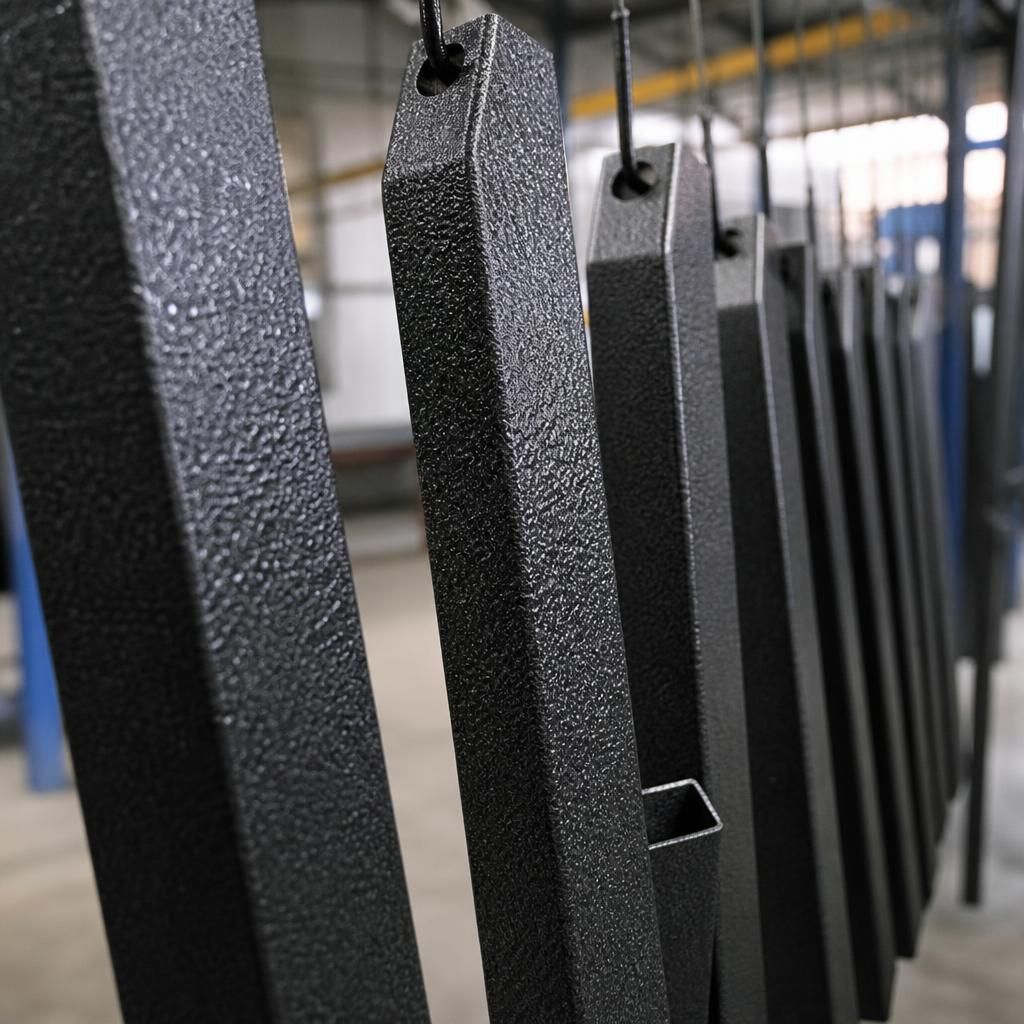
Textured anti-rust powder coating finishes are selected primarily for their tactile and visual effect, rather than because texture itself provides additional corrosion resistance. Fine-textured, wrinkle and hammer-effect surfaces can make handling marks and minor visual variations less noticeable, while also giving fabricated components a more distinctive appearance.
Texture must be assessed against the component’s cleaning and operating requirements. A pronounced surface profile can retain more dirt than a smooth finish and may be less suitable where parts are wiped frequently or exposed to contaminants. The chosen powder system must still provide consistent coverage across edges, recesses and joints, since the corrosion protection comes from the complete coating specification and its application—not from the surface effect alone.