

What are the benefits of powder coating over traditional liquid paint for metal components?
Powder coating applies a dry, electrostatically charged powder to metal before curing it into a continuous protective finish. Compared with traditional liquid paint, it typically provides stronger resistance to wear, chipping and corrosion, with more consistent coverage and less solvent-related waste.
Powder coating generally offers metal component manufacturers a more robust, consistent and resource-efficient finish than traditional liquid paint. The main differences arise from how the coating is applied and cured: dry powder is electrostatically attracted to the earthed metal surface and then heated until it flows into a continuous film, whereas liquid paint relies on a wet coating that must dry or cure as its carrier evaporates.
Key benefits over liquid paint include:
- Improved finish consistency: Powder is applied as a controlled dry film, reducing common liquid-paint problems such as runs, sags and uneven coverage caused by excess wet paint. Correct preparation, application settings and curing remain essential, particularly on components with recesses, sharp edges or complex geometry.
- Strong adhesion: Properly prepared metal provides a suitable key for the powder film. Cleaning and surface preparation remove contaminants that could otherwise cause blistering, flaking or premature coating failure. This makes preparation a central part of the result rather than a separate cosmetic step.
- Efficient material use: Powder does not require a liquid solvent carrier. Overspray can often be collected within a suitable controlled system, subject to the powder type and contamination controls. This can make the process more efficient than liquid painting, where unused wet paint and solvent-based cleaning materials may need to be managed as waste.
- Uniform appearance: Powder coating can produce an even colour and texture across repeat batches when the same preparation, powder specification and curing conditions are maintained. This is valuable for manufactured components that must match one another during assembly or across ongoing production runs.
- Practical handling after curing: Once the coating has been correctly cured and cooled, components do not have the same wet-paint drying stage. That can simplify movement, packing and assembly, provided the finish has reached the required cure and the parts are handled in a way that avoids marking.
- Broad decorative choice: Powder systems are available in different colours, gloss levels and textures. This allows a metal component to meet both functional and visual requirements without relying on a separate decorative topcoat in every application.
Powder coating can also be more suitable for production work where repeatability matters. A defined specification can cover the substrate, preparation method, powder type, target film thickness, colour, texture and curing requirements. Recording these details helps the coater identify deviations and maintain a consistent result between batches. Liquid paint can also be tightly controlled, but its wet-film behaviour, drying conditions and solvent management add different variables to the process.
The finish is not automatically the right choice for every component. Powder coating normally requires the metal part to tolerate the curing temperature, so heat-sensitive materials or assemblies containing vulnerable components may need another approach. Design features that create areas of poor powder access can also affect coverage. In addition, a powder-coated surface may be harder to repair invisibly than a liquid-painted surface, particularly where an exact colour or texture match is required. These factors should be assessed before specifying the system.
For industrial metalwork, the most appropriate comparison is therefore not simply powder versus liquid paint, but which coating system matches the component’s substrate, operating conditions, appearance, production volume and handling requirements. A coating specialist can use those details to recommend suitable preparation, powder chemistry, finish and curing controls rather than treating every metal component in the same way.
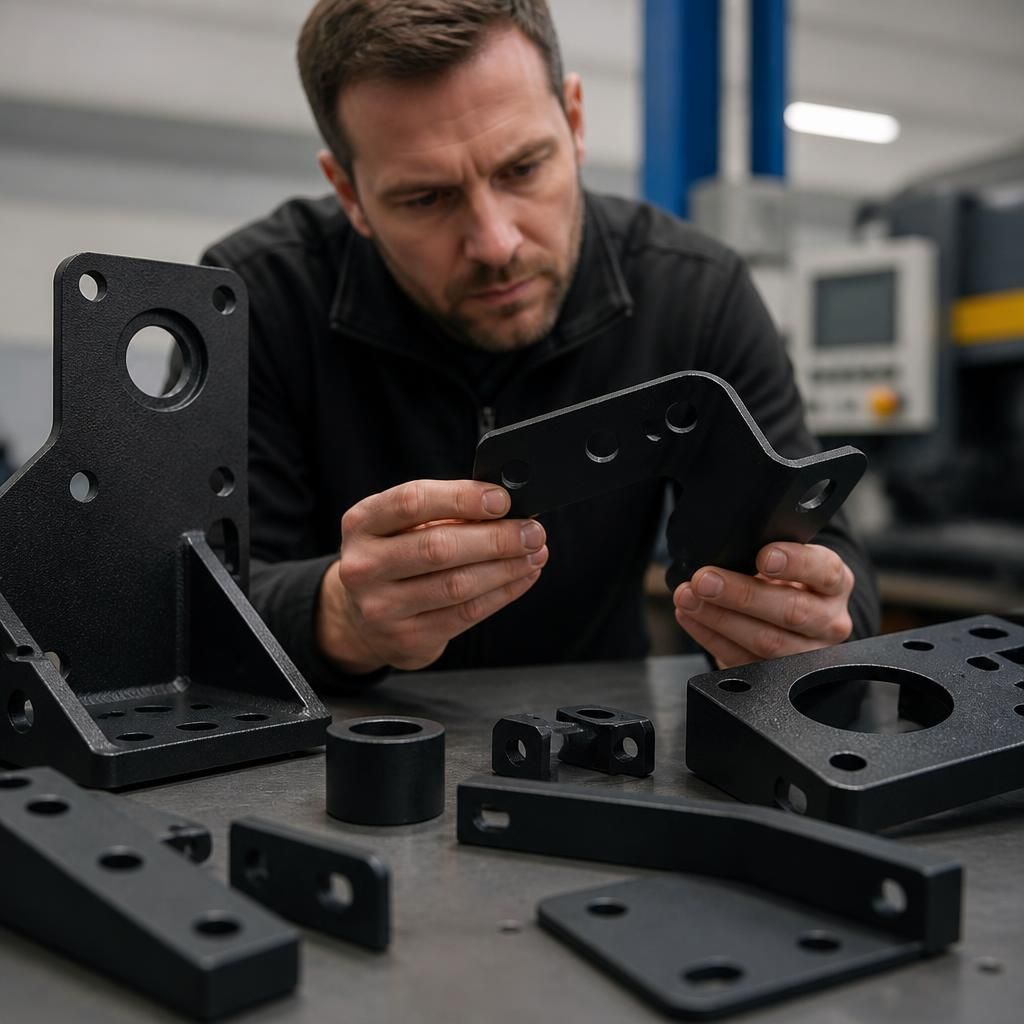
A practical advantage of powder coating is the predictability of the cured film on components that must fit accurately during assembly. Because the powder melts and cures into its final coating rather than drying as a solvent-based liquid film, the finished layer can be specified and checked before parts are assembled. This helps reduce the risk of excess coating affecting mating surfaces, clearances or moving interfaces.
That benefit depends on suitable masking and control of the target film thickness. Threaded holes, bearing seats, electrical contact points and other functional areas may need to remain uncoated, while exposed surfaces receive the required protection and appearance. For repeat production, documenting these requirements gives the coater a clear basis for preparing and inspecting each batch, making powder coating a practical choice where finish quality and component fit must be considered together.
Discuss powder coating for your metal components
If you are comparing powder coating with liquid paint for a specific metal component, discuss the substrate, operating conditions, dimensions and required finish with a coating specialist. This information helps establish whether powder coating is suitable and identify the appropriate preparation and coating specification.