

How can the choice of a nylon or speciality coating impact the overall lifecycle cost of metal components?
Choosing a nylon or speciality coating affects lifecycle cost through the balance between initial application, preparation and curing requirements and the protection needed during service. A coating matched to the component’s exposure, wear, chemical contact and operating conditions can reduce premature refurbishment, downtime and replacement, while an unsuitable specification may add maintenance and rework costs.
The choice of nylon or another speciality coating can change the total cost of a metal component by affecting its service life, maintenance burden, energy use in operation, repairability and replacement requirements. The lowest purchase price is not necessarily the lowest lifecycle cost: a coating with a higher specification or more involved application process may be economically preferable if it limits wear, corrosion, impact damage or contamination during service.
Initial cost is only one part of the assessment. A whole-life comparison should consider the following cost categories:
- Substrate preparation, including cleaning, degreasing, blasting, removal of mill scale or existing finishes, and any masking required.
- Application and curing, including the coating system, number of coats, handling, inspection and any additional processing needed for complex components.
- Component design and preparation, such as arranging drainage holes, masking threads, protecting mating faces or allowing for the final coating thickness.
- Production disruption, including transport, handling, assembly delays and the consequences of taking a component out of service.
- In-service maintenance, such as cleaning, inspection, touch-up, recoating and the replacement of damaged parts.
- End-of-life costs, including removal, refurbishment, recycling or disposal of the coated component.
Nylon can reduce costs where mechanical contact is the main source of deterioration. Nylon coatings are often considered for components exposed to abrasion, impact, sliding contact or repeated handling. Their toughness and relatively low-friction surface can help protect the underlying metal and reduce damage to contacting parts. In practical terms, this may lower the frequency of replacement or refurbishment where an uncoated metal surface would become scored, worn or contaminated.
That benefit depends on the grade, coating thickness, substrate condition and operating environment. A nylon coating should not be selected solely because it is hard-wearing. Load, temperature, movement, edge geometry, exposure to chemicals and the presence of sharp particles all influence whether it remains suitable. If the coating is exposed beyond its design conditions, early failure can create additional stripping, preparation and reapplication costs.
Speciality coatings can offer better value when the failure mechanism is more specific. The term speciality coating covers several different coating approaches rather than one universal material. A protective system may be selected for chemical contact, electrical insulation, corrosion resistance, release properties, heat exposure, food or hygiene requirements, or a combination of these factors. The economic value comes from addressing the particular cause of component deterioration without adding unnecessary processing or specification.
For example, a coating designed to resist a particular chemical may prevent swelling, staining or loss of adhesion that would otherwise require frequent intervention. A coating chosen for release or low-friction performance may reduce product build-up and cleaning effort. A system intended for corrosion protection may preserve dimensional accuracy and prevent the secondary damage caused by rust at joints, fasteners or moving interfaces. These outcomes are application-dependent and should be confirmed against the actual service conditions rather than assumed from the coating name.
Application quality has a direct effect on lifecycle economics. Inadequate preparation, contamination, poor masking, unsuitable film thickness or incomplete curing can cause defects even when the coating material itself is appropriate. Defects may include poor adhesion, pinholes, blistering, cracking, uneven coverage or interference with assembly tolerances. Correcting such issues after installation is generally more disruptive than identifying them through inspection before the component enters service.
Component geometry is also important. Recesses, sharp edges, internal faces, holes and threaded areas can create coating-access or thickness-control challenges. These features may require a defined masking plan, additional inspection or a revised design. Discussing them before production can avoid unnecessary stripping and rework, particularly for batch-manufactured parts where the same error could affect multiple components.
Maintenance costs should be assessed by failure mode, not just inspection frequency. A coated component may still require routine inspection, but the relevant checks will depend on how it is used. Inspectors may look for abrasion, impact marks, lifting at edges, chemical attack, changes in friction, exposed substrate or coating damage around fasteners and joints. A small local defect may be repairable, whereas widespread loss of adhesion or substrate corrosion may require complete removal and recoating.
Repairability therefore forms part of the original specification. It is useful to establish whether the coating can be locally prepared and repaired, whether the component must be removed for treatment, and how a repair will be inspected. The answer may influence the preferred coating system, access provisions and whether replaceable wear parts are more economical than coating a permanent assembly.
A practical lifecycle comparison should use the same operating assumptions for every option. Consider:
- What is causing the existing or anticipated damage?
- Which surfaces require protection, and which must remain uncoated for assembly, electrical contact or dimensional reasons?
- What temperatures, loads, movement, chemicals, moisture and cleaning methods will the component experience?
- How much downtime is associated with inspection, removal, recoating or replacement?
- Can the component be collected, processed and returned without affecting the wider production schedule?
- What inspection and acceptance criteria will confirm that the applied system is suitable?
The most reliable decision compares the coating cost with the cost of the failure it is intended to prevent. That comparison should include lost production, labour, damaged adjacent parts and emergency replacement, not only the price of the metal component. A nylon or speciality coating is most likely to reduce lifecycle cost when its properties, preparation method and application controls are aligned with the component’s actual duty.
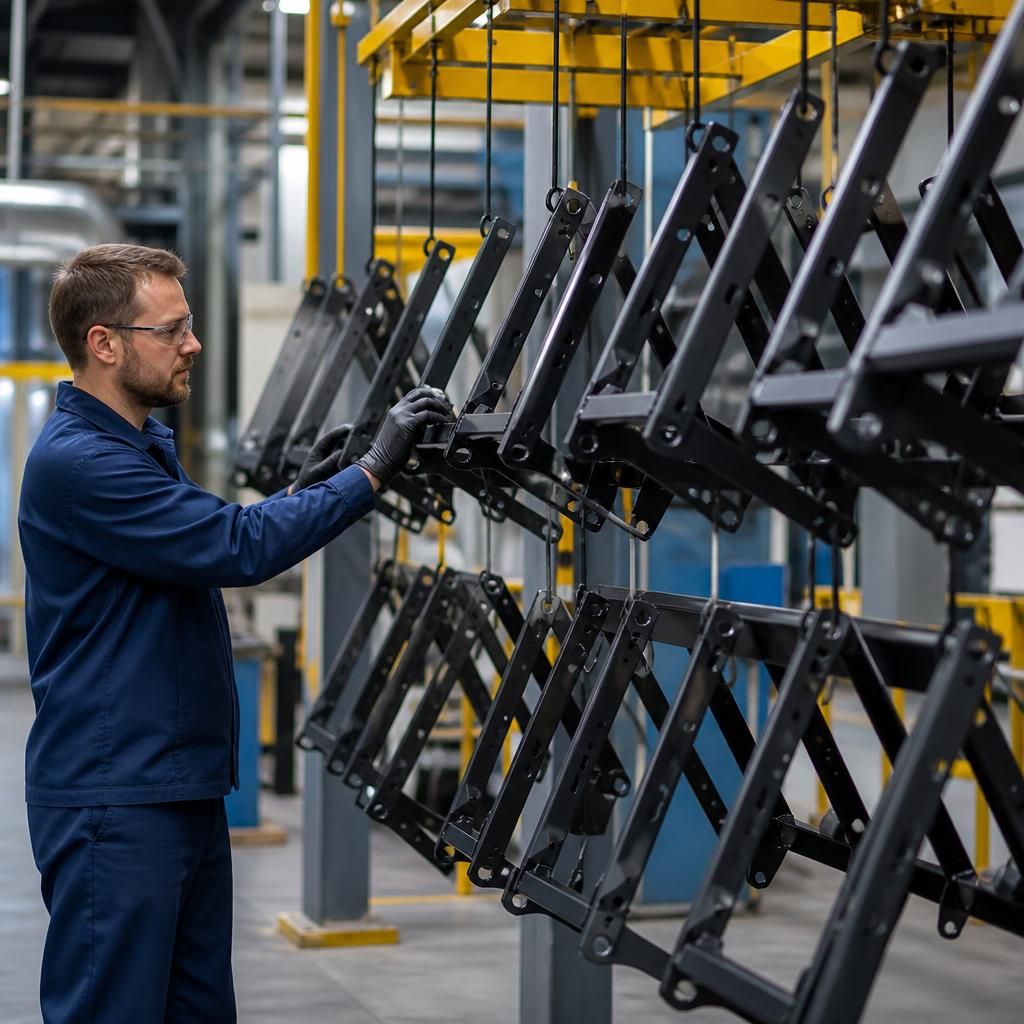
Batch size and repeatability can materially affect the lifecycle cost of coated components. For one-off or low-volume parts, the cost of masking, handling, preparation and inspection may represent a larger share of the total. For repeat production, those process requirements can be defined consistently, making it easier to control coating thickness, preserve critical faces and identify defects before parts reach assembly.
This is why the coating specification should be considered alongside the production pattern, not as a separate purchasing decision. A repeatable process can reduce variation between batches and make future refurbishment or replacement easier to manage, provided the same substrate condition, masking requirements and acceptance criteria are maintained. The resulting cost benefit comes from more predictable processing and fewer avoidable discrepancies, rather than simply from selecting the least expensive coating material.
Discuss Your Component’s Lifecycle Cost
Discuss your component’s lifecycle cost with the powder-coating team, providing details of its operating conditions, failure risks and production requirements. This allows the coating specification and processing approach to be considered against the costs of maintenance, repair and replacement.