

What factors should be considered when evaluating the cost-effectiveness of high temp and heat resistant powder coatings for your specific applications?
Evaluate cost-effectiveness by comparing the complete lifecycle cost—not just the coating price—against the required operating temperature, exposure conditions, service life, preparation, application and curing requirements. A suitable high temp powder coating should provide the necessary heat resistance and durability without imposing avoidable preparation, processing or replacement costs for the specific metal component and production volume.
High temp and heat resistant powder coatings are cost-effective when their service performance, processing requirements and expected replacement interval justify the complete applied cost. The assessment should therefore consider more than the price of the powder: evaluate the operating temperature, thermal cycling, substrate, preparation, coating specification, part design, batch size, curing requirements and likely maintenance conditions together.
Define the actual thermal duty
Start by recording the temperature the coated component will experience in service. This should include the normal operating temperature, short-term peaks, the duration of each exposure and how frequently heating and cooling occur. A component exposed briefly to a high temperature may have different requirements from one held continuously at a lower temperature.
Thermal cycling is particularly important. Repeated expansion and contraction can place stress on the coating and its bond with the metal. If the part moves between ambient conditions and elevated temperatures, a coating with a suitable temperature rating may be more cost-effective than a lower-cost system that requires frequent recoating. Consider whether heat is applied evenly or whether local hot spots occur around burners, welds, joints, fasteners or enclosed sections.
Match the coating system to the exposure
Temperature resistance is only one part of the specification. Assess the presence of moisture, condensation, salt, chemicals, oils, fuels, cleaning agents, abrasion and impact. A coating that performs well at elevated temperature may not provide the right balance of chemical or mechanical resistance for the surrounding environment.
Check the manufacturer’s technical data for the proposed system, including its continuous and intermittent temperature limits, curing conditions, substrate recommendations and resistance to the relevant exposures. These limits should be treated as application-specific guidance rather than a single universal rating. Colour, gloss and appearance can also change with prolonged heat, so visual requirements should be included where the component is exposed or customer-facing.
Account for the metal substrate and its condition
Steel, stainless steel, galvanised steel and aluminium can require different preparation and coating approaches. The substrate affects adhesion, corrosion protection, thermal movement and the risk of defects during heating. Existing mill scale, rust, oil, weld residue, zinc by-products or contamination can increase preparation costs and reduce the reliability of the finished coating if they are not addressed.
Assess whether the component needs blasting, degreasing, masking, edge treatment or another preparation step. For a heavily contaminated or previously coated item, preparation can represent a substantial part of the applied cost. It may still be economically sensible if it improves coating life, but the work should be included in the comparison rather than treated as an incidental cost.
Compare the complete processing cost
The quotation or internal estimate should separate the main cost drivers:
- coating material and the quantity required;
- surface preparation and cleaning;
- masking of threads, contact faces, apertures and other areas that must remain uncoated;
- racking, handling and part positioning;
- application, inspection and any required rework;
- curing or heat-treatment requirements;
- collection, delivery and other logistics; and
- future inspection, repair or recoating.
A low material price does not necessarily produce the lowest finished cost. A system requiring unusual preparation, restricted loading, additional masking or a more demanding cure may be less economical than a higher-priced coating that fits the production process more efficiently.
Examine curing and production compatibility
High temperature performance depends on the coating being correctly applied and cured. Confirm the required metal temperature, oven profile, dwell time and method for verifying that the component—not merely the oven air—has reached the necessary condition. Oversized, thick or thermally dense parts can heat differently from small components, while thin sections may reach temperature quickly.
Consider whether the available oven can accommodate the part and whether the curing cycle is compatible with other materials, seals, bearings, electronics or pre-installed components. If parts must be dismantled to withstand the cure, include that labour and the cost of reassembly. Parts that cannot be heated uniformly may require a different specification or process, and this should be resolved before comparing prices.
Consider geometry, finish thickness and coverage
Complex shapes, deep recesses, narrow channels and internal faces can increase masking, racking and application time. They may also create areas where powder coverage or curing is more difficult to control. Large parts and batch sizes influence handling and oven utilisation, while very small or irregular batches may carry higher preparation and setup costs per component.
Specify the required film thickness rather than assuming that a thicker coating is automatically more durable. Excessive thickness can affect fit, heat transfer, edge coverage and curing behaviour. Conversely, insufficient coverage may reduce protection on edges and exposed surfaces. The economical specification is the one that meets the functional requirement consistently without adding unnecessary material or processing.
Include the cost of failure and maintenance
Calculate what happens if the coating fails earlier than expected. Relevant consequences may include removing the component, interrupting production, dismantling associated equipment, preparing the surface again, replacing damaged parts or managing corrosion and contamination. Where access is difficult or downtime is disruptive, service life and repairability may matter more than the initial coating charge.
Establish how the finished parts will be inspected in service. Look for discolouration, blistering, cracking, flaking, loss of adhesion, corrosion at damaged areas and deterioration around joints or edges. A practical maintenance plan can identify local damage before it develops into a larger coating or substrate problem. The expected inspection and recoating method should form part of the original cost comparison.
Use lifecycle costing rather than price alone
A useful comparison calculates the applied cost over the expected service period. Include the initial coating work, preparation, curing, transport, planned inspections, likely repairs and eventual recoating or replacement. Then compare each suitable system against the operational consequences of failure.
For a fair comparison, use the same assumptions for part quantity, surface area, preparation standard, finish requirements, operating conditions and inspection frequency. Ask the coating specialist to identify which requirements are driving the cost and which are optional. Technical suitability should be established first; only systems capable of meeting the application’s thermal and environmental demands should be compared on price.
For industrial components, a sound evaluation combines the coating supplier’s technical information with details of the actual part and operating cycle. Providing drawings, substrate information, temperature records, exposure conditions, batch quantities and required finish allows the proposed process to be assessed against both performance and total cost. A Midlands powder-coating specialist can then advise on the practical implications of preparation, handling and curing for the specific component rather than pricing the coating in isolation.
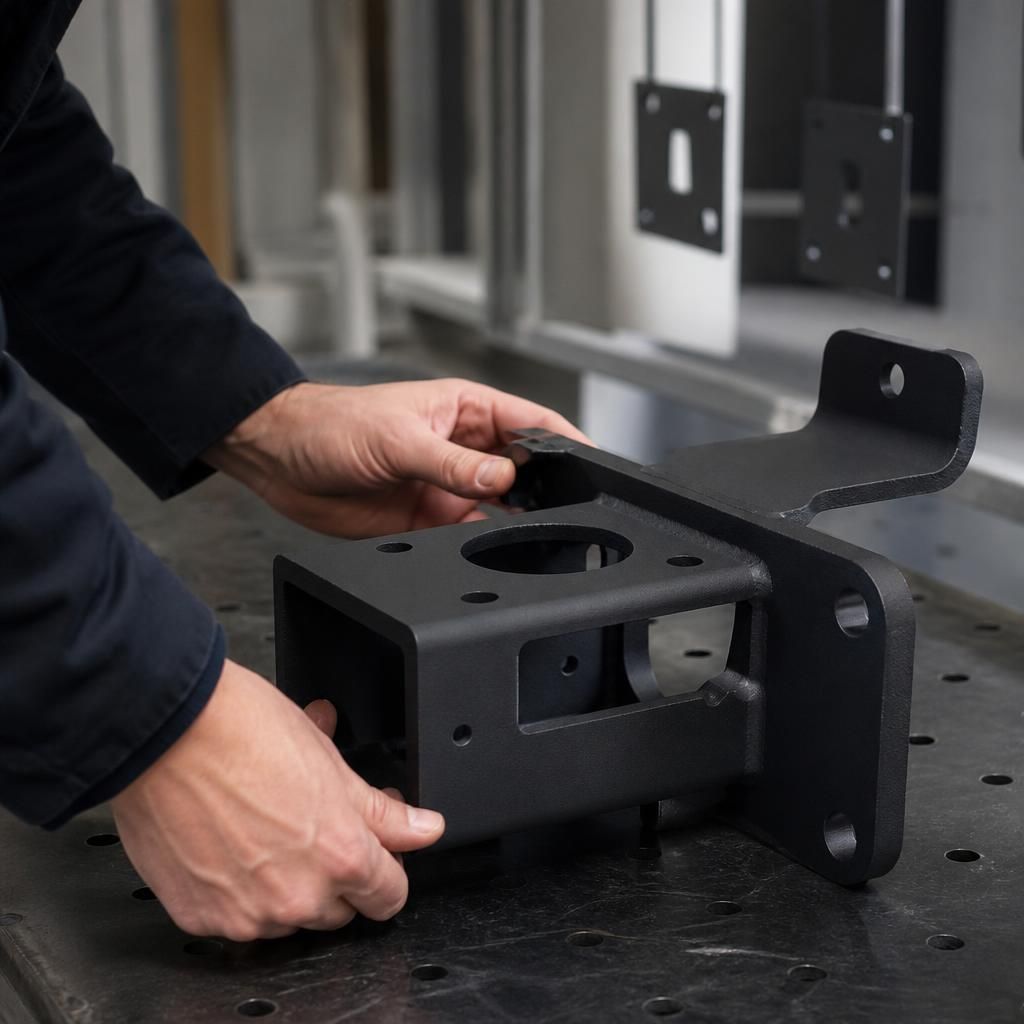
Validate the specification before committing to full production. A representative trial or first-off assessment can reveal whether the proposed coating, finish thickness, masking plan and curing cycle work together on the actual component. Check the cured finish for coverage, adhesion, appearance and dimensional fit, particularly around edges, joints and close-tolerance areas. Where practical, assess the part after representative heating and cooling rather than judging it immediately after application. The trial has a cost, but it can identify unsuitable preparation or processing before those issues affect a complete batch. Record the agreed coating specification and inspection criteria so that future batches can be compared consistently.
Discuss Your High Temp Powder Coating Application
Discuss your high temperature powder coating application with a specialist to review the component, operating conditions and practical cost considerations. Share the relevant technical details to establish whether the proposed coating system is suitable before proceeding.