

What environmental practices does your powder coating facility employ to minimise waste and emissions?
Our facility uses responsible powder-coating processes, efficient energy use and careful management of coating materials to minimise avoidable waste and emissions. These practices support a more sustainable approach to finishing metal components for industrial applications.
Environmental practice in powder coating means controlling material use, airborne emissions, energy demand and waste at each stage of the finish. At our facility, this is addressed through the way powder is applied, cured, recovered, stored and separated from other waste streams, with the aim of avoiding unnecessary consumption and preventing residues from being mishandled.
Powder application and overspray control
Powder coating is applied as a dry material rather than as a liquid coating carried in a solvent. This avoids the solvent-related emissions associated with conventional wet paint systems. The application process is managed to place powder on the component as accurately as practical, limiting overspray and reducing the amount of unused coating requiring disposal.
Overspray is kept separate from general waste. Where the powder type, colour and application requirements allow, suitable material may be recovered through the coating system and reused. Recovered powder must be managed carefully: contamination, moisture, mixed colours and changes in formulation can affect finish quality. Material that is not suitable for reuse is isolated and handled through the appropriate waste route rather than being mixed indiscriminately with recyclable or general waste.
Reducing rework and rejected components
Environmental performance is also influenced by first-time-right production. Correct preparation, suitable powder selection and controlled curing help reduce defects such as poor adhesion, uneven coverage, under-cure or over-cure. Avoiding these faults prevents additional blasting, recoating, powder consumption and oven use. Batch checks and visual inspection therefore contribute to waste reduction as well as finish consistency.
Components are assessed for their coating requirements before processing so that the application method, film build and curing conditions are appropriate to the substrate and the specification. This is particularly important for production batches, where a small process issue can otherwise create repeated waste across multiple parts.
Energy use and curing control
The curing stage is a significant part of a powder-coating line’s energy demand. Energy is used more effectively when parts are loaded sensibly, the oven is operated at the required conditions and the cure schedule is matched to the powder manufacturer’s technical requirements. Avoiding unnecessary heating and repeated curing reduces wasted energy while protecting the performance of the finished coating.
Regular attention to the coating line, extraction equipment and curing equipment also helps maintain stable operation. Equipment that is correctly adjusted and maintained is less likely to create inconsistent coverage, excessive overspray or avoidable reprocessing.
Waste segregation and responsible handling
Powder residues, used preparation media, masking materials, packaging and maintenance waste are not the same material and should not be dealt with as one waste stream. Separating them improves the prospect of recycling or recovery where a suitable route exists and reduces the risk of contaminating otherwise usable waste.
Packaging is handled with the same principle. Empty powder containers and other packaging are kept orderly and directed to the appropriate recycling or disposal route where facilities accept those materials. Chemicals and residues associated with surface preparation are stored and removed in accordance with their handling requirements, protecting drains, soil and surrounding areas from contamination.
Practical environmental considerations for customers
Customers can support these measures by supplying clean, correctly identified components and clear coating specifications. Avoiding unnecessary changes of colour or finish between small batches can reduce line cleaning, residual powder and setup waste. Accurate quantities and suitable packing also help prevent damage, rework and repeat transport.
For manufacturers, fabricators, construction firms and automotive businesses, the relevant environmental information will depend on the component, coating system and production volume. We can discuss the material, finish and batch requirements so that the process is planned around appropriate powder use, preparation, curing and waste handling rather than treating sustainability as a separate step after coating.
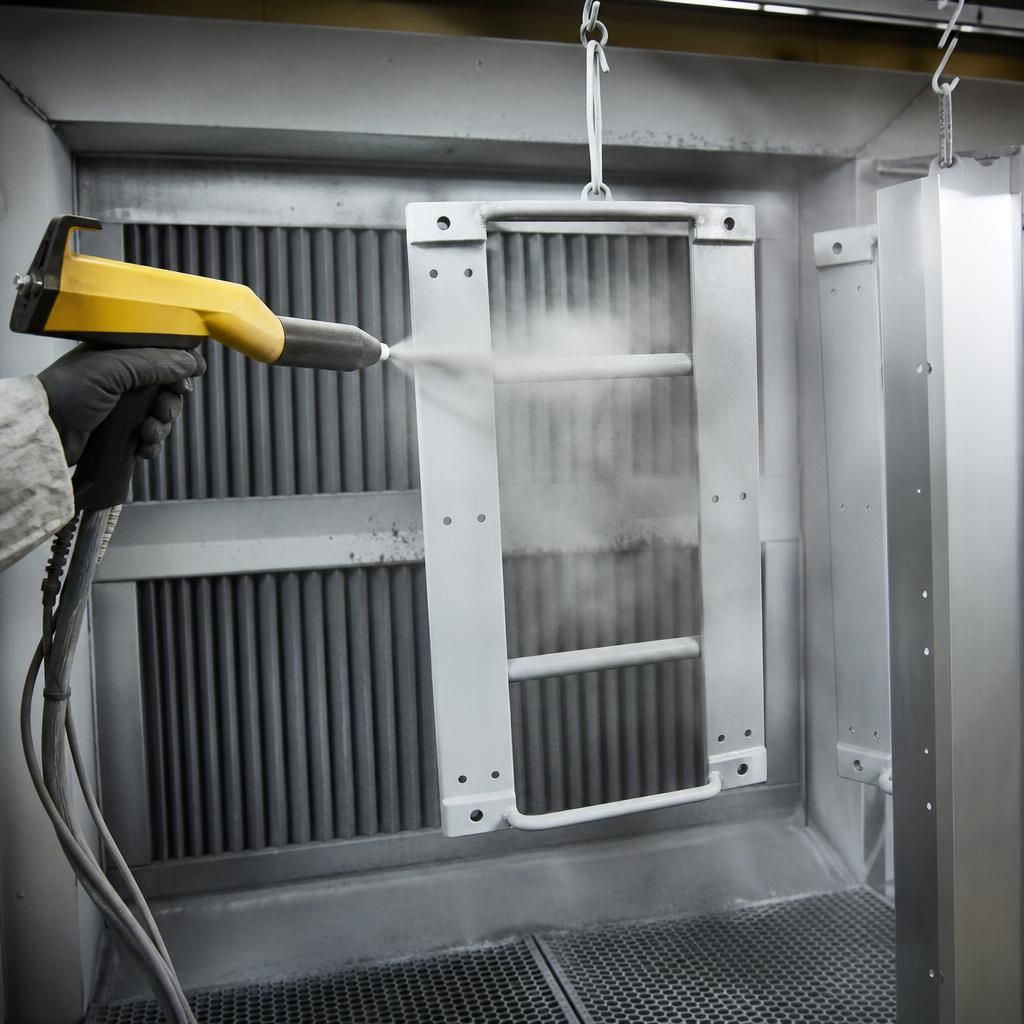
Airborne powder is controlled at the application stage through extraction and filtration rather than being allowed to disperse around the working area. This helps capture fine particles that do not settle on the component and limits uncontrolled release into the surrounding environment.
Maintaining extraction paths, filters and booth surfaces is therefore part of responsible powder-coating operation. Regular housekeeping removes settled residue before it can spread to other areas, while collected material is kept within the appropriate waste-handling system. These controls complement the material, energy and waste measures used throughout the coating process.
Discuss environmental practices for your powder coating project
If environmental controls form part of your procurement criteria, contact us to review the coating specification and process information relevant to your project. We can help clarify which environmental considerations should be included when assessing an industrial powder-coating service.