

What factors should I consider when choosing a provider for repairing powder coating defects to ensure quality and cost-effectiveness?
Choose a provider that can identify the defect’s cause, assess the substrate and specify an appropriate repair method rather than simply recoating over the problem. Compare quotations by checking what they include—surface preparation, coating materials, colour and finish matching, inspection, handling and collection or delivery—so the lowest price does not conceal necessary work or increase the risk of repeat defects.
The right provider combines technical repair capability, documented quality control and a quotation that reflects the full job rather than just the final coating. Cost-effective defect repair is not necessarily the lowest-priced option: a cheaper treatment can become more expensive if the original defect remains, the finish does not match adjacent areas or the component requires reworking.
Check that the provider can handle the type, size and quantity of components involved. Repairing a small fabricated item, a large structural component and a repeat batch may require different preparation, application and curing arrangements. Ask whether the provider has suitable equipment for the component dimensions, coating specification and required throughput. For production work, the ability to repeat the same process across a batch is as important as achieving an acceptable finish on one sample.
Ask how the repair decision will be made. Some defects can be locally treated, while others require the coating to be removed and the complete part recoated. The correct choice depends on the defect’s extent, the condition of the underlying metal, the component’s geometry and the performance required in service. A competent provider should explain the proposed scope, its limitations and any circumstances that could change the work after inspection.
Review the provider’s quality-control process. Useful questions include:
- How are parts checked before and after coating?
- How is process information recorded for repeat or batch work?
- How are non-conforming parts identified and managed?
- What checks are made for coverage, adhesion, curing and visible finish?
- How are repaired components protected against damage during packing and transport?
The precise inspection method should suit the coating specification and the component’s intended use. For parts exposed to weather, chemicals, abrasion or frequent handling, visual appearance alone is not enough to judge whether a repair is suitable.
Consider finish consistency as well as basic colour matching. Gloss level, texture, edge coverage and the appearance of adjoining surfaces can affect whether a repaired part is acceptable. This is particularly important where components are assembled together or are visible within a finished product. If an exact visual match cannot be achieved because of weathering, batch variation or the age of the existing coating, the provider should explain whether a wider-area repair or full recoating would give the more consistent result.
Examine how clearly the quotation defines exclusions and possible additional work. It should identify the components covered, the specified finish, preparation assumptions, any masking or dismantling requirements, packaging arrangements and the basis on which extra work would be authorised. Clarify who is responsible for removing fittings, protecting threaded areas and identifying parts that must not be coated. Clear boundaries reduce disputes and make quotations easier to compare.
Assess communication and technical documentation. For business-critical components, useful records may include the agreed coating specification, colour reference, batch or job identification, inspection notes and photographs of defects before treatment. Documentation is especially valuable when repaired parts form part of a controlled manufacturing process or when a recurring defect needs to be investigated across several production runs.
Look for evidence of process control rather than relying only on finished photographs. A polished example does not show how the provider manages awkward geometries, recessed areas, masking, contamination risks or repeat work. Ask for a clear explanation of how the component will be prepared, coated, cured, inspected and packed. Where the appearance or performance is particularly important, agreeing an approved sample or reference standard before the full repair can help establish what will be accepted.
Include the cost of disruption and repeat handling in the comparison. A realistic assessment considers transport, dismantling, packing, inspection on receipt, possible rework and the consequences of a component being unavailable to the wider production process. A provider that understands industrial batch work should be able to discuss how parts will be identified and returned in a condition suitable for the next manufacturing stage.
Finally, choose a provider that is prepared to distinguish between a cosmetic touch-up and a technically sound repair. For low-risk visual damage, a limited treatment may be appropriate. Where corrosion, poor adhesion, widespread contamination or repeated coating failure is present, a more extensive solution is usually easier to justify because it addresses the condition of the part rather than concealing the visible symptom. The best choice is therefore the provider that offers a defined repair scope, repeatable workmanship, suitable inspection and transparent commercial terms for the component’s actual service requirements.
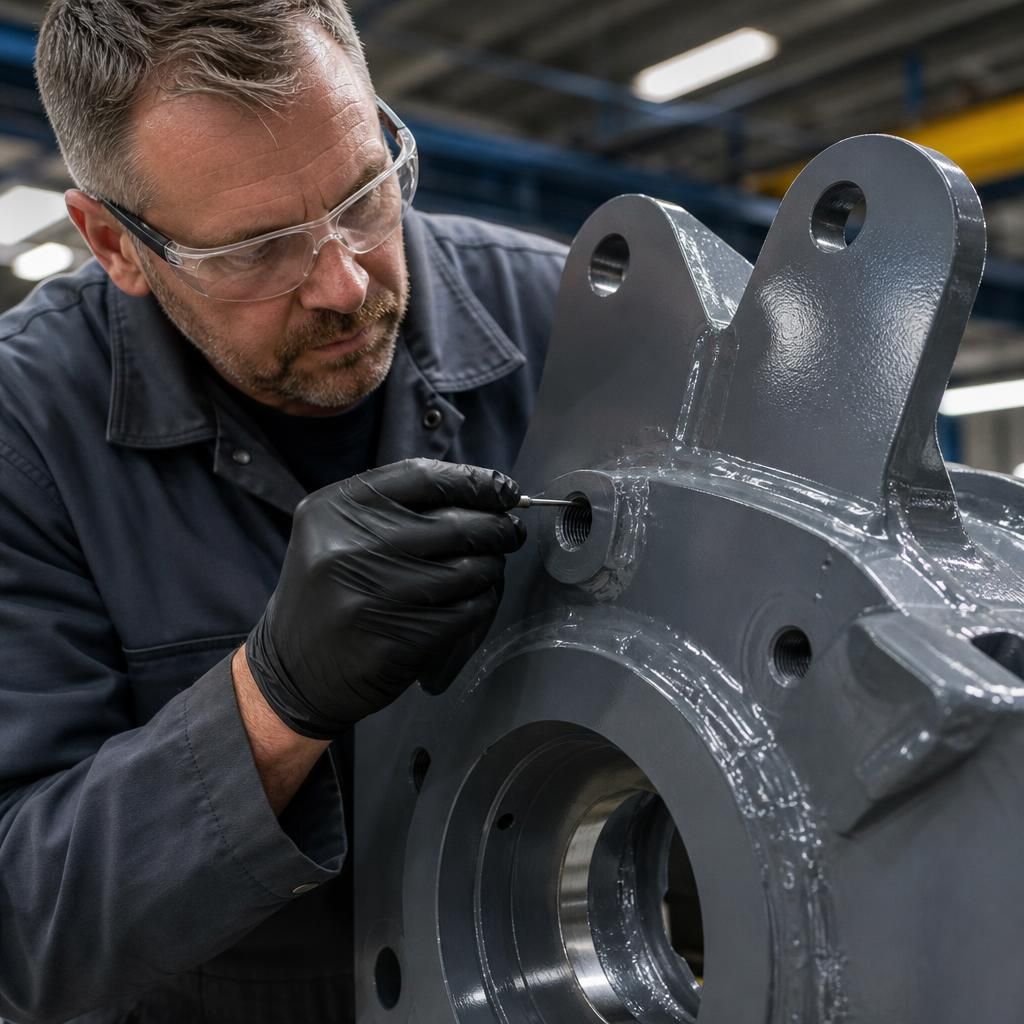
A provider should assess whether the repaired coating will preserve the component’s fit and function, not only its appearance. Powder build-up around threaded holes, mating faces, bearing seats, sliding surfaces or electrical contact points can affect assembly even when the visible finish looks acceptable.
Before work begins, confirm which areas must remain free from coating and how they will be protected and checked. The quotation should account for any masking, plugging or post-coating inspection needed to maintain critical dimensions. This is particularly important for fabricated and manufactured parts that pass directly into another assembly stage, where an attractive repair can still create additional handling, machining or rework costs.
Discuss Your Powder Coating Defect Repair Requirements
Discuss your powder coating defect repair requirements with the team, providing details of the component, defect and intended use so the appropriate repair scope can be considered. Request a quotation that clearly separates preparation, coating and any additional work.