

What considerations should be made for maintenance and longevity when dealing with nylon and speciality coatings?
Maintaining nylon and speciality coatings requires selecting the coating for the service conditions, controlling exposure to abrasion, chemicals, moisture and heat, and inspecting the finish for early signs of wear or damage. Longevity also depends on sound surface preparation, correct application and curing, suitable cleaning methods, and prompt repair of defects before the underlying metal is exposed.
Long-term performance of nylon and speciality coatings is best managed through a documented maintenance regime that reflects the component’s function, construction, operating load and exposure. The regime should establish a condition baseline, identify the areas most likely to deteriorate, define acceptable wear and record any changes so that intervention is based on evidence rather than a fixed calendar alone.
Establish a condition baseline. Record the coating specification, colour, finish, application date, substrate and any relevant thickness or dimensional requirements when the component is first placed into service. Photographs of edges, joints, contact surfaces and other vulnerable areas provide a useful comparison during later inspections. For components with close tolerances, threaded features, bearing surfaces or mating parts, record the original fit as well as the visual condition of the coating.
Set inspection priorities according to risk. Not every coated part requires the same level of monitoring. Components that protect the substrate from corrosion, carry loads, operate in contact with other parts or would be difficult to replace should receive greater attention. Inspections should concentrate on edges, corners, apertures, weld areas, fixing points, clamps, joints and locations where movement or repeated contact occurs. For nylon coatings used as a wear or low-friction surface, sliding paths and impact zones are particularly important.
- Look for local thinning, scoring, gouging, cracking, blistering, lifting, chalking or changes in texture.
- Check whether fasteners, seals, bushes or mating components are creating concentrated pressure on the coating.
- Assess whether wear is exposing the underlying metal or allowing moisture to reach a damaged interface.
- Where appearance is important, compare colour and gloss consistently rather than relying on memory.
Visual inspection may be sufficient for straightforward applications, but critical components can require dimensional checks, coating-thickness measurements or other agreed inspection methods. The method must be suitable for the particular substrate and coating system; a reading is only useful when it can be compared with an original specification or an established acceptance limit.
Control mechanical damage during use. Nylon can provide useful resistance to impact and wear, but it is not immune to damage from sharp edges, point loading, dragging, vibration or incorrectly aligned parts. Review the way coated components are assembled and handled. Protective separators can prevent contact during storage and transport, while lifting equipment and fixtures should avoid concentrated loads on finished surfaces. If wear is repeatedly found in one location, correcting the source of the contact is generally more effective than repeatedly repairing the coating.
Dimensional change also deserves attention. A coating adds material to the component, and the permitted build may be significant around holes, threads, bearing seats, sliding fits and mating faces. If a part becomes tight, binds or shows uneven contact, investigate the interface rather than forcing it into service. The original drawing, coating allowance and assembly tolerance should be reviewed before any adjustment or rework is undertaken.
Use controlled cleaning practices. Remove deposits before they become a source of abrasion or retain moisture against the coating. A soft cloth or brush and a compatible, non-abrasive detergent are normally preferable to harsh scouring materials. Test any cleaning agent on a representative area or sample where its compatibility is uncertain. Do not assume that a product suitable for bare metal is suitable for nylon or another speciality coating, particularly where additives, solvents or prolonged contact are involved. Cleaning equipment should not leave scratches or force debris into joints and damaged areas.
Manage repairs according to the extent of damage. A small cosmetic mark and a defect that exposes the substrate do not have the same significance. Damage should be classified by its depth, location, size and effect on the component’s function. A local repair may be appropriate for limited damage, but its success depends on removing poorly bonded material, preparing the exposed area correctly and using a repair material compatible with the original system. A touch-up may not reproduce the original colour, texture, thickness or mechanical properties.
Where damage is widespread, occurs on a critical surface or has reached the substrate, complete stripping and re-coating may provide a more consistent result than repeated local repairs. Before this is specified, confirm that the component can withstand the additional preparation and processing, and that dimensions, masking requirements and heat exposure remain acceptable. Repair records should identify the affected part, defect, preparation method, material used and any revised inspection requirement.
Review the maintenance plan. Inspection findings should be recorded with the operating conditions and any changes to the component’s use. A pattern of damage may indicate excessive loading, an unsuitable mating material, poor drainage, movement at a joint or a change in the process environment. Reviewing these trends allows the maintenance team to alter handling, design or inspection frequency before coating failure becomes extensive.
For industrial batches, consistency is as important as the condition of an individual part. Retain the coating specification and agreed acceptance criteria, and communicate any changes in service duty, cleaning chemicals, assembly method or storage conditions to the coating provider before the next production run. This helps ensure that maintenance decisions remain aligned with the coating system and the component’s actual use throughout its service life.
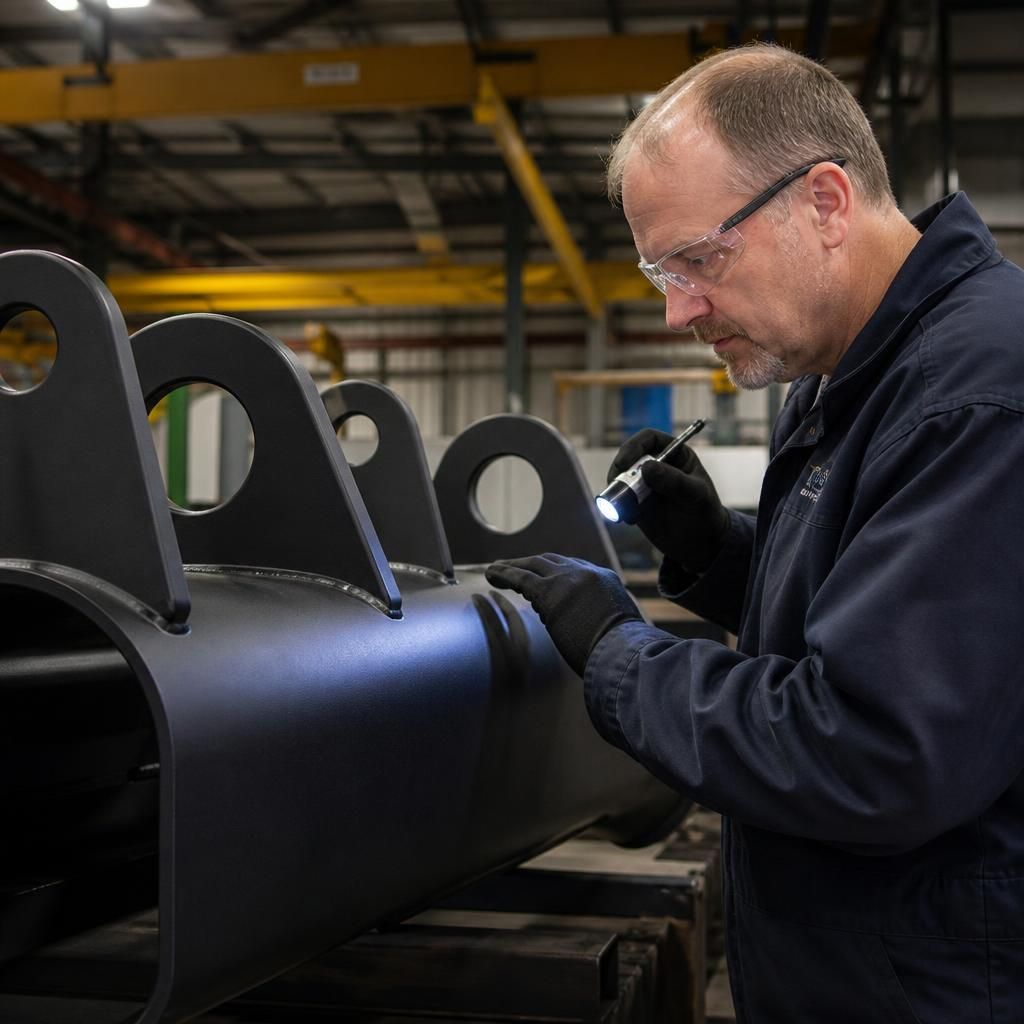
Thermal cycling is an important longevity consideration because repeated heating and cooling can place stress on the bond between a nylon or speciality coating and its metal substrate. The risk is greater where the coating and component expand at different rates, or where temperature changes occur alongside vibration, chemical exposure or mechanical loading.
Maintenance planning should therefore consider the component’s actual temperature cycle rather than its maximum temperature alone. Inspect areas around welds, sharp transitions, joints and restrained fixings for lifting, cracking or loss of adhesion after changes to operating conditions. If these defects recur, review the coating specification, substrate preparation and component design together rather than treating each occurrence as an isolated repair.
Discuss Maintenance for Nylon & Speciality Coatings
If you are reviewing the maintenance requirements for a nylon or speciality-coated component, discuss its substrate, service conditions, cleaning regime and observed defects with a coating specialist. This allows the coating specification, repair approach and inspection criteria to be considered together.