

What are the key considerations for applying high temp and heat resistant powder coatings to ensure optimal performance and longevity?
Optimal performance from high temp and heat resistant powder coatings depends on matching the coating system to the component’s continuous and peak operating temperatures, substrate and exposure conditions. Thorough surface preparation, controlled film thickness, correct curing and consideration of thermal cycling are essential for maintaining adhesion, corrosion resistance and finish integrity over time.
Applying high temperature and heat resistant powder coatings successfully requires more than selecting a coating labelled for elevated temperatures. The complete system must be chosen and controlled around the component’s service environment, metal type, geometry, dimensional requirements, appearance, and method of use. Resin chemistry, application technique, masking, inspection and compatibility with adjacent materials can all affect whether the finished coating remains suitable in service.
Define the full operating environment. Temperature is only one part of the specification. Establish whether the coating will encounter direct flame, hot air, radiant heat, steam, moisture, oils, fuels, cleaning chemicals, abrasive contact or outdoor exposure. A system that tolerates dry heat may not provide the same performance when heat is combined with condensation or aggressive chemicals. Consider whether the component is heated in a clean atmosphere or exposed to combustion products, as deposits and oxidation can alter the coating surface.
Select the resin and additive package for the duty. High temperature powder coatings are formulated differently from general-purpose architectural or industrial powders. The formulation affects heat resistance, colour stability, gloss retention, flexibility, chemical resistance and resistance to surface degradation. Some systems are intended primarily to retain an acceptable finish at elevated temperature, while others prioritise functional protection over decorative appearance. The technical data for the proposed product should therefore be checked against the actual combination of heat, chemicals and mechanical service rather than relying on a generic high-temperature description.
Check the metal and component design before coating. Steel, stainless steel, galvanised metal, castings and fabricated assemblies can present different coating requirements. Welds, sharp edges, deep recesses, overlapping joints and enclosed sections may affect powder access and the consistency of the finished film. Trapped air or moisture within hollow fabrications can also create defects during heating. Drainage and venting should be considered where appropriate, while threaded holes, bearing seats, sliding faces and other close-tolerance areas may need planned masking or post-coating treatment.
Allow for dimensional and assembly tolerances. Powder coating adds a measurable layer to mating surfaces, holes, slots and locating features. The specification should identify areas that must remain uncoated, the acceptable build on functional surfaces and any masking method needed to protect them. Masking materials must themselves tolerate the process conditions without leaving residue or damaging the coating. This is particularly important for components assembled after coating, where an apparently minor build-up can affect fit, electrical contact or movement.
Control application coverage and equipment settings. High-temperature powders need consistent deposition across broad faces, edges, recesses and complex profiles. Gun position, electrostatic settings, part orientation and grounding influence transfer and coverage. Difficult geometries may require a planned application sequence rather than a single pass. Excessive powder in recesses can create appearance or processing defects, while poorly covered areas may become weak points in service. Powder handling should also prevent contamination from incompatible materials, moisture or dirt.
Consider outgassing and contamination risks. Porous castings, previous treatments, cutting fluids, weld residues and absorbed moisture can release gases during processing and produce pinholes, bubbles or other surface defects. The risk should be assessed during trial work, especially for cast or heavily fabricated parts. Any pre-treatment or masking materials used must be compatible with both the metal and the selected powder system; residues that are harmless at room temperature can cause defects when the component is heated.
Verify the finished coating against functional requirements. Inspection should cover appearance as well as properties that matter in service. Depending on the application, this can include film build, adhesion, hardness, colour or gloss, surface continuity and the condition of masked areas. For safety-critical, chemically exposed or repeatedly heated components, representative testing may be appropriate before production. Test methods should reflect the intended service rather than treating a decorative visual inspection as proof of high-temperature performance.
Review compatibility with the wider assembly. The coating may contact seals, insulation, gaskets, fasteners, lubricants or other finishes during operation. These materials can have their own temperature limits and may release substances that affect the powder surface. Electrical bonding points and earth paths also need deliberate treatment where the coating is applied to electrical housings or fabricated equipment. Defining these interfaces before coating reduces the risk of removing the finish later to restore fit, conductivity or movement.
Document the specification for repeat work. A useful coating specification records the approved powder system, colour and finish, metal type, masked locations, acceptance criteria, inspection checks and processing instructions. Retaining this information helps maintain consistency across batches and makes it easier to investigate any change in appearance or service behaviour. For manufacturers and fabricators, agreeing these requirements before production is particularly important when components will be coated repeatedly or supplied as part of a larger industrial assembly.
For complex metal parts, the most reliable approach is to assess the operating environment and component design together, then confirm the proposed system through representative trials and inspection. This avoids treating heat resistance as an isolated product claim and ensures that application details support the coating’s intended industrial use.
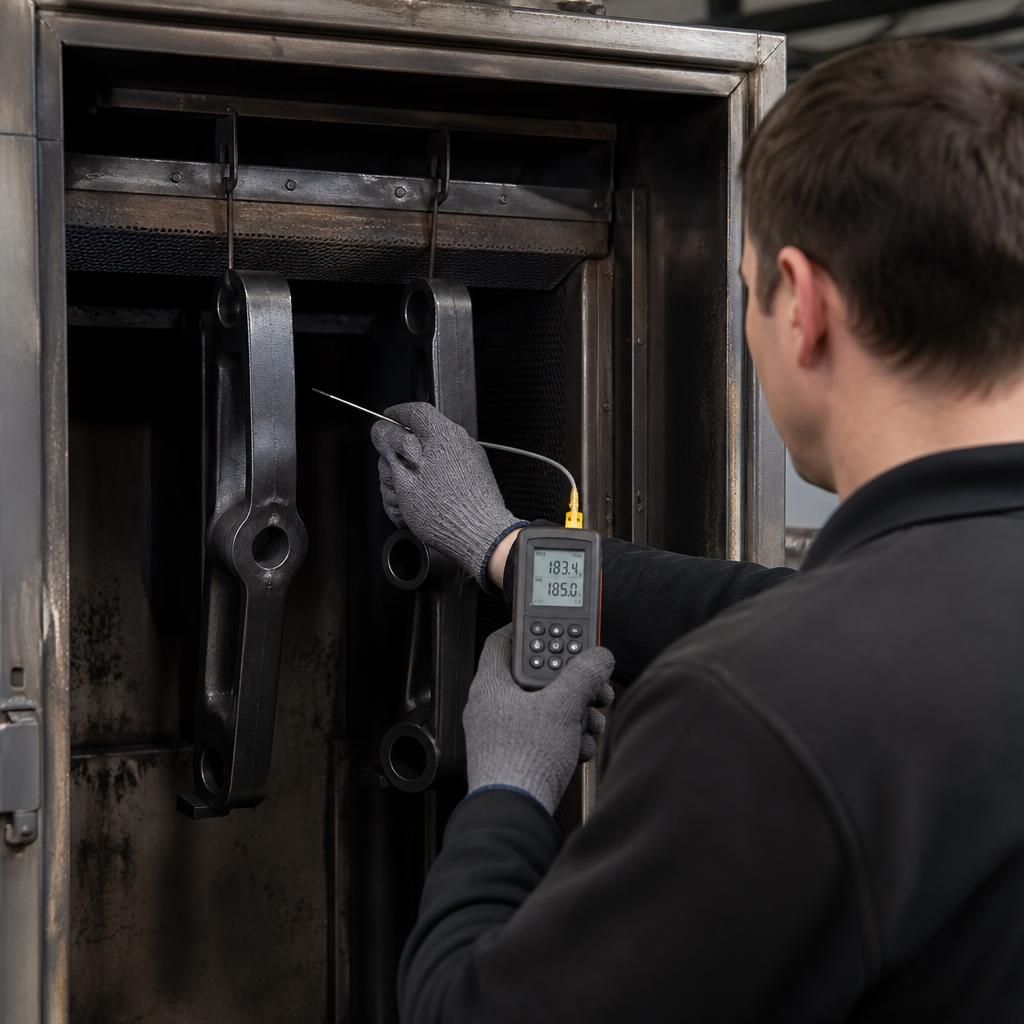
Verify the component temperature, not just the oven setting. The air temperature shown by an oven controller does not necessarily reflect the temperature reached by the metal. Thick sections, densely loaded batches and assemblies with different thermal masses can heat at different rates, leaving some areas under-cured while others remain exposed to excessive heat.
Use the powder system’s specified metal-temperature cure schedule and validate it on representative parts, particularly where geometry or loading changes. Temperature measurement at selected points can confirm that the complete component reaches the required cure condition. This helps protect adhesion, finish stability and coating performance without relying solely on the oven display or elapsed cycle time.
Discuss Your High Temperature Coating Requirements
Share your component drawings, metal type and operating conditions to discuss whether a high temperature and heat resistant powder coating is suitable for the intended duty. The coating team can review the requirements and advise on the information needed for a practical specification.