

What role does pre-heating play in the nylon powder coating process?
Pre-heating brings the metal substrate to the temperature needed for nylon powder to melt, flow and form a continuous coating during application. Consistent, controlled heat supports adhesion and finish uniformity, while excessive or uneven heating can cause defects or affect the nylon’s performance.
Pre-heating is the stage that gives the metal enough stored heat to accept and melt nylon powder during application. Its role extends beyond simply warming the part: the heat held by the substrate controls how much powder melts, how consistently it covers the surface and how the finished film develops as the component cools.
Nylon powder is commonly applied to a heated component using a fluidised-bed or spray-based process. In either case, the substrate temperature is a working variable. When the powder contacts the metal, it must melt and form a continuous film before the component loses too much heat. The coating operator therefore considers both the heating temperature and the time available for powder to melt on the part.
Pre-heating has several important functions:
- It activates the powder. The hot metal supplies the energy needed for the nylon particles to soften, melt and merge into a film.
- It influences coating build. A component with sufficient retained heat can melt more powder during a dip or spray pass. This affects the amount of material deposited and must be controlled to avoid an unnecessarily heavy or thin coating.
- It supports coverage of complex shapes. Recesses, corners, brackets and areas around welds can lose heat at different rates from broad, flat surfaces. Heat planning helps the powder melt before these areas fall below the effective processing range.
- It determines the usable production sequence. The interval between removing a component from the oven and applying powder matters. If the part cools substantially during transfer, the intended coating result may not be achieved even though the oven setting was correct.
The temperature of the oven is not the same as the actual temperature of the metal. A thick steel frame, a thin fabricated panel and a part with a large heat sink will absorb and retain heat differently. Part mass, wall thickness, surface area, hanging position and the number of components heated together all affect the result. For this reason, the process should be based on the temperature of the substrate and the powder manufacturer’s technical requirements, rather than on an oven display alone.
Temperature measurement is particularly important when parts have varied geometry. Contact probes, infrared instruments or other suitable methods can be used, provided that the measurement method is appropriate for the surface and calibrated for the process. Infrared readings may be affected by surface condition and emissivity, so they should be interpreted consistently. Recording temperatures at representative points can reveal whether a component is heating evenly or whether certain sections require a revised loading arrangement or longer heat soak.
Heating also needs to remove conditions that could interfere with the coating. Moisture, cutting fluids, oils and residues may become trapped or released when the metal is heated. This is why cleaning and drying must be completed before the pre-heating stage. Heating is not a substitute for degreasing or abrasive preparation, and it should not be relied upon to burn off contamination. Residues can produce pinholes, bubbles, discolouration or areas where the coating does not properly form.
The correct approach differs according to the application method. In a fluidised-bed process, the heated part is immersed in suspended nylon powder, so the retained heat of the whole component is important for melting the powder during contact. With spray application, the operator may need to manage the relationship between gun output, spray distance, pass speed and substrate temperature. A part that is too cool may allow powder to remain partially fused, while a part that is losing heat rapidly may produce inconsistent coverage between the first and last passes.
Heat loss is often fastest at edges, ends, small projections and areas connected to substantial masses of metal. These locations can develop a different film from the centre of the part. Conversely, enclosed sections or heavy assemblies may continue releasing heat after application and affect the way the film settles. Loading plans, part orientation and controlled transfer from the heating equipment to the coating station help reduce these differences.
Pre-heating should be separated from post-application heating in the process specification. Nylon is a thermoplastic, so the applied powder forms its film through heating and melting rather than through the same chemical curing mechanism used by thermosetting powder coatings. Depending on the chosen nylon system and application method, additional heating may be needed to complete flow or achieve the specified finish. The relevant technical data should define the required metal temperature, heating conditions and any subsequent treatment.
Overheating is also undesirable. Excessive heat exposure can alter the appearance of the nylon, affect its physical properties or increase the risk of defects. Repeated heating may be relevant for parts that are recoated, repaired or passed through more than one thermal stage. The process should therefore control the complete thermal history of the component, not just the peak oven temperature.
For reliable preparation, the key checks are:
- Confirm that the selected nylon powder is suitable for the intended application method and substrate.
- Clean, rinse where required and dry the metal before heating.
- Allow enough time for the component to reach a consistent substrate temperature, particularly where sections vary in thickness.
- Measure the part temperature at representative locations rather than relying solely on the oven setting.
- Minimise uncontrolled cooling between heating and powder application.
- Inspect the completed film for variation around edges, recesses, welds and heavy sections, then adjust the heating and handling process if necessary.
In practice, pre-heating is best treated as a controlled part of the nylon coating specification. The powder type, metal thickness, component geometry and application equipment determine the appropriate settings. A repeatable process records these variables and verifies the temperature actually reached by the workpiece, giving the coating operator a sound basis for consistent results across batches.
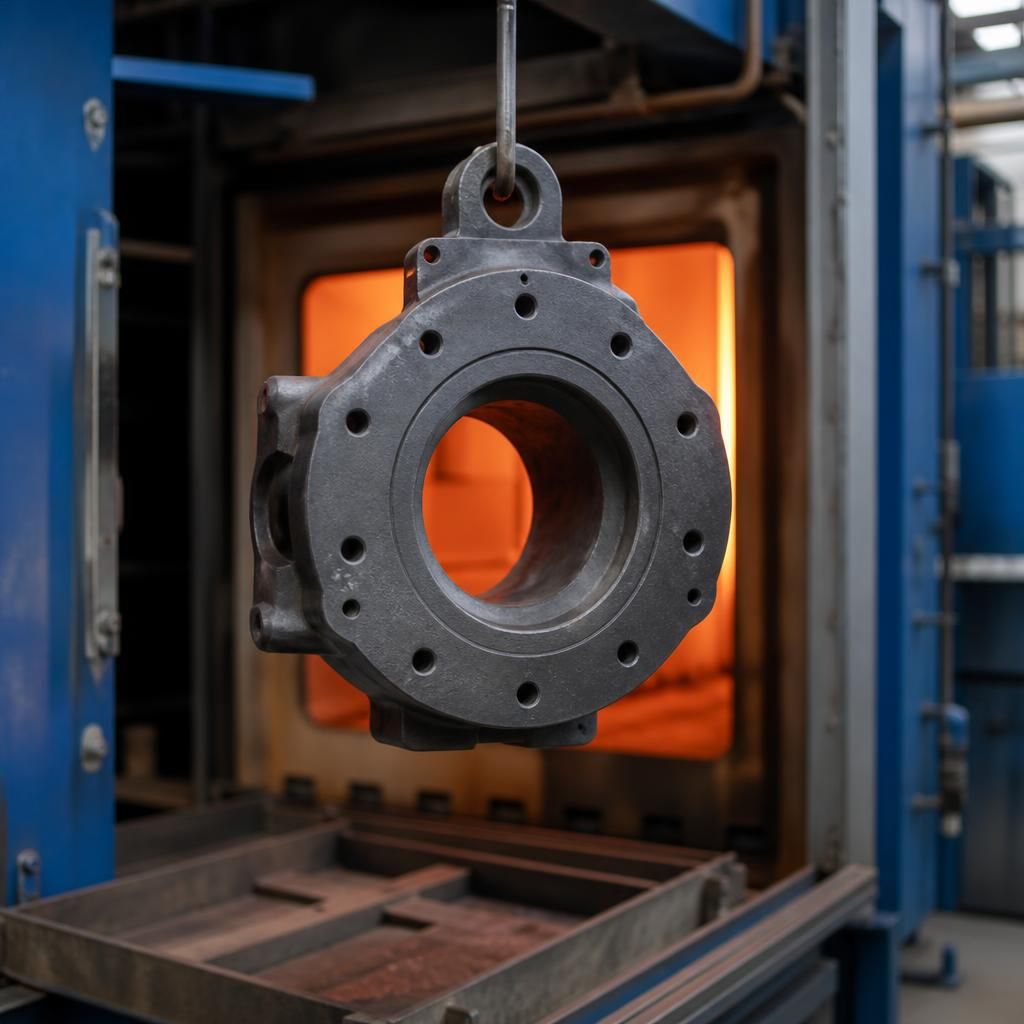
Pre-heating can also expose an outgassing risk in porous castings, hollow sections and fabricated parts that contain trapped air or moisture. As the metal warms, expanding air or vapour may move towards the surface and disturb the nylon film, creating bubbles, blisters or small voids.
For these components, preparation should include adequate drainage, venting and drying before the coating stage. A controlled pre-heat helps identify whether the part releases vapour, allowing the process to be adjusted before nylon powder is applied. This is particularly important where the finished coating must provide continuous protection over enclosed or irregular metalwork.