

What factors should be considered to ensure the optimal performance and efficiency of powder coated aluminium in different environmental conditions?
Optimal performance depends on matching the aluminium alloy, pre-treatment, powder chemistry and coating specification to the expected exposure. Heat, UV, moisture, salt, pollutants and abrasion should be assessed alongside component design, drainage, edge coverage, application control, curing and planned maintenance.
Optimal performance and efficiency from powder coated aluminium depend on treating the coating as part of the complete component specification. The expected environment, service life, appearance requirements, component geometry, installation method and maintenance regime should be considered together, because a coating that performs well in one setting may be unsuitable for another.
Define the exposure category
Start by describing where the aluminium will be used and what it will encounter. An internal architectural component, an external façade part, a roadside enclosure and equipment near the coast have different demands. Consider direct weathering, sheltered or partially enclosed locations, exposure to de-icing materials, industrial vapours, cleaning chemicals, airborne grit and frequent handling. Conditions can also vary across one installation; areas beneath ledges, close to joints or near moving equipment may collect contaminants or experience more wear than exposed surfaces.
The assessment should cover both the normal environment and foreseeable abnormal exposure. Accidental chemical splashes, prolonged condensation, heavy soiling and contact with incompatible materials can shorten coating life even when the general location appears relatively mild.
Match the finish to the required service life
Colour and gloss retention may be more important than basic corrosion protection for visible aluminium. Dark or highly saturated colours can show surface changes more readily in strong sunlight, while textured finishes may retain dirt differently from smooth finishes. For a safety-critical, public-facing or difficult-to-replace component, the specification should state the acceptable change in appearance as well as the required protection.
Where appearance must remain consistent across multiple parts, specify the same finish system, application orientation and approval process. Viewing samples under suitable lighting can help identify differences in colour, sheen or texture before production quantities are coated. This is particularly relevant when replacement parts will be added to an existing installation.
Consider thermal movement and operating temperature
Aluminium expands and contracts as its temperature changes. The coating must remain compatible with the movement of the substrate and with the way the part is fixed. Long sections, panels, covers and assemblies with rigid attachments require particular attention to joint details and tolerances. A design that restrains movement can place stress on the finished surface or on connected components.
Temperature should be assessed during manufacture, transport, installation and use, rather than relying only on the general air temperature. Heat from nearby equipment, enclosed spaces or reflected sunlight may create a different operating condition from the surrounding environment. Low temperatures can also affect impact behaviour and the handling of coated parts.
Check material interfaces and assembly details
Aluminium parts are often assembled with steel fixings, brackets, seals, plastics or other metals. Trapped moisture between dissimilar materials can create a local corrosion risk, while incompatible sealants, adhesives or cleaning products may stain, soften or attack the coating. The full assembly should therefore be reviewed, not just the aluminium surface in isolation.
Allow for coating build at holes, slots, threads, mating faces and close-fitting joints. Masking or post-coating machining may be necessary where electrical contact, accurate fit or mechanical movement is required. Any exposed cut edge, drilled area or repair should be dealt with through a defined process rather than left to site improvisation.
Design for handling, transport and installation
A sound coating can still be damaged before the product reaches service. Parts should be protected from rubbing, impact, metal swarf and contaminated packaging during storage and movement. Lifting points and stacking arrangements should avoid concentrated loads on visible faces and edges.
Installation procedures should identify suitable tools, temporary protection and acceptable methods for removing marks. Cutting, drilling or grinding near a finished surface can embed particles or create local damage. If site modifications are unavoidable, the repair specification should identify the preparation, compatible repair material and inspection required.
Use a proportionate inspection and maintenance plan
Maintenance should remove deposits before they become bonded to the surface. The appropriate cleaning method depends on the contaminant and coating specification, but harsh abrasives, strongly alkaline products, aggressive solvents and unapproved pressure-washing practices can alter the finish. A small trial area is sensible where the cleaner or method has not previously been used.
Inspections should look for changes rather than simply record that the coating is present. Check for fading, chalking, blistering, loss of adhesion, impact marks, staining, corrosion at interfaces and damage around fixings or modified areas. Early local repairs are generally easier to control than allowing a defect to spread or expose a larger area of the substrate.
Control the specification and verify suitability
A written specification should record the aluminium grade, component use, exposure category, colour and gloss requirement, finish type, acceptable appearance, masking requirements, inspection criteria and repair method. For demanding applications, representative samples or test panels can be assessed before the full batch is approved. Testing should reflect the actual risk, such as resistance to weathering, chemicals, impact, adhesion or prolonged contact with moisture.
Performance is most efficient when the coating, component design and maintenance plan are agreed before manufacture. This reduces avoidable rework, prevents unsuitable finishes being selected for the environment and makes future inspection or replacement parts easier to manage. For complex or high-exposure aluminium components, the coating specification should be reviewed alongside the design and installation requirements rather than treated as a final cosmetic decision.
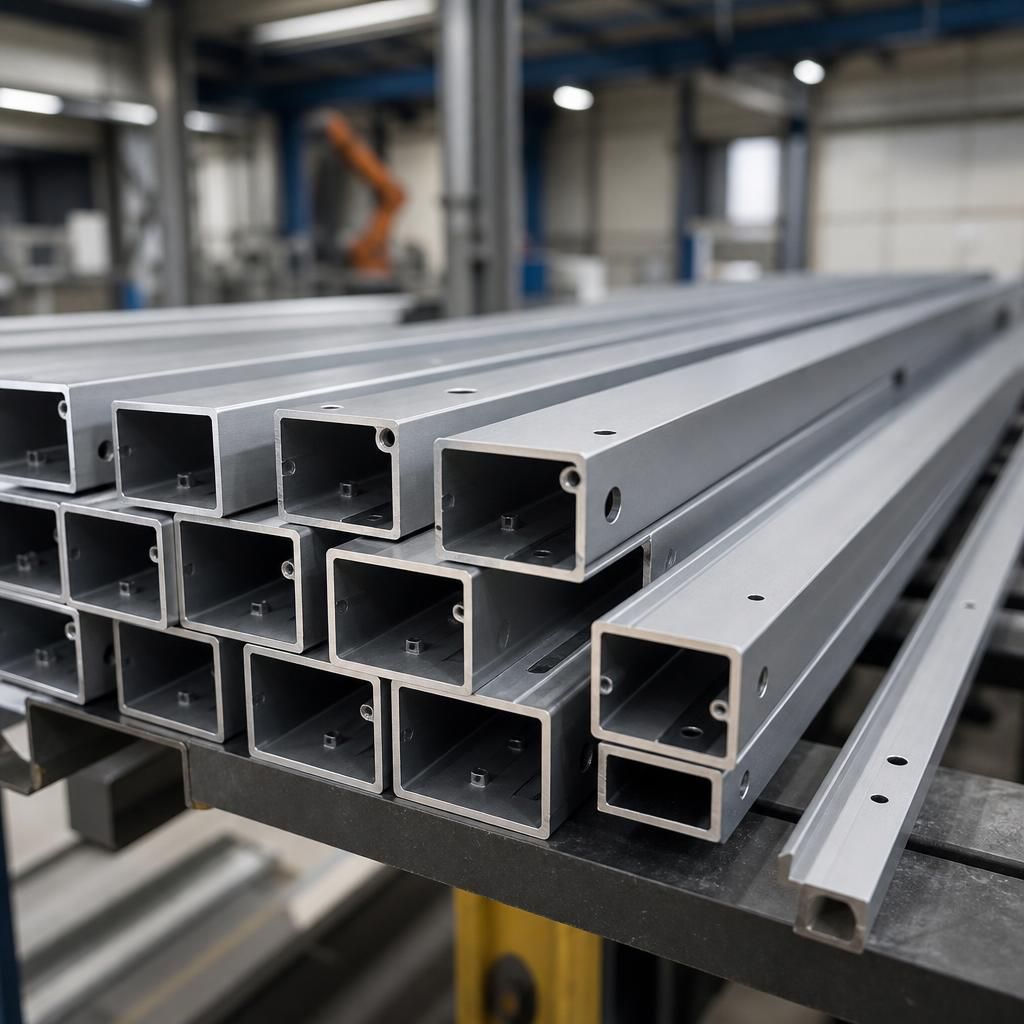
Hollow aluminium sections need suitable venting and drainage to perform reliably after powder coating. Closed cavities can retain pretreatment chemicals, rinse water or moisture, which may cause staining, blistering, corrosion at openings or pressure-related defects during curing.
Design drain and vent holes at appropriate points before coating, taking account of how the component will be suspended and orientated during processing. Avoid arrangements that allow liquid to collect in corners or behind welded details. The holes must also be compatible with the finished product’s structural, visual and sealing requirements.
Where cavities must remain sealed in service, the coating and fabrication process should be reviewed together. Welding, cutting and drilling can expose uncoated areas or create routes for moisture ingress, so these details need defined preparation and protection. Addressing them at the design stage improves coating consistency and reduces remedial work after manufacture.
Review your powder coated aluminium specification
If you are specifying powder coated aluminium for a demanding environment, discuss the component design, exposure conditions and coating requirements with our team before production. We can help identify the information needed for a suitable specification and provide a coating quotation for your project.