

How does using an epoxy primer enhance the longevity and performance of powder-coated metal components?
Epoxy primer enhances the longevity of powder-coated metal components by creating a strongly bonded, corrosion-resistant foundation beneath the powder coating. This additional barrier helps protect prepared metal from moisture, chemicals and mechanical wear, supporting a more durable finish in demanding industrial applications.
An epoxy primer enhances the service life of a powder-coated metal component by improving the performance of the complete coating system, rather than acting as a substitute for correct preparation or a suitable topcoat. It provides an intermediate layer between the prepared metal and the powder finish, helping the coating system remain intact when the component is exposed to demanding operating conditions.
One important benefit is improved adhesion between coating layers. Powder coating relies on a clean, suitably prepared surface, while the primer creates a controlled interface for the powder topcoat to bond to. This can be particularly valuable where the metal has a complex profile, exposed edges, welded areas or a mixed surface condition. A well-bonded system is less likely to develop lifting, flaking or local separation when the component is handled, assembled or subjected to service conditions.
The primer can also improve the consistency of the finish across components made from different sections or fabrication methods. Welds, joints and areas affected by fabrication may respond differently from the surrounding metal during preparation and coating. Using an epoxy primer as part of a specified system helps provide a more uniform base, reducing variation between the substrate and the final powder layer.
Its contribution to durability is most effective when the coating system is matched to the component’s environment. Factors to assess include:
- the type of metal, such as carbon steel, stainless steel or aluminium;
- the level of exposure to water, condensation, salts, oils or cleaning chemicals;
- the degree of handling, impact, abrasion and vibration;
- operating temperatures and changes in temperature; and
- the required appearance and performance of the powder topcoat.
Epoxy primers are generally selected for their strong adhesion and protective properties, but they are not automatically the right choice for every application. Some epoxy systems have limited resistance to prolonged ultraviolet exposure and may chalk or change appearance if left as the exposed finish. For external components, the primer is therefore normally covered by a compatible powder topcoat selected for the expected environment. The primer and powder must be suitable for use together, including their curing requirements and intended film build.
Preparation remains a decisive factor. Oil, grease, oxide, dirt and other contaminants can prevent the primer from forming a reliable bond, while unsuitable blasting, chemical treatment or incomplete removal of residues can affect the coating system later. The metal should be prepared according to its material and condition, and the component should be handled in a way that avoids recontamination before priming. Correct application thickness and curing are also important: too little primer may provide inadequate coverage, while excessive or poorly cured material can affect intercoat adhesion and the final appearance.
For fabricated parts, the design and condition of the component should be considered before coating. Sharp edges, narrow recesses, overlapping joints and trapped contamination can create weak points that a primer alone cannot correct. Where practical, fabrication details should allow effective preparation, drainage and coating access. Any required masking, earthing or dimensional allowances should also be agreed before processing, particularly for parts that must fit closely after coating.
In practical terms, an epoxy primer is most beneficial when it forms part of a documented coating specification. That specification should identify the substrate, preparation method, primer, powder topcoat, curing conditions and intended service environment. Inspection can then focus on surface cleanliness, coverage, visible defects, adhesion and cure. This systems-based approach is more reliable than choosing a primer in isolation and expecting it to compensate for unsuitable preparation or an incompatible powder finish.
For industrial metal components, the result is a more carefully engineered coating build with better adhesion, more consistent coverage and improved resistance to service-related degradation. Powder-coating specialists can assess whether an epoxy primer is appropriate for the component, how it should be combined with the powder finish and which preparation steps are needed before treatment.
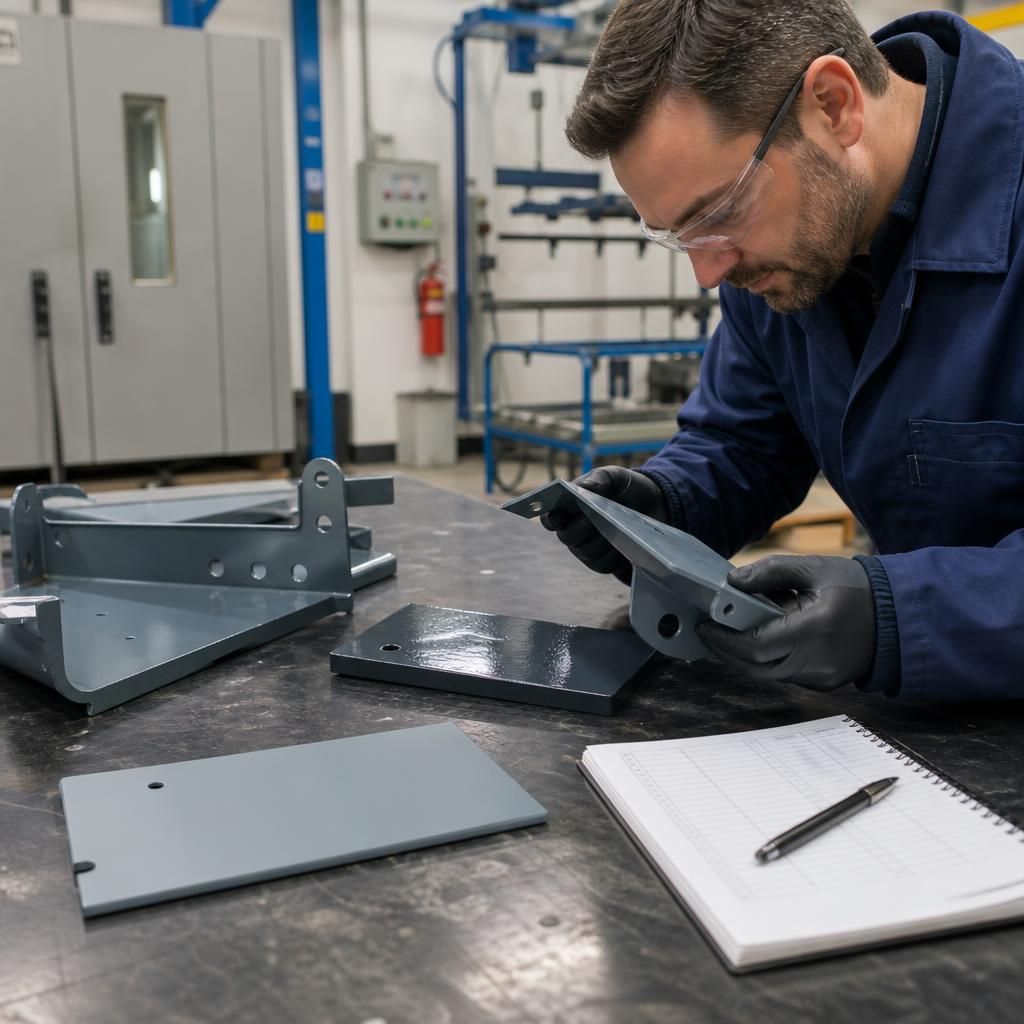
A trial application can help confirm that an epoxy primer will improve the performance of a particular powder-coated component before full production begins. A representative part or test panel can be assessed for surface appearance, coating build, adhesion, cure and dimensional fit, especially where the component includes welds, recesses or close-fitting interfaces. This validation helps identify problems caused by the substrate, geometry or coating combination at an early stage, reducing the risk of applying an unsuitable system across an entire batch.
Discuss epoxy primer for your powder-coated metal components
Discuss your component’s substrate, operating environment and coating requirements with the powder-coating team to assess whether an epoxy primer is suitable. Providing details of the part design and intended use will help inform the preparation and coating specification.