

How does the selection of primer influence the longevity and performance of the powder coating finish?
Primer selection directly affects how well a powder coating adheres, resists corrosion and remains durable in service. The primer should match the metal substrate, exposure conditions and powder topcoat so it provides compatible protection without compromising the finish.
A primer extends the useful life of a powder-coated component by creating an intermediate layer between the prepared metal and the decorative topcoat. The correct choice controls how moisture and contaminants are held away from the substrate, how movement and impact are managed, and how consistently the complete coating system performs in its intended environment.
Start with the substrate and its condition. Steel, galvanised steel, aluminium and previously coated components present different adhesion and corrosion challenges. A primer selected for ordinary mild steel may not be suitable for a zinc-coated surface or an aluminium component. Residual mill scale, oxidation, welding contamination, salts or remnants of an old coating can also limit performance; primer cannot compensate for inadequate cleaning, preparation or pretreatment. The condition of the metal should therefore be assessed before a primer is specified.
On steel, the primer’s barrier properties are particularly important. If the topcoat is damaged, a suitable primer can slow the movement of water and corrosive agents towards the exposed metal. This helps reduce underfilm corrosion and limits the spread of damage from a chip or scratch. Its effectiveness depends on the complete system, however: surface preparation, primer coverage, curing and topcoat integrity all contribute to the result.
Exposure conditions determine the level of protection required. Indoor components in a controlled, dry setting may need a different system from parts exposed to rain, condensation, road contaminants, industrial pollutants, chemicals or marine air. Consider not only the normal environment but also cleaning methods, temperature changes, abrasion and the consequences of coating failure. A primer should be chosen for the actual service conditions rather than simply the appearance required from the finish.
Corrosion protection is also influenced by design. Sharp edges, corners, welds, recesses, holes and joints are more difficult to coat evenly than broad flat areas. Poor coverage at these points can become the starting point for corrosion. The selected primer and application process should produce consistent coverage across the component, while the part design and racking arrangement should allow all relevant surfaces to be treated effectively.
Compatibility with the topcoat is essential. The primer and powder topcoat must be capable of forming a sound system when applied and cured under the specified conditions. Incompatible layers can lead to poor intercoat adhesion, blistering, pinholing, colour variation, loss of gloss or an uneven texture. Some primers are selected mainly for corrosion resistance, while others are designed to support particular appearance, flexibility or chemical-resistance requirements. The topcoat’s chemistry, curing range and intended finish should therefore be considered at the same time as the primer.
Curing has a direct effect on performance. An under-cured primer may remain weak or insufficiently bonded, whereas excessive heat or an unsuitable cure sequence can affect the primer, the metal or the topcoat. The coating specification should account for the component’s metal thickness, mass and geometry because these affect how heat reaches the coating layers. Where a two-coat system is used, the interval and conditions between coats also need to follow the coating manufacturer’s technical requirements.
Film thickness must be controlled rather than increased indiscriminately. Too little primer may leave weakly protected areas, particularly around edges and complex features. Excessive build can contribute to runs, cracking, solvent or gas-related defects, loss of detail and problems during curing. The correct thickness is the one specified for the selected system and exposure category, applied evenly and verified as part of quality control.
Primer selection can also affect practical service performance. A coating system exposed to impact, vibration or repeated handling needs sufficient flexibility and intercoat adhesion to resist cracking and delamination. Components subjected to abrasion may require a system that retains its protective function as the surface is worn. Where appearance is critical, the primer should not create excessive texture, show-through or colour influence in the finished topcoat.
For galvanised or zinc-coated steel, the specification should address the surface condition and the possibility of outgassing or adhesion problems. Suitable preparation and a compatible primer can help manage these risks, but the zinc surface should not be treated as interchangeable with bare steel. Aluminium likewise requires preparation and a primer system appropriate to its oxide layer and intended exposure.
A sound selection process therefore considers:
- the base metal, surface condition and previous treatment;
- the level and type of corrosion exposure;
- temperature, chemicals, moisture, abrasion and mechanical movement in service;
- the required appearance, texture, colour and gloss;
- compatibility between pretreatment, primer and powder topcoat;
- the component’s geometry, edges, joints and access for application; and
- the specified application thickness and curing conditions.
For a batch of components, these factors should be agreed before coating begins, particularly where the parts combine different metals or will be installed in demanding conditions. The primer is one layer in a designed coating system, not an isolated substitute for preparation or correct application. Matching it to the substrate, exposure and topcoat gives the finished powder coating a better basis for retaining its protective and visual properties throughout service.
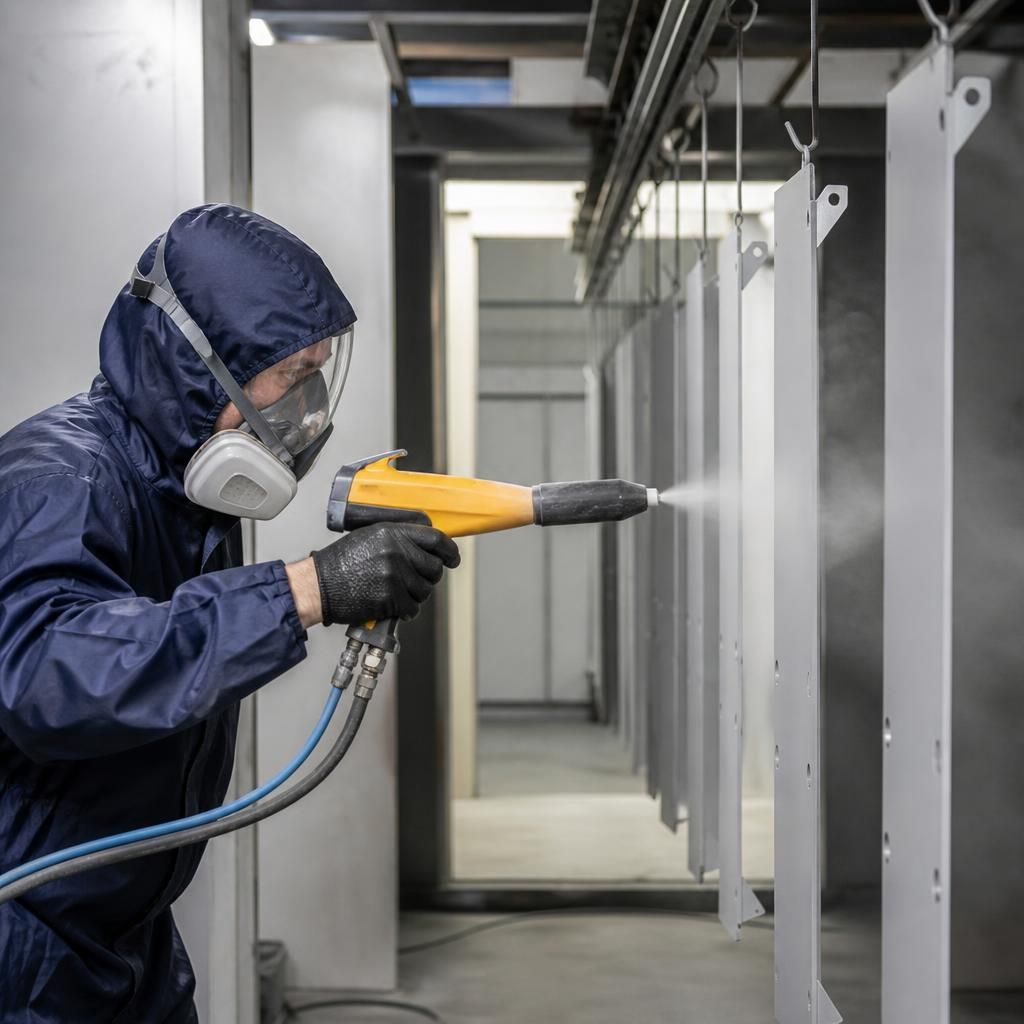
Primer chemistry influences longevity by determining how the coating system responds when the outer powder layer is damaged. A zinc-rich system can provide sacrificial protection to steel, while an epoxy-based primer mainly forms a strongly bonded barrier against moisture and contaminants. These mechanisms are not interchangeable, so the choice should reflect the likely mode of failure rather than being based solely on the desired colour or surface appearance.
For components likely to experience chips, abrasion or handling damage, the primer must retain adhesion around the affected area and work with the selected topcoat. A primer that offers excellent protection in one application may be unsuitable if it cannot tolerate the required cure schedule, flexibility or subsequent powder layer. Reviewing the technical data for the complete system helps confirm that the primer’s protective mechanism, application method and curing requirements are suited to the component’s intended use.
Discuss Your Primer Requirements for Powder Coating
Discuss your component’s substrate, service environment and intended topcoat with our powder-coating specialists to assess the most suitable primer system. Share your drawings or part details where relevant so the coating requirements can be reviewed before processing.