

How do collection and delivery services influence the choice of powder coating materials?
Collection and delivery services can influence powder coating material selection by making component size, batch volume, transport protection and handling requirements part of the specification. These practical considerations may favour a coating system that provides the required durability and finish while remaining suitable for the component’s journey between the customer and coating facility.
Collection and delivery services influence the choice of powder coating materials by adding logistical requirements to the technical specification. The coating must not only suit the metal, intended use and required appearance; it must also be practical to prepare, cure, package and transport as part of the overall production process. Logistics therefore act as a selection filter rather than determining the coating chemistry on their own.
End-use performance remains the starting point. A component exposed to weather, chemicals, abrasion, impact or moisture requires a material with the appropriate resistance. Polyester systems are commonly considered for external durability, epoxy systems for adhesion and chemical resistance in suitable environments, and specialist thermoplastic materials such as nylon where a more resilient or protective finish is required. Collection and delivery arrangements cannot compensate for choosing a coating that is unsuitable for the component’s operating conditions.
Once the performance requirement is established, the movement of parts between the customer and the coating facility can affect which technically suitable option is most practical. Important considerations include:
- Process compatibility: the selected powder must be suitable for the metal substrate, pretreatment method, application equipment and curing conditions. Components may need to be assessed before collection so that the coating specification does not conflict with the way they are manufactured or assembled.
- Component geometry: recessed areas, sharp edges, threaded sections, close tolerances and assembled parts can affect application and subsequent packing. A material and finish should be selected with these features in mind, particularly where coating build could affect fit or function.
- Curing requirements: powder coatings require controlled heating to form the finished film. The suitability of a system may depend on the component’s material, thickness and heat tolerance. This is especially relevant where parts contain heat-sensitive elements, inserts, seals or pre-assembled components.
- Surface preparation: coatings differ in how they perform on prepared substrates and in the level of preparation needed to achieve reliable adhesion. Collection arrangements provide an opportunity to clarify the existing surface condition, previous coatings, contamination risks and any areas that must remain untreated.
- Finish specification: gloss level, texture, colour, film thickness and visual consistency should be agreed before work is scheduled. A finish that is appropriate for a hidden structural part may not be suitable for a visible architectural or automotive component, even if both are made from the same metal.
The choice can also be affected by whether the component needs a standard coating system or a specialist formulation. Nylon and other thermoplastic powders may be considered where the required combination of toughness, insulation, chemical resistance or surface feel differs from that offered by conventional thermoset coatings. Protective or corrosion-resistant systems may be more appropriate where the part’s service environment creates a particular risk. In each case, the coating must remain compatible with the application and curing process as well as with the collection and delivery plan.
Packaging and dispatch requirements are part of the specification because the finished surface must reach the customer in the agreed condition. This does not mean that one powder material is universally better for transport. Instead, the selected finish should be judged alongside its resistance to marking, scuffing and contact during normal post-coating movement. Vulnerable edges, delicate textures and high-appearance finishes may require a different packing approach from robust industrial components.
Collection and delivery can also make technical communication more important. The coating provider needs accurate information about the number and type of parts, substrate, dimensions, intended environment, masking points, tolerances, colour requirements and any restrictions on heat exposure. Drawings, photographs or sample components can help confirm whether the proposed material is appropriate before the parts enter the coating process. Clear instructions reduce the risk of selecting a finish that meets a general colour or corrosion requirement but fails to meet an assembly or performance constraint.
For businesses across the Midlands and surrounding areas, a collection and delivery service can be incorporated into the specification from the outset. A practical assessment should compare the following:
- the environment in which the component will be used;
- the required resistance to corrosion, chemicals, impact, abrasion and weather;
- the substrate and its tolerance of the curing process;
- the required film build, colour and surface texture;
- any masking, dimensional or assembly constraints; and
- the method of packing and returning the completed parts.
The best material is therefore the one that satisfies the functional specification while fitting the complete production route. Collection and delivery services make that route easier to assess as one connected process, helping manufacturers, fabricators, construction firms and automotive businesses avoid treating coating selection, processing and transport as separate decisions.
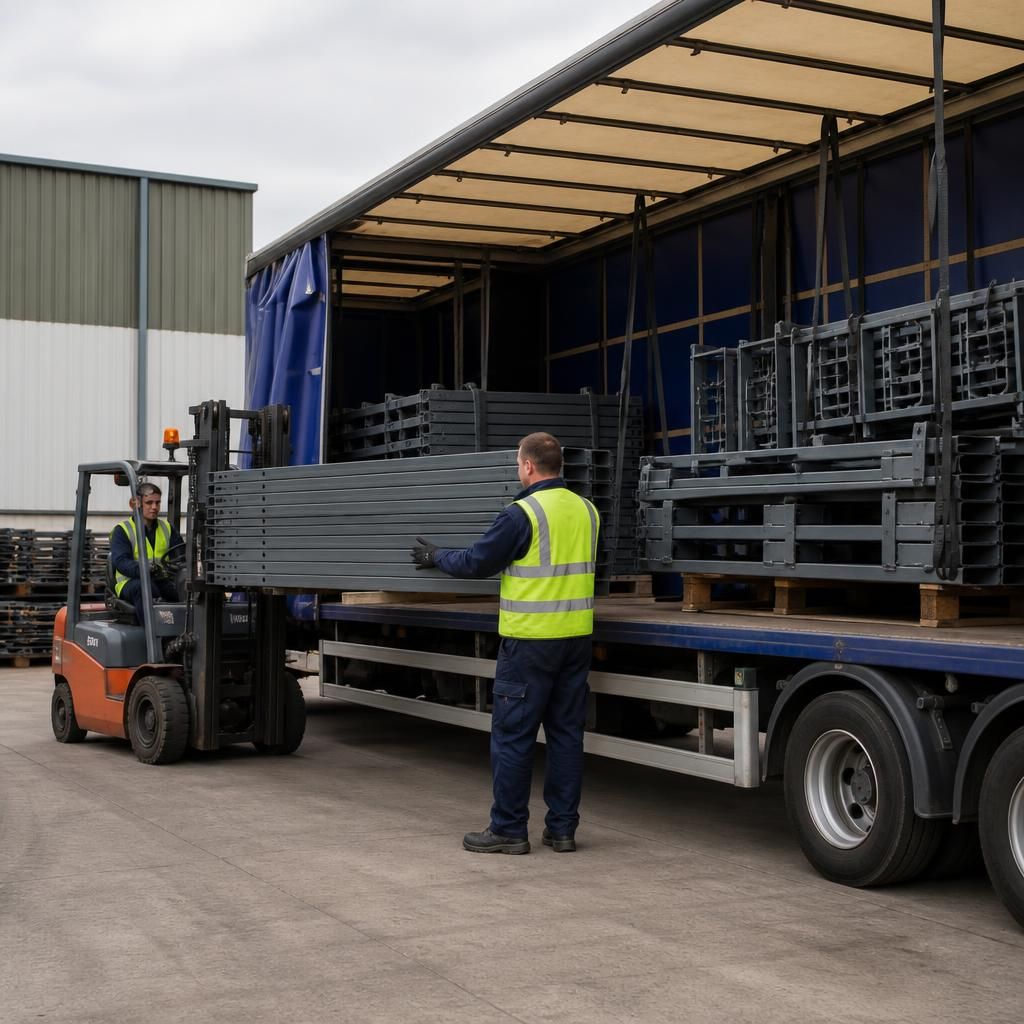
Collection and delivery services can influence material selection when a batch contains components with different handling or installation requirements. Parts that will be stored, moved between production stages or fitted directly on site may need a finish selected with those practical conditions in mind, rather than choosing a powder solely for its colour or general corrosion resistance.
Planning the movement of the complete batch also helps identify whether one coating system is appropriate for all items. Where components have different service conditions or dimensional requirements, separating them into suitable coating specifications can prevent an unsuitable compromise. The logistics plan therefore supports a more accurate comparison of standard, specialist and protective powder coatings before processing begins.
Discuss Your Powder Coating Material Requirements
Discuss your powder coating material requirements with the team, including the component’s substrate, service environment and finish specification. This will help establish which coating options are technically suitable for your parts and production requirements.