

How does the choice of powder coating material impact performance and cost for aluminium components?
The powder coating material selected for aluminium affects adhesion, corrosion resistance, UV and chemical performance, appearance and service life. Higher-specification formulations can increase coating cost, but choosing material to match the component’s environment and performance requirements can help avoid premature failure, rework and unnecessary expense.
The powder coating material determines how an aluminium component behaves in service and how much it costs to process. The most important choice is the resin system—the binder that forms the coating film—supported by pigments, fillers and additives. Selecting a formulation for the component’s environment, required finish and production method is usually more economical than choosing solely by powder price.
Thermoset and thermoplastic powders have different performance profiles. Thermoset powders chemically cross-link during curing, creating a permanent film that cannot simply be melted and reshaped. Polyester, epoxy and epoxy-polyester hybrid systems are common examples. Thermoplastic powders melt and solidify without the same chemical cross-linking process; nylon is one example used where particular resistance or a thicker protective layer is required.
- Polyester powders are commonly selected for aluminium used outdoors because the formulation can be designed for exposure to sunlight and weathering. They are available in a wide range of colours and finishes, making them suitable where appearance and external use both matter.
- Epoxy powders provide a hard, chemically resistant coating and can be appropriate for components used indoors or in conditions where sunlight exposure is limited. An epoxy formulation is not automatically the right choice for an exterior decorative surface, because prolonged ultraviolet exposure can affect its visual performance.
- Hybrid powders combine epoxy and polyester characteristics. They can offer a balance between hardness, chemical resistance and finish for suitable indoor applications, but the exact balance depends on the formulation.
- Polyurethane and other specialist formulations may be considered where the specification calls for particular flexibility, smoothness, chemical resistance or appearance.
- Nylon and other thermoplastic coatings can be useful for demanding wear, impact or chemical applications. They may require different application controls and should be assessed against the component’s geometry and required coating thickness.
These categories are broad rather than interchangeable product specifications. Two powders based on the same resin family can behave differently because of their additives, pigment package, gloss level, curing schedule and intended use. The technical data sheet should therefore be checked for the actual operating limits rather than relying on the resin name alone.
Cost is affected by the amount of usable coating applied, not just the price per kilogram. Powder consumption depends on the component’s surface area, specified film thickness, geometry and the efficiency of application and recovery. A powder with a higher purchase price may have a lower applied cost if it gives consistent coverage with less waste or reduces the need for corrective work. Conversely, a low-cost material can become expensive if it requires a heavier film, produces more rejects or is unsuitable for the service conditions.
- Film thickness: a thicker protective layer uses more material and may affect edge coverage, tolerances, threads, slots and moving interfaces. Applying more powder than the specification requires does not necessarily improve performance.
- Transfer efficiency and overspray: component shape, recesses, sharp edges and the powder’s application characteristics affect how much material reaches the aluminium. Recovery systems can reduce waste, although reclaimed powder may not be suitable for every colour or specification.
- Colour and finish changes: changing between powders can involve cleaning and set-up work. Small or varied batches may therefore have a different processing cost from a consistent production run.
- Curing requirements: powders must reach the specified metal temperature for the required time. A formulation with a different cure window can influence oven settings, line speed, energy use and production planning.
- Masking and dimensional control: specialist powders or thicker coatings may require careful masking around contact points, holes, threads and mating surfaces. The associated preparation and inspection form part of the total cost.
- Surface preparation and rework: the chosen coating cannot correct unsuitable substrate condition, poor cleaning or an inappropriate pre-treatment system. Stripping and recoating rejected parts adds labour and material cost.
The aluminium alloy and component design also affect the material decision. Thin sections, deep recesses and assemblies containing different metals may need a coating specification that accommodates heat transfer, access and dimensional requirements. Components with close tolerances may need tighter control of powder deposition than simple panels or brackets. The coating should be specified alongside the drawing, masking plan and permitted film-thickness range rather than as an isolated colour instruction.
For a sound comparison, define the conditions the aluminium will encounter: internal or external use, exposure to sunlight and moisture, contact with oils or cleaning chemicals, abrasion, impact, operating temperature, and any electrical or dimensional requirements. Then compare candidate materials against those conditions, the required finish and the available curing process. This avoids paying for properties that are unnecessary while preventing an economy material from being used beyond its intended limits.
A practical quotation should distinguish the powder material from the cost of preparing, coating, curing, inspecting, masking, packing and handling the components. It should also confirm the agreed resin type, colour and finish, film-thickness requirement, curing basis and any performance specification. Powder Coatings can assess these factors for aluminium components supplied by manufacturers, fabricators, construction businesses and automotive companies across the Midlands, with collection and delivery options available where required.
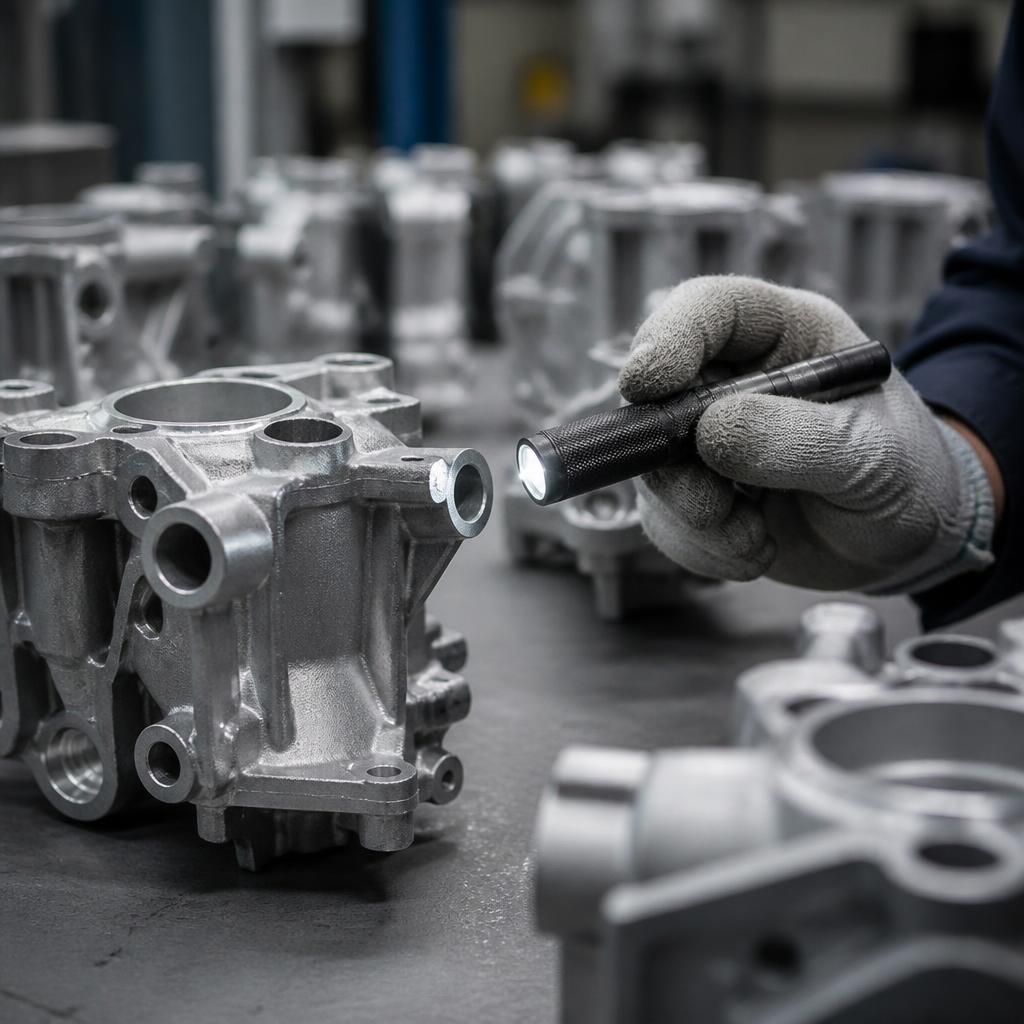
For aluminium castings and porous sections, powder choice must account for the risk of gas release during curing. Trapped air or moisture can escape as the component heats, causing pinholes, bubbles or surface defects in the cured film. Where the component and process justify it, a powder formulated for degassing may help reduce this risk, but it does not replace suitable cleaning, drying and substrate preparation.
This is a performance and cost consideration because a visually defective coating may require stripping and recoating, adding handling, labour and material use. Assessing the aluminium substrate, component geometry and curing behaviour before selecting the powder can therefore be more economical than treating the material as a simple colour choice.