

What are the environmental conditions that affect the longevity of epoxy and polyester powder coatings?
The longevity of epoxy and polyester powder coatings is affected by ultraviolet (UV) exposure, moisture, temperature changes, chemicals, abrasion and atmospheric pollutants. Epoxy coatings generally provide strong chemical and corrosion resistance but can chalk or lose colour in prolonged sunlight, while polyester coatings usually offer better weather and UV resistance for exterior applications; correct preparation, film thickness and curing remain essential in both cases.
The longevity of an epoxy or polyester powder coating depends on the severity and duration of the service environment, as well as how the coated component is designed, prepared and maintained. The same coating can perform well on a sheltered internal part but deteriorate sooner where condensation, retained contamination, movement, impact or aggressive process conditions are concentrated at particular areas.
Exposure should be assessed by location and use, not simply by whether a component is indoors or outdoors. Relevant environments include dry internal areas, humid spaces, locations subject to condensation, exposed external installations, industrial atmospheres and parts that experience repeated splashing or immersion. A component may also have several exposure zones: an upper face, underside, joint, fixing point and edge can each experience different conditions.
- Condensation cycles: Repeated changes between a cold metal surface and warmer humid air can create a thin water film. If the design prevents drainage or drying, this can keep the coating interface wet for extended periods.
- Water retention: Flat ledges, unsealed joints, overlapping metal, hollow sections and poorly positioned fixings can hold water against the coating. These details can become weak points even when the main coated surface remains sound.
- Thermal movement: Components that heat and cool unevenly may expand and contract at different rates. This places stress on the coating, particularly around sharp transitions, welds, joints and areas where dissimilar materials meet.
- Process contamination: Oil mist, manufacturing residues, cleaning chemicals, salt deposits and airborne industrial substances can accumulate on a surface. Their effect depends on concentration, contact time and whether the surface is cleaned before deposits become established.
- Impact and vibration: Repeated knocks, vibration, movement at fixings and contact between adjacent parts can damage the film locally. Once a chip or crack exposes the metal, the surrounding area may become more vulnerable to under-film corrosion.
- Biological conditions: Damp, shaded areas may allow organic deposits or microbial growth to remain on the surface. These deposits can retain water and make inspection more difficult, especially around joints and concealed faces.
Component geometry is therefore an environmental consideration in its own right. Sharp edges, deep recesses and narrow gaps are harder to cover consistently and are more likely to retain contamination. Weld spatter, residues in corners and poorly prepared edges can also reduce the effective protection at the coating-to-metal interface. Good drainage, accessible surfaces, suitable edge treatment and avoidance of unnecessary crevices help reduce these localised risks.
The condition of the underlying metal affects service life as well. Corrosion that begins beneath the coating, movement in a joint or contamination left on the substrate can cause blistering, lifting or loss of adhesion. Powder coating is not a substitute for correcting active corrosion, repairing defective welds or removing grease, scale and other preparation residues. The preparation system should be selected for the substrate and the expected environment before the powder is applied.
Epoxy and polyester should be considered in relation to the complete exposure profile rather than treated as interchangeable finishes. An epoxy-based system may be suitable where the main requirement is protection in a controlled internal or chemically demanding environment, while a polyester-based system is commonly considered where resistance to external exposure and appearance retention are important. The final choice still depends on the specific atmosphere, component design, preparation standard, required film build and curing schedule. In some applications, a multi-layer system may be more appropriate than a single powder coat.
Maintenance can limit the effect of environmental exposure. Coated parts should be inspected for chips, cracking, lifting, staining, corrosion at edges and deposits around fixings or joints. Cleaning should remove accumulated substances without introducing a more aggressive chemical or an abrasive method that damages the film. Where a defect reaches the metal, it should be assessed and repaired rather than simply covered with further coating.
When specifying a coating, provide the coater with information about the actual service conditions. This should include:
- the installation location and whether the component is sheltered, exposed, humid or subject to condensation;
- contact with process fluids, cleaning products, salts or other contaminants;
- expected heating, cooling, vibration, impact and contact with other parts;
- areas where water or deposits may collect;
- the metal substrate, existing corrosion and any welded or repaired sections; and
- the required appearance, cleaning regime and inspection arrangements.
This information allows the coating specification to address the actual environmental load, rather than relying only on the nominal powder type. For industrial components, longevity is best treated as a combined result of suitable chemistry, sound substrate preparation, correct application and curing, sensible component design and ongoing inspection.
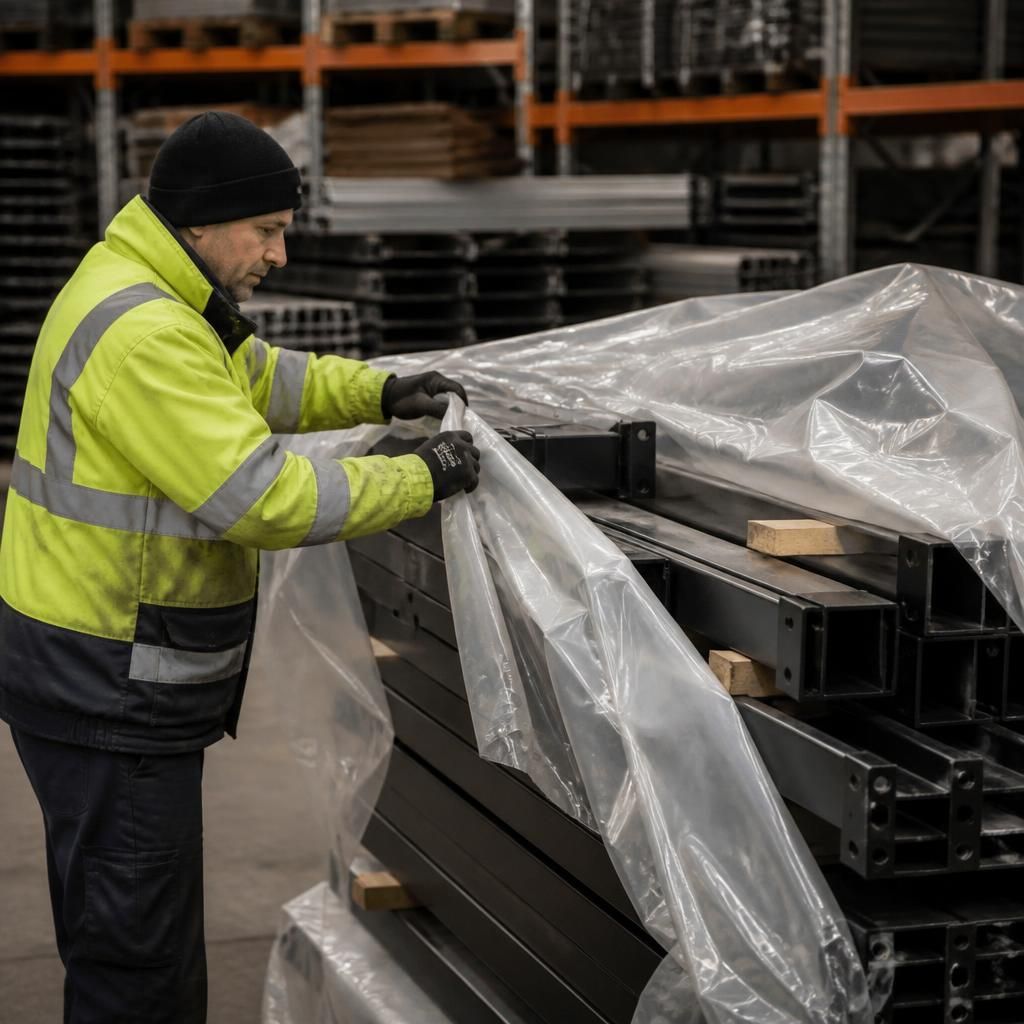
Environmental exposure can affect a powder-coated component before it reaches its installation site. Damp storage, condensation inside packaging and contact with wet or contaminated packing materials can mark the finish or allow corrosion to develop at small defects.
Coated parts should be stored in a clean, dry, ventilated area with separators that prevent metal-to-metal contact. Components should not be tightly wrapped while warm or damp, as trapped moisture can remain against the coating. During handling, avoid dragging parts across one another and inspect edges, fixing points and contact areas after transport. Any damage found before installation should be assessed and repaired so that the coating system is not compromised from the outset.
Discuss Your Powder Coating’s Environmental Requirements
Discuss your component’s environmental requirements with our powder-coating team so the epoxy or polyester system, preparation and finish can be matched to its intended use. Provide details of the substrate, exposure conditions and maintenance requirements for informed coating advice.