

What are the different types of finishes available with electrostatic powder coating for industrial purposes?
Industrial electrostatic powder coating is available in smooth, textured, matt, satin, gloss, metallic and specialist finishes such as wrinkle or protective nylon coatings. The appropriate option depends on the required appearance, surface texture, wear resistance and operating environment of the metal component.
Industrial electrostatic powder coating finishes are selected by combining the powder’s resin chemistry with the required appearance and performance characteristics. The resin determines how the coating behaves in service, while the formulation, curing conditions and application method influence the final surface. This means two components with a similar visual result may have very different resistance to weathering, chemicals, impact, abrasion or heat.
Common powder coating resin systems include:
- Polyester powders: widely used for components exposed to outdoor conditions because they provide good resistance to ultraviolet light and weathering. They are suitable for structural metalwork, external equipment, architectural components and many general industrial applications.
- Epoxy powders: provide strong adhesion and good resistance to corrosion, moisture and many chemicals. They are often selected for components used indoors or where protection from the substrate is more important than long-term exposure to sunlight. Direct and prolonged ultraviolet exposure can affect their appearance, so the service environment must be considered.
- Epoxy-polyester hybrid powders: combine characteristics of both resin types and are commonly used for indoor equipment, fabricated parts, cabinets and general engineering components. They can offer a practical balance of adhesion, surface protection and appearance where severe external exposure is not expected.
- Polyurethane and acrylic powders: can be specified where a particularly clean surface, colour stability or resistance to particular environmental conditions is required. Their suitability depends on the component, the powder formulation and the curing specification rather than the resin name alone.
- Polyamide or nylon powders: are used for demanding applications involving abrasion, impact, friction, chemicals or repeated handling. These coatings may be appropriate for industrial components that need a more robust functional layer than a conventional decorative powder.
Functional finishes can also be formulated for a specific duty. A corrosion-protective system may use a suitable primer layer beneath the visible topcoat, particularly where steel will face moisture, salts or aggressive industrial conditions. Chemical-resistant formulations are considered for parts exposed to oils, cleaning agents, fuels or process chemicals. Abrasion-resistant coatings are relevant to chutes, handling equipment, brackets, guards and other components subject to repeated contact. The correct specification should identify the actual substance, temperature, contact time and mechanical action involved; the general term “chemical resistant” does not cover every chemical or concentration.
Some finishes are designed to provide electrical insulation, controlled conductivity or resistance to static build-up. These are specialist requirements and should be defined before coating, because the electrical behaviour of the finished surface may depend on the powder formulation, coating thickness, substrate and grounding arrangements. They should not be treated as interchangeable with a standard decorative coating.
A clear powder coat may be used where the underlying metal appearance or an existing coated surface needs to remain visible while gaining an additional protective layer. Clear systems can highlight surface defects, weld marks, contamination or uneven preparation, so the substrate still needs to be prepared to an appropriate standard. A clear coat also does not correct corrosion or poor adhesion in an earlier layer.
The visual character of a finish is affected by more than the powder colour. The formulation and application settings influence light reflection, surface uniformity and the way the coating disguises or reveals minor imperfections. The condition of the metal, edge geometry, welds, holes and recessed areas also affect the result. Components with sharp edges, deep recesses or complex profiles may require particular attention to powder coverage and curing.
Surface preparation is therefore part of the finish specification rather than a separate cosmetic step. Oil, grease, mill scale, rust, dust and previous coatings can interfere with adhesion. Depending on the substrate and service conditions, preparation may include degreasing, abrasive cleaning, chemical pre-treatment or a conversion coating. Galvanised steel and previously coated materials may need a process tailored to their surface chemistry to reduce adhesion problems, outgassing or premature failure.
The powder must then be applied and cured within the parameters specified for that product. Electrostatic charging helps the powder adhere to the earthed component, but the deposited layer still has to reach the correct cure condition throughout the part. Large sections, heavy fabrications and areas with different metal thicknesses can heat at different rates. Under-curing may leave the coating with inadequate performance, while excessive heat can affect colour, gloss or the substrate. The powder manufacturer’s technical data and the component’s thermal behaviour should guide the curing process.
When choosing between finishes, an industrial specification should record:
- the substrate, including whether it is mild steel, galvanised steel, aluminium or another metal;
- whether the component will be used indoors, outdoors or in a controlled industrial environment;
- exposure to ultraviolet light, moisture, salt, chemicals, heat, abrasion and impact;
- the required appearance and acceptable level of surface variation;
- any electrical, hygiene, friction or insulation requirements;
- the component’s dimensions, weight, geometry and areas that may be difficult to coat;
- the required preparation, primer and topcoat system; and
- how the finished parts will be handled, assembled, transported and maintained.
For batch and industrial work, sample approval can be useful before a full production run. A sample allows the specified powder, preparation method and cure cycle to be assessed on the same or a representative substrate. It can also reveal problems caused by weld contamination, trapped gases, masking requirements or contact points that may not be apparent from a drawing alone.
The most suitable electrostatic powder coating finish is therefore not simply the one that looks closest to the desired colour. It is the complete coating system: substrate preparation, primer where required, powder chemistry, application, curing and inspection. A Midlands industrial powder coating specialist can use the component’s operating conditions and production requirements to help identify whether a standard decorative system, a protective formulation or a more specialised finish is appropriate.
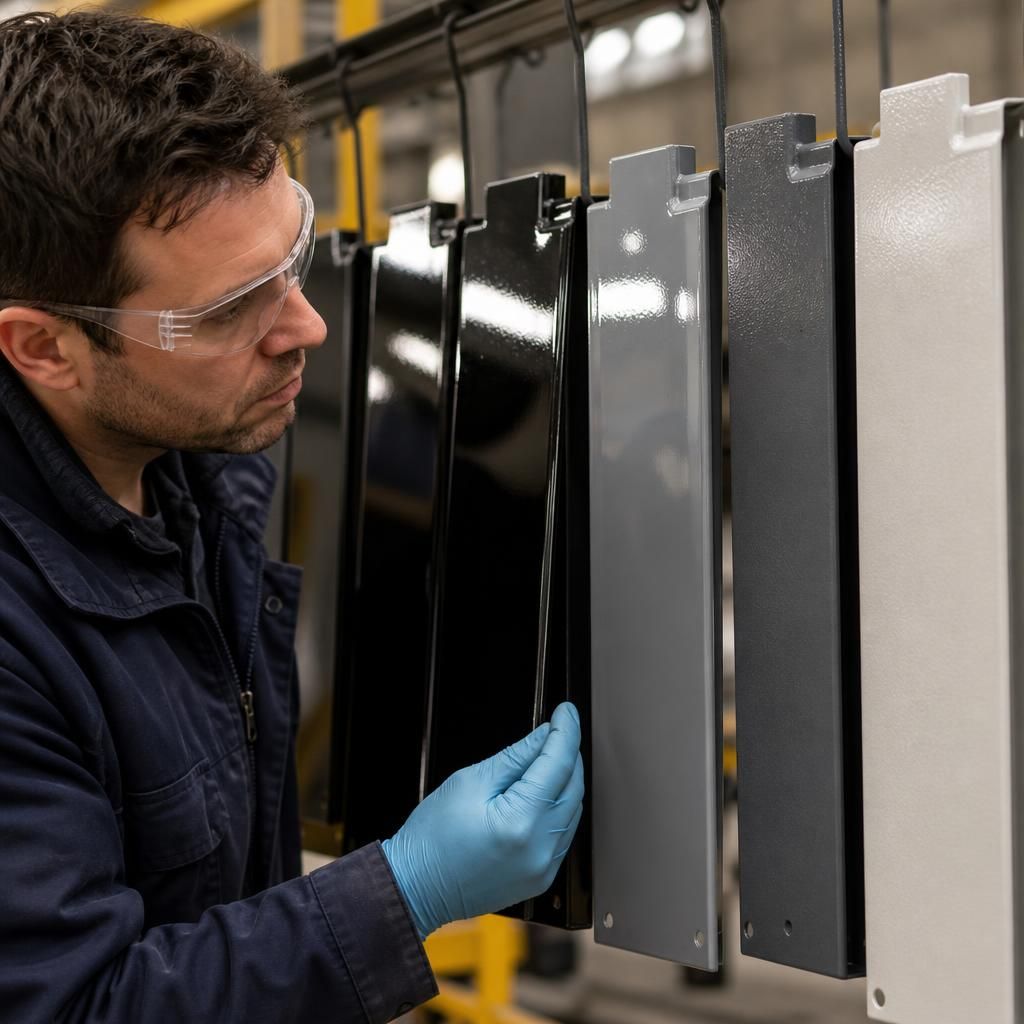
Gloss level is an important distinction between industrial powder coating finishes because it affects both appearance and how the component is viewed in service. A high-gloss surface reflects more light and can make colour appear more vivid, while matt and satin finishes produce less reflection and may be preferred where glare or a highly reflective appearance would be unsuitable.
The choice should also take account of the component’s surroundings, handling and cleaning requirements. Gloss and texture should be specified alongside the colour, rather than treated as an afterthought, so that the finished parts match the intended visual and practical requirements.
Discuss Your Industrial Powder Coating Finish Requirements
Discuss your industrial powder coating finish requirements with the Midlands team, including the substrate, operating environment and required appearance. This information can help establish a suitable finish and coating specification for your components.