

What types of blasting media are best suited for delicate metal surfaces?
Glass bead, plastic media and finely graded walnut shell are generally suited to delicate metal surfaces because they remove contamination with less risk of deep scratching, distortion or excessive material removal than aggressive abrasives. The best choice depends on the metal, existing coating and required surface profile, so test a small area and use controlled pressure before full preparation for powder coating.
For delicate metal surfaces, the most suitable blasting media are those matched to the required cleaning result rather than selected solely for maximum cutting power. Sodium bicarbonate and dry ice are useful where contamination must be removed with minimal alteration to the substrate, while fine ceramic media or carefully controlled fine aluminium oxide may be appropriate where the surface also needs a light profile for powder coating adhesion.
The correct option depends on the metal, its thickness, the condition of the existing finish and whether the objective is cleaning, coating removal or preparation for a new coating. A delicate component may be damaged by excessive impact even when the abrasive itself is considered suitable. Thin aluminium, zinc, brass, copper and decorative stainless steel therefore require a more controlled approach than heavily corroded structural steel.
- Sodium bicarbonate: A relatively soft, water-soluble medium suited to removing light oils, carbon deposits, some paint residues and general surface contamination. It has limited ability to create an anchor profile, so it is normally more appropriate for cleaning than as the only preparation before powder coating. Any residue must be removed thoroughly because remaining salts or moisture can interfere with coating adhesion.
- Dry ice pellets: Dry ice cleaning is effectively non-abrasive because the pellets sublimate on impact. It can remove loose contamination and certain coatings without leaving conventional abrasive particles embedded in the metal. However, it does not create a mechanical key, so a separate preparation method may be needed where the powder coating specification requires a defined surface profile.
- Fine ceramic media: Ceramic beads can provide a more controlled impact than sharp, angular abrasives. They may be suitable for light surface conditioning, removal of minor oxidation or preparation of components where dimensional accuracy and appearance are important. Media size, equipment settings and the condition of the ceramic must be managed carefully, as any abrasive can damage a thin or soft substrate if applied too aggressively.
- Fine aluminium oxide: This angular medium is harder and more cutting than the options used purely for cleaning. It can be considered for delicate parts that need a measurable key, but only with a fine grade and carefully controlled blasting parameters. It is generally less forgiving on soft metals, polished faces and thin edges, where it can produce excessive roughness or visible impact marks.
For powder coating preparation, the key distinction is between removing contamination and producing surface texture. A cleaning medium may leave the metal visually clean but too smooth for reliable adhesion. Conversely, an aggressive abrasive may create a profile that is deeper or coarser than necessary, alter sharp edges and affect the appearance of the finished component. The target should be a consistent, suitably fine surface rather than the most heavily blasted finish possible.
Particle characteristics matter. Smaller particles generally offer more control and are less likely to remove substantial amounts of material in a single pass. Rounded particles tend to peen or condition the surface, whereas angular particles cut into it and create a more pronounced profile. Harder media remove coatings more quickly but increase the risk of distortion, embedded debris and loss of detail. The same abrasive can therefore be suitable for one component and unsuitable for another, depending on its grade and application.
Settings should be selected with the component’s construction in mind. Lower blasting pressure, a suitable nozzle stand-off distance, a consistent traverse speed and short, overlapping passes help limit heat and impact concentration. Edges, corners, threads, apertures and thin sections deserve particular attention because they receive a higher local effect than broad, flat areas. Masking or plugging may be necessary to protect machined faces, bearing seats, threaded holes and other areas that must remain dimensionally accurate.
Media cleanliness is also important. Reused abrasive can carry oil, paint, corrosion products or particles from a harder metal into a more delicate component. Cross-contamination may affect coating adhesion or leave unwanted inclusions in the prepared surface. The blasting system should be suitable for the selected medium, with clean compressed air and effective separation of spent material where required.
After blasting, the surface should be inspected for remaining oxidation, embedded particles, uneven texture and damage to critical features. Components should be handled with clean gloves and protected from fresh contamination before coating. Non-ferrous metals do not develop the same flash-rusting behaviour as bare steel, but they can still oxidise, tarnish or retain moisture and residues that compromise the coating process.
Where a delicate part has an existing plating, anodised layer or decorative finish, the objective may be to remove contamination without stripping the underlying treatment. In such cases, full abrasive removal is not automatically appropriate. The preparation method should be agreed with reference to whether the original layer is to remain, be repaired or be completely removed before powder coating.
A professional assessment should therefore consider the substrate hardness, wall thickness, component geometry, coating specification and required finish together. The best blasting media is the least aggressive option that achieves the necessary cleanliness and, where required, a suitable coating profile without compromising dimensions or surface appearance.
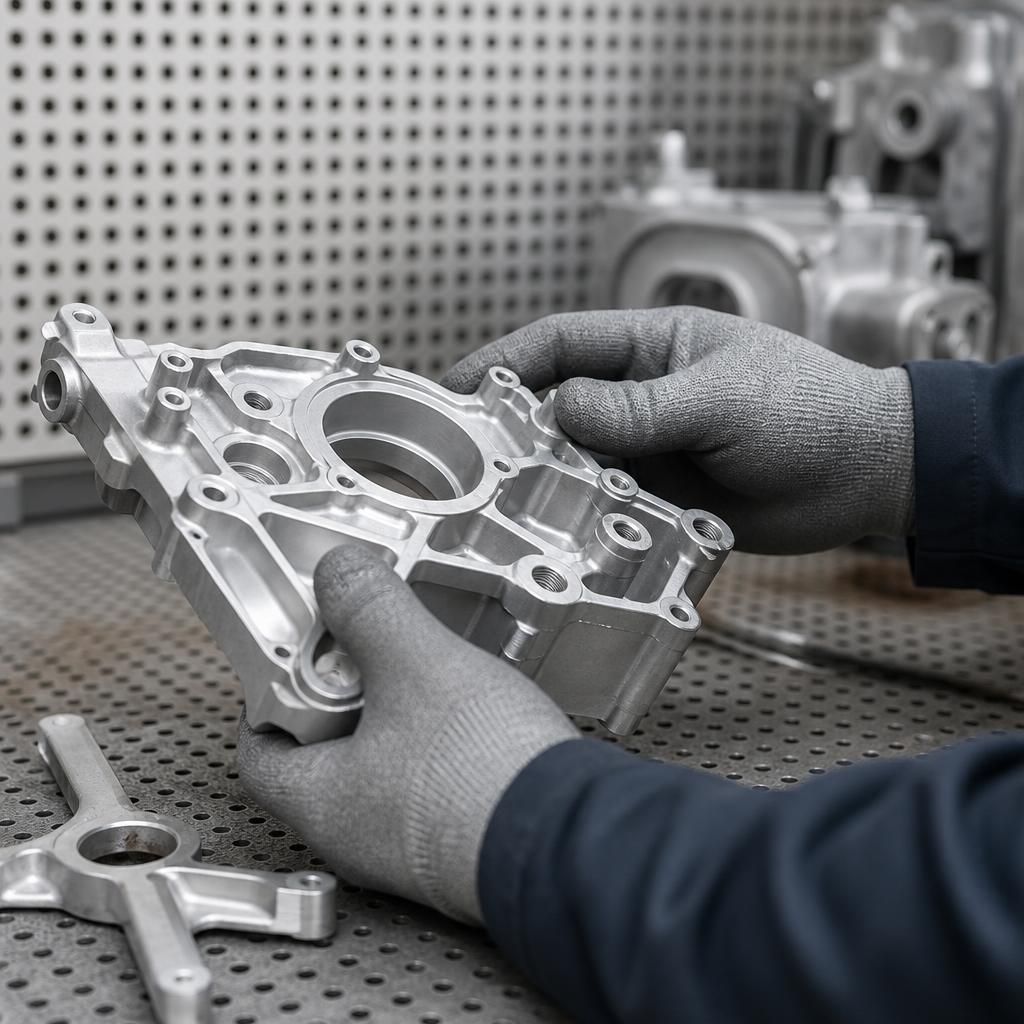
Component geometry is an important part of choosing blasting media for delicate metal surfaces. Fine abrasive can become trapped in blind holes, threads, folded edges, seams and internal cavities, where it may later contaminate the powder coating or interfere with assembly. A medium that is suitable for an exposed flat panel may therefore be unsuitable for a precision component with enclosed features.
Before preparation, identify areas where media could collect and decide how they will be protected or cleared. Components should be positioned so cavities can drain, with critical openings masked where appropriate. After blasting, trapped particles should be removed and the part checked before coating. This is particularly important for threaded holes, bearing seats and close-fitting joints, where even a small amount of residual media can affect dimensional accuracy or function.
Discuss the Right Blasting Media for Your Metal Components
Discuss your component specifications with a powder-coating specialist before selecting a blasting medium, particularly where the metal is thin, plated, machined or dimensionally critical. This allows the preparation method to be matched to the required coating finish and areas that must remain protected.