

How do I choose the right protective powder coating for aluminium applications?
Choose a protective powder coating for aluminium by assessing the component’s exposure to moisture, chemicals, abrasion and UV, alongside the required appearance and service performance. Confirm that the coating system and pretreatment are suitable for aluminium, then select the finish and specification that match the application rather than colour alone.
The right protective powder coating for aluminium is determined by the component’s environment, the aluminium alloy and the required service life, rather than by colour alone. A suitable specification combines compatible pretreatment, powder chemistry, film performance, curing conditions and the appearance required for the finished part.
Start with the aluminium substrate. Alloy composition, surface condition and manufacturing method can affect coating adhesion and appearance. Extrusions, castings, sheet, machined parts and fabricated assemblies may have different levels of porosity, oxide contamination, weld residue or lubricant on the surface. These should be identified before coating because a powder system cannot compensate for contamination or unsuitable preparation.
Ask whether the aluminium is new, previously coated, anodised or exposed to weather. Existing finishes may need to be removed, and corrosion products must not be sealed beneath the new coating. Welds, sharp edges, recesses and joints also deserve attention: they can be more vulnerable to incomplete coverage, trapped moisture or mechanical damage than broad, accessible faces.
Match the coating chemistry to the exposure.
- Exterior architectural polyester systems are generally selected where aluminium must retain its decorative finish while resisting outdoor weathering and ultraviolet exposure. The precise grade should reflect the intended level of colour and gloss retention.
- Industrial polyester systems may suit general external or internal metalwork, but the specification should be checked against the actual exposure rather than assumed to cover every outdoor application.
- Epoxy systems can provide strong resistance to many chemicals and good adhesion, making them useful in protected or internal environments. They may not be the first choice where long-term direct sunlight and colour retention are the main requirements.
- Epoxy-polyester hybrid systems can be appropriate for indoor components where a balance of appearance and general protection is required. Their suitability depends on the temperature, chemicals and handling conditions involved.
- Specialist protective coatings should be considered where the component faces unusual abrasion, chemical contact, impact, electrical or hygiene requirements. The coating supplier should confirm that the proposed formulation has been tested for that particular duty.
Define the environment in practical terms. Record whether the aluminium will be installed indoors or outdoors, exposed to rain or condensation, positioned near the coast, subjected to road salts, or located in an industrial atmosphere. Note any contact with oils, cleaning agents, solvents, acids, alkalis or process chemicals. The frequency of cleaning and the cleaning method matter too, since aggressive chemicals, abrasive pads and high-pressure washing can damage a finish that is otherwise suitable for normal service.
Mechanical demands should be assessed separately from chemical exposure. Components that are handled, assembled, transported or exposed to rubbing may need greater resistance to impact, abrasion and edge damage. If the coating will be applied to moving parts, covers, brackets or fabricated assemblies, identify areas where contact or flexing occurs. A decorative finish is not automatically a heavy-duty protective finish.
Check pretreatment as part of the coating system. Aluminium forms an oxide layer naturally, so cleaning and conversion treatment are important to establish a stable surface for adhesion and corrosion protection. The preparation sequence may include degreasing, rinsing, controlled abrasion or chemical conversion, depending on the substrate and the powder system. The exact process should be agreed with the coater because excessive abrasion, unsuitable chemicals or poor rinsing can create defects rather than improve the surface.
Where corrosion resistance is critical, ask what pretreatment is specified and how it is controlled. It is also important to prevent contamination between preparation and application. Handling marks, dust, moisture and residues can produce poor adhesion, pinholing, cratering or under-film corrosion.
Specify the finish according to use. Gloss, satin and matt finishes do more than change appearance. Highly glossy surfaces can make surface imperfections more visible, while very matt or textured finishes may retain dirt differently and can be harder to clean. Textured finishes may help disguise minor substrate variation, but they are not a substitute for proper preparation. Consider whether the component needs a smooth surface for cleaning, a particular visual effect for a manufactured product, or a finish that coordinates with adjacent materials.
Colour should be selected after the performance requirements are established. Dark colours can show dust, handling marks and surface heating more readily in some applications, while pale colours may make staining more apparent. If components are being matched to existing aluminium, compare an approved sample under relevant lighting rather than relying on a screen or colour name alone. Define acceptable variation where parts will be produced in batches.
Confirm curing and component design compatibility. Powder must be cured at the temperature and for the time specified for that product. The metal’s actual temperature, not simply the oven setting, determines whether the coating has cured correctly. Thick and thin sections, enclosed assemblies and heat-sensitive inserts may reach different temperatures. Materials that cannot tolerate the curing cycle should be identified before production, as should masking requirements for threads, contact faces, bores and moving interfaces.
Design details can affect the result. Drainage and ventilation holes may be needed in hollow fabrications to prevent trapped chemicals or air during preparation and curing. Tight corners, deep recesses and joined sections can be difficult to coat consistently. Parts should therefore be reviewed for racking, handling and access before the final coating specification is issued.
Use evidence appropriate to the risk. For straightforward indoor components, the technical data sheet and a clear description of the exposure may be sufficient. For external, safety-critical or chemically exposed parts, request supporting test information and define the acceptance criteria before coating. Relevant checks may include adhesion, visual appearance, coating thickness, cure, impact, abrasion, humidity or corrosion resistance, selected according to the service conditions. Laboratory test results are useful for comparing systems, but they do not reproduce every installation environment.
A trial part or representative sample is valuable when the substrate, finish or assembly is complex. It can reveal issues with colour, gloss, coverage, masking, outgassing and fit before a full batch is processed. The approved sample should be retained as the visual reference, with the powder type, finish, pretreatment and curing requirements recorded in the job specification.
For aluminium components supplied to a powder coater, provide the alloy or substrate information, dimensions, intended environment, handling requirements, masking points and any required colour or gloss standard. State whether the part will be exposed to chemicals, abrasion, coastal conditions or frequent cleaning. A specialist coating service can then help determine whether a standard architectural or industrial system is appropriate, or whether a more specialised protective specification is needed.
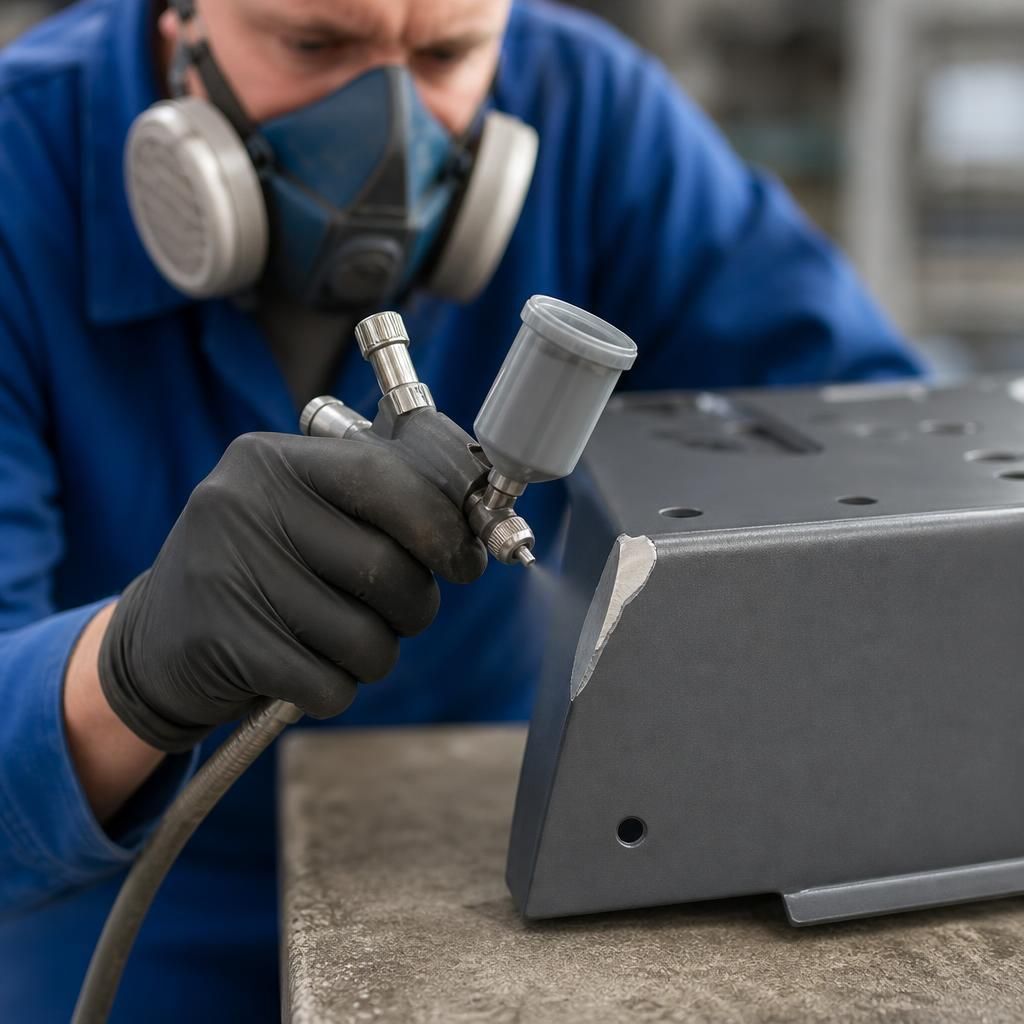
Consider how the coating will be repaired if the aluminium is damaged during installation, transport or service. Powder coating is applied as a cured finish, so local touch-ups may not reproduce the original texture, gloss or colour exactly. This is particularly relevant for visible components or parts likely to be handled.
Before selecting the system, ask whether a compatible repair method and matching material can be specified. Record the powder type, colour reference, gloss level and finish texture with the job details. For critical or highly visible applications, retain an approved coated sample so any future repair can be assessed against the original finish.