

What are the common challenges faced with primer, epoxy, and nylon coatings, and how can they be mitigated?
Common challenges with primer, epoxy and nylon coatings include inadequate surface preparation, poor intercoat compatibility, incorrect film thickness, curing faults and unsuitable exposure conditions. They can be mitigated through thorough cleaning and preparation, selecting compatible systems, controlling application and cure conditions, and matching the coating to the component’s service environment.
Primer, epoxy and nylon coating problems are often caused by a mismatch between the component, the coating system and the way the finished part will be used. In addition to basic preparation and curing controls, successful mitigation depends on accounting for component geometry, substrate condition, application access, dimensional requirements, handling and the different behaviour of each coating type.
Complex shapes can produce uneven coverage. Recesses, internal corners, narrow slots and enclosed sections may receive less powder than exposed faces. Electrostatic application can also create a Faraday cage effect, where charged powder is repelled from deep recesses and sharp internal angles. This can leave weak spots even when the visible surfaces appear satisfactory. Parts should be designed or positioned to improve line-of-sight access, and the coater should agree how difficult areas will be reached before processing. Where necessary, application settings and spray technique can be adjusted for the geometry rather than treating every component as a flat panel.
Edges and sharp transitions require particular attention. Coating tends to pull back from very sharp edges, while burrs can prevent a continuous film and create points where damage begins. Radiused edges, suitable deburring and removal of loose material help the coating form a more consistent protective layer. Welds should also be examined for spatter, sharp projections and trapped residues. Components with welded or fabricated sections may need additional specification because differences between parent metal and weld areas can affect appearance and performance.
Substrate variation can cause inconsistent results across a batch. Mild steel, galvanised steel, aluminium, castings and previously treated parts each present different coating conditions. Cast or porous materials may release gases during heating, leading to pinholes, blisters or small surface defects. These parts may require an appropriate degassing approach or a coating system selected for the substrate. Galvanised surfaces can also vary in reactivity and texture, so the treatment should be matched to the actual material rather than assumed from the part description alone.
Masking and contact points can affect both finish and assembly. Threads, bores, bearing seats, earth points and machined faces may need to remain free of coating. Poorly planned masking can leave exposed metal where protection is needed, while excessive coating on a mating surface can interfere with fit. Masking materials must withstand the process without leaving residue or altering the finish. Drawings should identify functional surfaces, permitted build-up and areas that must not be coated before the work is scheduled.
Appearance variation is a separate challenge from protective performance. Differences in gloss, texture, colour, film build, batch and viewing angle may be visible even when adhesion and corrosion resistance are acceptable. Large panels and adjacent components can make small variations more noticeable. A written specification should identify the required colour reference, gloss or texture, acceptable visual standard and whether parts must be processed together. Keeping related components within the same production sequence can help reduce avoidable variation.
Primer and epoxy systems can create problems when their role is not clearly defined. A primer may be selected for corrosion control, adhesion support or resistance to a particular service condition, but it is not automatically suitable as a complete finish coat. Epoxy can provide useful chemical and mechanical resistance, yet its suitability depends on the environment and the required appearance. The specification should state whether the system is a primer, a topcoat or a combined system, and should identify the loads, chemicals, moisture and cleaning methods the component will encounter.
Nylon introduces different considerations because it is commonly chosen for wear, impact, noise reduction or sliding contact. The coating may be unsuitable where tight tolerances cannot accommodate its thickness or where the component will encounter chemicals that attack the selected nylon grade. Contact surfaces should be assessed for friction, operating temperature, impact and repeated abrasion. Threads, shafts and close-fitting interfaces need particular care because even a durable coating can affect assembly if allowances are not made in the design.
Nylon powders can also be sensitive to storage and handling conditions. Moisture or contamination in the material can contribute to surface defects, so powder should be kept in suitable conditions and protected from unnecessary exposure. Components must be supported and handled in a way that avoids marking the finish before it has cooled and stabilised. Protective packaging is useful where coated parts will rub against one another during internal transport.
Batch control is important when repeatability matters. Record the substrate, coating system, colour, application requirements and any masking or dimensional constraints on the job specification. Inspect representative parts for coverage, finish and functional fit, particularly when a component is new, redesigned or being processed by a different route. Non-destructive checks can identify visual and dimensional issues, while adhesion or other performance testing should be selected according to the risk and service requirement rather than applied without purpose.
When a defect occurs, avoid treating the visible symptom in isolation. A blister may indicate trapped gas, contamination or a substrate issue; uneven colour may reflect application, batch or curing variation; and premature wear may indicate that the coating was not suited to the contact conditions. Comparing affected areas with sound areas, reviewing the component history and checking the process record usually provides a more reliable diagnosis than simply adding another coat.
For industrial components, the most effective mitigation is therefore a documented specification agreed before coating begins. It should cover the substrate, required function, service conditions, coating sequence, areas to remain uncoated, dimensional tolerances, appearance standard, inspection method and handling requirements. Specialist powder coating advice can help determine whether primer, epoxy, nylon or a combined system is appropriate for the part and its intended use.
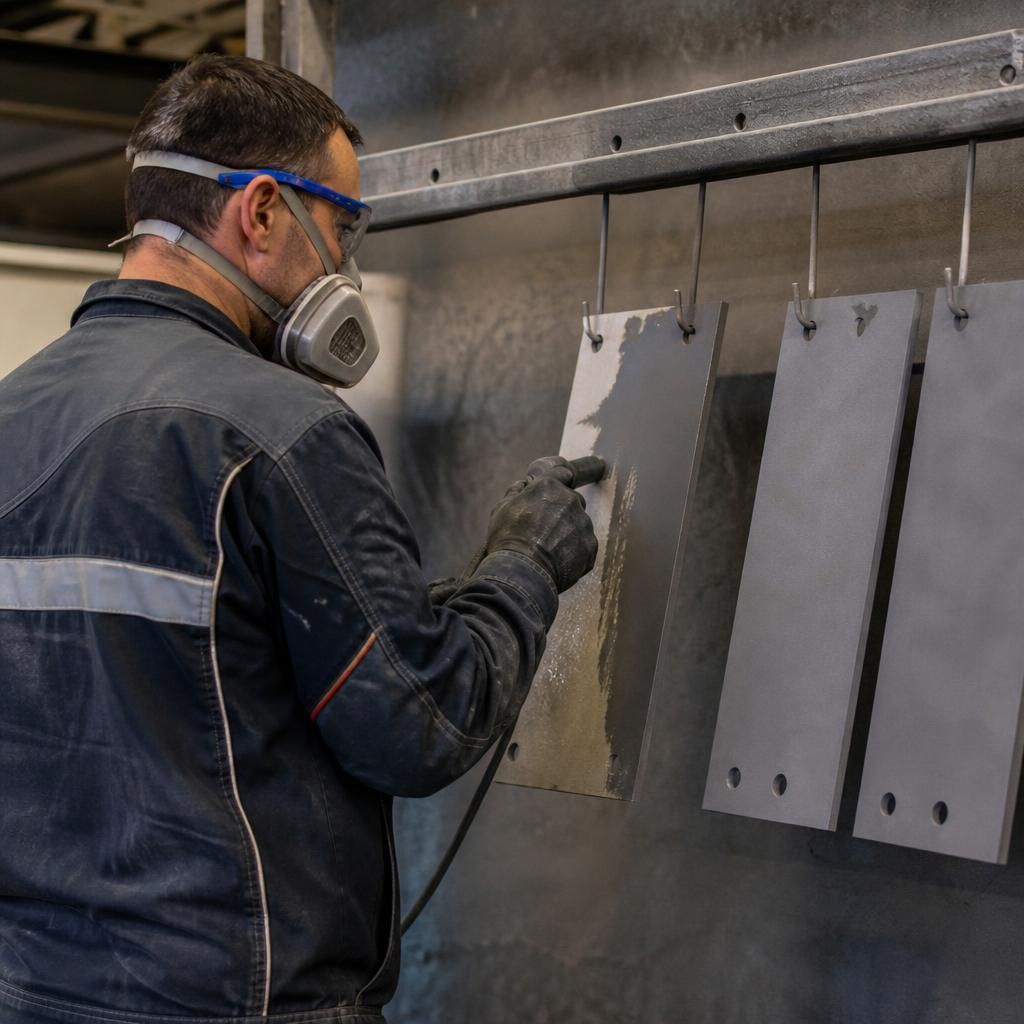
Reworking a defective coating requires more than applying another layer over the visible fault. Loose, blistered or poorly bonded material should be removed, and the exposed substrate should be checked for contamination, corrosion or outgassing before preparation begins again. Coating over an unstable layer can conceal the original defect while leaving the new finish vulnerable to premature failure.
The repair method should also match the coating system. A primer, epoxy layer and nylon finish may require different preparation and recoating conditions, particularly where film thickness or adhesion between layers is critical. The repaired area should be assessed for coverage, edge transition, appearance and functional fit before the component returns to service. Where defects are widespread or their cause is uncertain, processing a representative test piece can help confirm the revised preparation and application method.
Discuss Your Primer, Epoxy or Nylon Coating Requirements
Discuss your component drawings, substrate and operating conditions with the powder-coating team to identify a suitable primer, epoxy or nylon coating approach. Providing details of required tolerances and functional surfaces will help establish the right specification before processing begins.