

What are the key factors to ensure optimal adhesion and longevity in the powder coating process for aluminium?
Optimal adhesion and longevity when powder coating aluminium depend on thorough pretreatment, a clean and suitably keyed surface, compatible powder selection, controlled application and the correct curing cycle. Consistent film thickness, careful handling after curing and protection from unsuitable service conditions also help maintain the finish over time.
Optimal adhesion and long service life on powder-coated aluminium depend on controlling the entire coating system, not simply applying powder to a prepared component. Aluminium’s naturally forming oxide layer, alloy composition, component design, coating specification, process controls and post-coating handling all influence whether the finish remains securely bonded and resistant to corrosion, weathering and mechanical damage.
Assess the aluminium before processing. Aluminium alloys and tempers can behave differently during preparation and curing. Castings may contain porosity, while extrusions, sheet and fabricated assemblies can have different surface conditions. Oil, forming lubricant, adhesive residue, marking ink, weld contamination and embedded abrasive particles can interfere with bonding even when the surface looks clean. Existing oxidation, water staining and white corrosion products should also be identified before the coating route is selected.
The component’s previous history matters as well. Reclaimed or previously coated aluminium may require a different preparation method from newly fabricated material. Any old coating must be removed or demonstrated to be compatible with the new system; powder should not be used to conceal an unstable underlying layer.
Control the chemical conversion stage. Aluminium rapidly reforms an oxide film after exposure to air. A suitable conversion treatment creates a more stable interface between the metal and the powder coating, helping to support adhesion and corrosion protection. Its effectiveness depends on correct chemical concentration, contact time, temperature, rinsing and drying. Inadequate rinsing can leave residues, while excessive treatment or poor control can produce an unsuitable surface for coating.
The pretreatment should be chosen for the aluminium alloy, the intended coating chemistry and the service environment. A finish intended for sheltered indoor equipment may have different requirements from one exposed to moisture, pollutants, coastal conditions or repeated cleaning. Process records and regular checks are important because a visually acceptable part can still have a chemically inconsistent surface.
Design the component for coating performance. Sharp edges, narrow recesses, overlapping joints and enclosed sections are more difficult to coat consistently than accessible faces. Powder can pull away from sharp edges during application, leaving reduced protection at points that are vulnerable to impact and corrosion. Where design changes are possible, softened edges, suitable drainage and access for cleaning can improve the final result.
Fabricated assemblies should also be checked for trapped moisture, sealants, weld spatter and gases. Vented hollow sections can reduce the risk of pressure build-up during heating. Drainage and vent holes need to be positioned so that pretreatment liquids do not remain inside the component. These considerations are particularly important for aluminium sections and assemblies with enclosed cavities.
Match the powder system to the exposure. The coating material should be selected according to the environment, appearance requirements and mechanical demands of the finished part. Relevant considerations include:
- resistance to ultraviolet exposure and colour change for external applications;
- resistance to moisture and corrosion where the component may be exposed to water or condensation;
- flexibility and impact resistance where parts may be formed, assembled or handled after coating;
- resistance to chemicals, detergents or oils used around the component; and
- the required gloss, texture, colour and surface appearance.
Powder should be specified as a complete system rather than selected by colour alone. A visually attractive finish may not provide the required durability if its chemistry is unsuitable for the operating environment. Where appearance and protection are both important, the specification should identify acceptable limits for colour, gloss, texture and film build.
Manage the substrate temperature and cure accurately. The relevant cure condition is the temperature reached by the aluminium itself, rather than just the temperature shown by an oven controller. Aluminium transfers heat efficiently, but component mass, geometry, loading and contact with fixtures can cause different areas to heat at different rates. Under-cured powder may have poor mechanical properties and reduced chemical resistance; excessive heat or prolonged exposure can affect colour, gloss and coating performance.
For critical work, cure verification can include temperature probes attached to representative parts and recorded against the powder manufacturer’s specified cure window. Different component sizes and loading patterns may require separate process checks. This is especially relevant where thin sections and heavy fabrications are processed together.
Protect vulnerable areas during application. Masking must prevent powder from entering threads, bores, mating faces, electrical contact points and drainage paths. Fixtures should provide reliable electrical contact without leaving excessive uncoated areas. Poor earthing can cause uneven deposition, while excessive powder build-up on hooks or contact points can interrupt the electrical path and reduce consistency between batches.
Edges, corners and recessed areas should be examined for adequate coverage rather than assessed only from the most visible face. Excessive film build can cause runs, loss of detail, cracking or problems during assembly; insufficient build can reduce protection. The acceptable range should therefore be agreed with reference to the component’s function and the coating system’s technical requirements.
Use inspection and testing to confirm the process. Quality checks should cover the substrate, appearance, coverage, adhesion and cure. Depending on the application, useful checks may include visual inspection under suitable lighting, film-thickness measurement, adhesion testing and verification of cure or solvent resistance. Cross-cut or pull-off testing may be appropriate where the specification requires objective adhesion evidence, but test locations should be selected carefully because a test can damage the finished part.
Inspection should also look for pinholes, craters, blisters, contamination, inclusions, colour variation and uncoated contact marks. Results are more useful when they are recorded by batch, component type and process conditions, allowing recurring defects to be traced to preparation, application, curing or handling.
Handle and store finished aluminium correctly. Powder coating develops its final properties through the complete cure and subsequent cooling process. Parts should be supported in a way that avoids pressure marks, abrasion and contact damage. Clean protective materials and suitable separators can prevent coated faces from rubbing together during storage or transport. Contact with aggressive chemicals, standing water or contaminated packaging can undermine an otherwise well-controlled finish.
For demanding aluminium components, the most reliable approach is to agree the service environment, coating specification, preparation route, inspection criteria and acceptance limits before production begins. This links the material and design decisions to measurable process controls and gives the finished coating the best basis for durable adhesion.
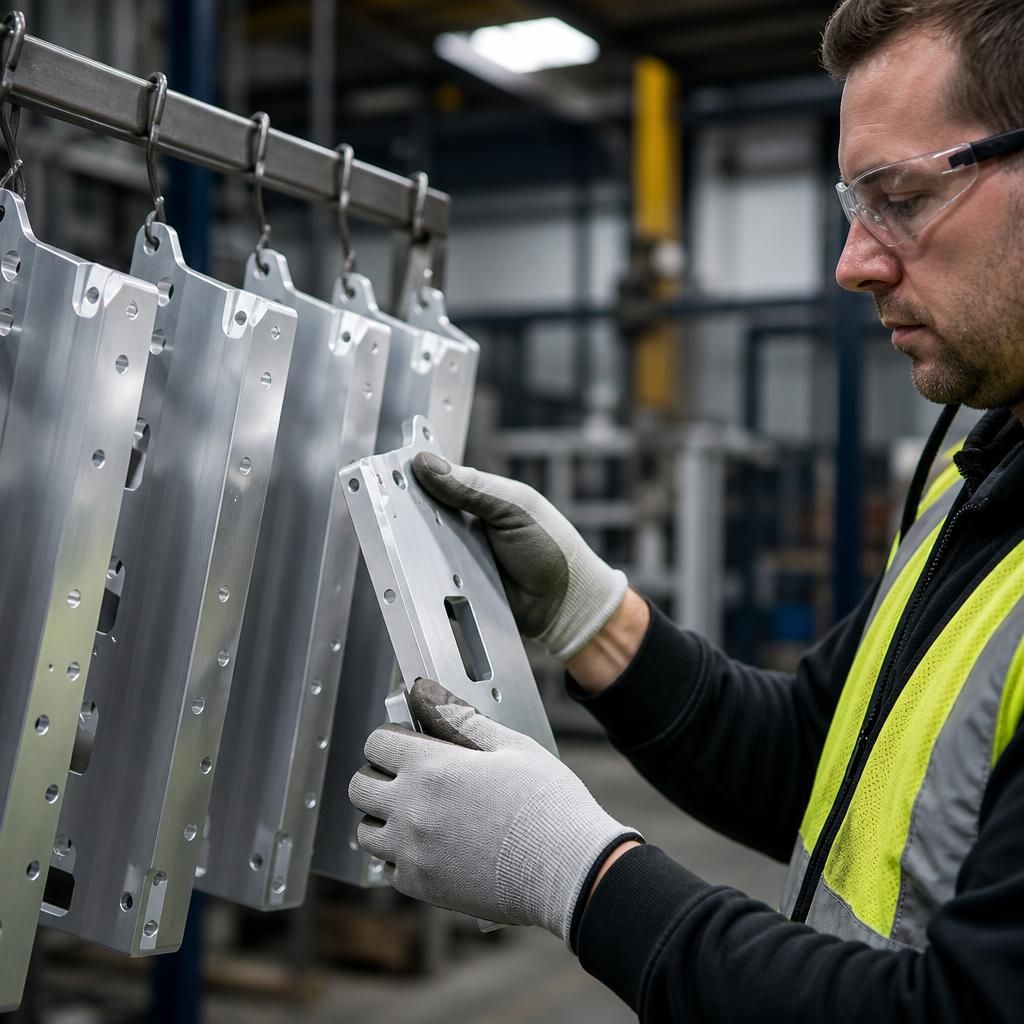
Post-pretreatment handling is an important adhesion control for aluminium. A chemically prepared surface can be compromised by fingerprints, dust, moisture or contact with contaminated racks before powder is applied. Components should therefore be transferred using clean gloves and suitable fixtures, with prepared faces protected from unnecessary contact and airborne contamination.
The surface should be checked again immediately before coating. If contamination or visible moisture is found, it should be removed using a preparation method compatible with the specified pretreatment system rather than covered with powder. This simple control helps preserve the prepared aluminium interface and reduces the risk of premature loss of adhesion.
Discuss your aluminium powder coating requirements
Discuss your aluminium powder coating requirements with our Midlands-based team, including the component design, service environment and required finish. We can help identify the relevant coating specification and processing considerations for your metal parts.