

How can advanced powder coating processes improve the performance of industrial metal components?
Advanced powder coating processes improve industrial metal components by combining effective pre-treatment, controlled electrostatic application and precise curing to create a more consistent, firmly bonded finish. The result is improved resistance to corrosion, wear and demanding operating conditions, helping components retain their protective and functional properties for longer.
Advanced powder coating processes improve industrial metal components by matching the coating system and application controls to the component’s material, geometry and service conditions. This approach produces a finish with more predictable functional properties, including controlled film build, reliable coverage, suitable flexibility and resistance to the specific forms of exposure the component will encounter.
The performance of a coated component is determined by more than the powder colour or surface appearance. A suitable specification considers:
- the base metal, such as mild steel, galvanised steel or aluminium;
- the component’s shape, edges, recesses, holes and assembled features;
- exposure to moisture, chemicals, sunlight, abrasion, impact or heat;
- the required coating thickness and finish; and
- whether the coating is primarily decorative, protective, insulating or functional.
This selection process helps avoid using a coating that looks satisfactory initially but is poorly suited to the component’s working environment. For example, a part exposed to repeated friction requires a different performance balance from an enclosure that mainly needs a consistent external finish. Components used near oils, cleaning agents or industrial chemicals may also need a formulation selected for chemical compatibility rather than appearance alone.
Controlled film thickness improves consistency
Advanced application methods allow the coating build to be managed more closely across a production batch. An insufficient film may leave areas with inadequate protection, while excessive build can affect dimensions, fit, edge definition and the appearance of the finish. Controlled thickness is particularly important where components must fit together, pass through apertures or maintain precise clearances.
Component geometry also affects coverage. Corners, recesses, internal faces and Faraday cage areas can behave differently during powder application. Process planning and appropriate equipment settings help reduce thin spots, uneven deposition and excessive accumulation on edges. This gives manufacturers a more uniform coating without treating every component as though it has the same shape or application requirements.
Improved curing supports the coating’s functional properties
Curing must be considered in relation to the metal temperature, the powder formulation and the component’s mass. Large or heavy sections may heat differently from small parts, so a single conveyor setting may not produce the same result across every item. Properly controlled curing develops the coating’s intended hardness, adhesion, flexibility and chemical resistance. Under-curing can leave the film with reduced performance, whereas excessive heat may affect the finish or the underlying material.
For this reason, industrial coating work benefits from process checks rather than relying solely on visual inspection. Depending on the specification, checks may include film thickness measurement, visual assessment, adhesion testing and examination of coverage around edges and difficult features. These checks provide evidence that the finish is suitable for the component’s intended use and help identify variation before coated parts enter assembly.
Specialist powders can add functional performance
Standard polyester-based systems are not appropriate for every application. Nylon powder coatings, for instance, can be considered where a tough, low-friction or impact-tolerant surface is required. Their suitability depends on the component and operating conditions, including contact with other parts, cleaning requirements and exposure to chemicals. Protective systems can likewise be specified where the main objective is to provide a barrier between the metal and its environment.
Different resins and formulations offer different balances of hardness, flexibility, exterior durability, chemical resistance and appearance. Selecting the right system therefore involves assessing the complete duty of the component rather than choosing solely by colour, gloss level or initial cost. A finish that is easy to clean may be more valuable in one application, while flexibility or impact tolerance may be more important in another.
Process design can protect dimensional and functional features
Advanced coating work also accounts for areas that must remain uncoated. Threads, earth points, bearing seats, mating faces and electrical contact areas may need masking before application. Correct masking prevents powder from interfering with assembly or electrical continuity and reduces the need for post-coating removal. Hanging points and part orientation should also be planned so that contact marks are limited to acceptable locations and the coating reaches the required surfaces.
These controls are especially relevant to batch and large-scale work, where small variations can be repeated across many components. A documented specification covering the metal, preparation, powder type, target thickness, curing requirements, masking and inspection criteria gives the coater and customer a common reference. It also makes it easier to investigate defects such as pinholes, poor coverage, inconsistent gloss or adhesion problems.
For manufacturers, fabricators, construction suppliers and automotive businesses, the practical benefit is a coating process aligned with the component’s real operating demands. Powder coating specialists serving the Midlands can assess the part design, required finish and production quantities, with collection and delivery options available for businesses that need regional logistics support.
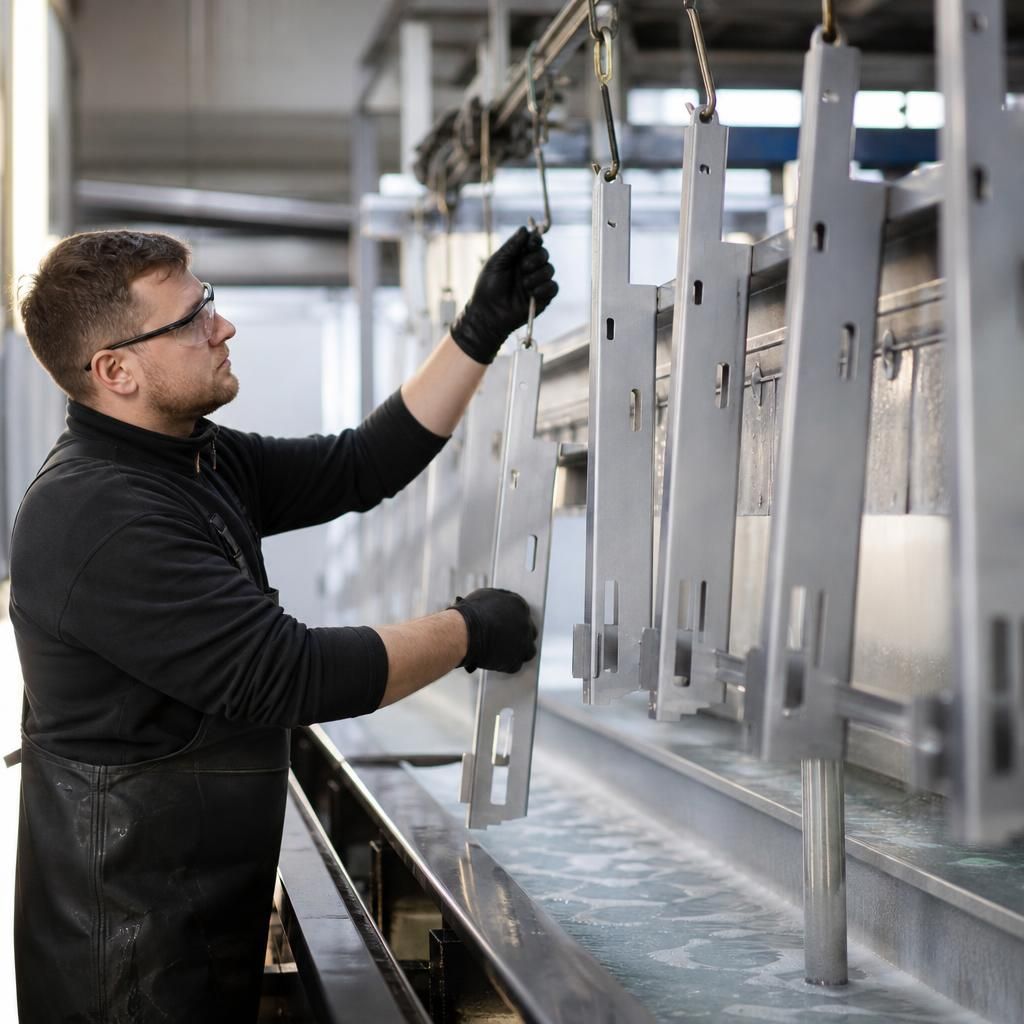
Effective pre-treatment improves industrial metal performance by preparing the surface before powder is applied. Degreasing and cleaning remove oils, dirt, mill scale and other contaminants that could interfere with adhesion, while mechanical or chemical preparation can create a more suitable surface for the coating system.
The treatment must match the substrate. Mild steel, galvanised steel and aluminium can require different preparation methods because their surface chemistry and corrosion behaviour differ. A suitable conversion treatment or other specified preparation can help the powder coating bond consistently and reduce the risk of early adhesion failure, blistering or corrosion developing beneath the finish. This makes pre-treatment a functional part of the coating system rather than a cosmetic preliminary step.
Discuss advanced powder coating for your industrial metal components
Discuss your component’s operating conditions, substrate and performance requirements with the powder-coating.co.uk team to identify a suitable advanced coating approach. Provide your part drawings, quantities and finish specifications when requesting a quote for industrial powder coating.