

What safety measures should be considered when using industrial powder coating services?
Industrial powder coating safety depends on controlling risks at every stage, including suitable personal protective equipment (PPE), effective ventilation, safe powder handling, controlled curing operations and appropriate fire precautions. A competent service provider should also use documented risk assessments, trained operators and procedures for managing metal preparation, equipment and finished components.
Industrial powder coating safety depends on controlling the interaction between people, coating materials, metal components, heat, mechanical equipment and the working environment. In addition to the controls used during application and curing, a safe project requires accurate information about the components, suitable preparation, controlled movement of loads, clear responsibilities and procedures for dealing with abnormal conditions.
Exchange safety information before work starts. The coating provider should receive relevant details about the parts, including their material, dimensions, weight, previous coatings, oils, process residues and any areas that must not be coated. Components that have contained chemicals, oils or other hazardous substances may require specific cleaning or decontamination before they can be processed. The supplier should also identify restrictions affecting heating, masking, drainage, electrical contact or the use of lifting equipment.
Safety data sheets and product information should be available for the powders, cleaning agents and preparation chemicals in use. These documents explain hazards, storage requirements, first-aid measures, spill response and disposal considerations. The coating specification should be clear enough to prevent unsafe improvisation, particularly where a part requires unusual masking, a specialist coating or a curing temperature that could affect the substrate.
Control combustible dust risks. Powder coating material is finely divided, and airborne dust can create both an inhalation hazard and, under the right conditions, a fire or explosion risk. Powder should be kept from accumulating on floors, ledges, motors, light fittings and other surfaces. Cleaning methods must avoid dispersing dust into the air; compressed air is not automatically suitable for housekeeping. Extraction, collection systems and electrical installations should be suitable for the risks identified by the assessment.
Where combustible dust could be present, the relevant hazardous-area assessment should consider the powder, concentration, ignition sources and equipment layout. The Dangerous Substances and Explosive Atmospheres Regulations may be relevant to the workplace controls. Ignition sources include hot surfaces, sparks, unsuitable electrical equipment, static discharge and unauthorised hot work. Smoking, naked flames and other ignition sources must be controlled in designated areas.
Manage static electricity and electrical equipment. Powder application relies on electrostatic charging, so bonding and earthing arrangements require particular attention. Parts, racks, spray equipment and other conductive items should have reliable electrical continuity, with contact points kept free from excessive coating build-up. Cables, guns, extraction systems and control panels should be inspected for damage and used only as intended. Isolation procedures are necessary before maintenance, cleaning or clearing blockages.
Equipment safety should also cover guards, interlocks, emergency stops and access to moving machinery. Applicable duties under the Provision and Use of Work Equipment Regulations may include ensuring that equipment is suitable, maintained and used by people with appropriate instruction. Any lifting accessories, hoists or cranes used for heavy components need suitable inspection and safe working practices under the relevant lifting-equipment requirements.
Plan manual handling and component movement. Metal parts can be awkward, sharp-edged or unstable even when they are not exceptionally heavy. The handling method should account for the component’s centre of gravity, coating damage risk and the route between preparation, coating, curing, inspection and storage areas. Trolleys, racks, lifting devices and handling points should be suitable for the load. People should not stand beneath suspended components, and access routes should remain clear of obstructions, trailing leads and spillages.
Racks and hanging points must support the part securely throughout processing. A poorly balanced load can fall, swing or contact heated equipment. Components should be positioned so that operators do not need to reach through moving machinery or place hands near hot surfaces. Sharp edges, burrs and projecting features should be identified before handling and protected where appropriate.
Consider preparation and contamination hazards. Blast cleaning, degreasing and chemical pretreatment can create different risks from powder application. Abrasive media, residues and removed coatings must be contained and managed according to their properties. Existing paint or corrosion products may contain substances that require investigation before disturbance. Cleaning chemicals should not be mixed unless the product instructions specifically allow it, and containers should be labelled and stored correctly.
Parts should be dry and free from trapped liquids before entering heated equipment. Hollow sections, overlapping joints and enclosed cavities deserve particular attention because retained moisture, oil or solvent can expand, release vapour or cause defects during heating. Drainage and venting arrangements should be agreed before processing; drilling or modifying a component is not a decision to make without the owner’s approval.
Protect people from heat and stored energy. Ovens, recently cured parts, racks and nearby metalwork may remain hot after the heating cycle. Physical separation, warning notices and a defined cooling or handling procedure reduce contact and burn risks. Doors, access panels and interlocks should function correctly, and maintenance should be carried out only after heat, electrical energy and other stored energy have been isolated.
Any unusual smell, smoke, unexpected temperature, equipment alarm, loss of extraction, powder release or damaged component should trigger a controlled stop and escalation procedure. Operators should know who has authority to isolate equipment and how to report the condition. Re-starting should follow an investigation rather than relying on repeated resets.
Maintain good personal and workplace hygiene. Eating, drinking and smoking should be kept away from process areas. Hands should be washed after handling powders, chemicals or contaminated parts and before breaks. Contaminated clothing should be managed so that residues are not carried into clean areas. Welfare facilities, eyewash provision and first-aid arrangements should reflect the substances and processes present.
Control waste, spills and transport. Powder overspray, used abrasive, filters, contaminated wipes and chemical residues should be segregated, labelled and disposed of through an appropriate route. A spill procedure should specify isolation, containment, clean-up materials and reporting requirements. Waste containers must not create an additional dust, vapour or ignition hazard.
Finished components should be secured during collection or delivery so that they cannot shift, fall or rub against one another. Packaging should protect coated surfaces without trapping unsafe residues or obscuring lifting points. The handover should include any relevant limitations, such as hot parts, temporary protection, fragile masking areas or safe storage requirements.
For a commercial powder coating project, the most useful safety check is therefore a documented review covering the part, materials, equipment, handling method, environment, emergency arrangements and responsibilities of each party. This approach helps identify risks that may not be visible from the coating specification alone and ensures that safety controls remain appropriate from receipt of the metalwork through to its return.
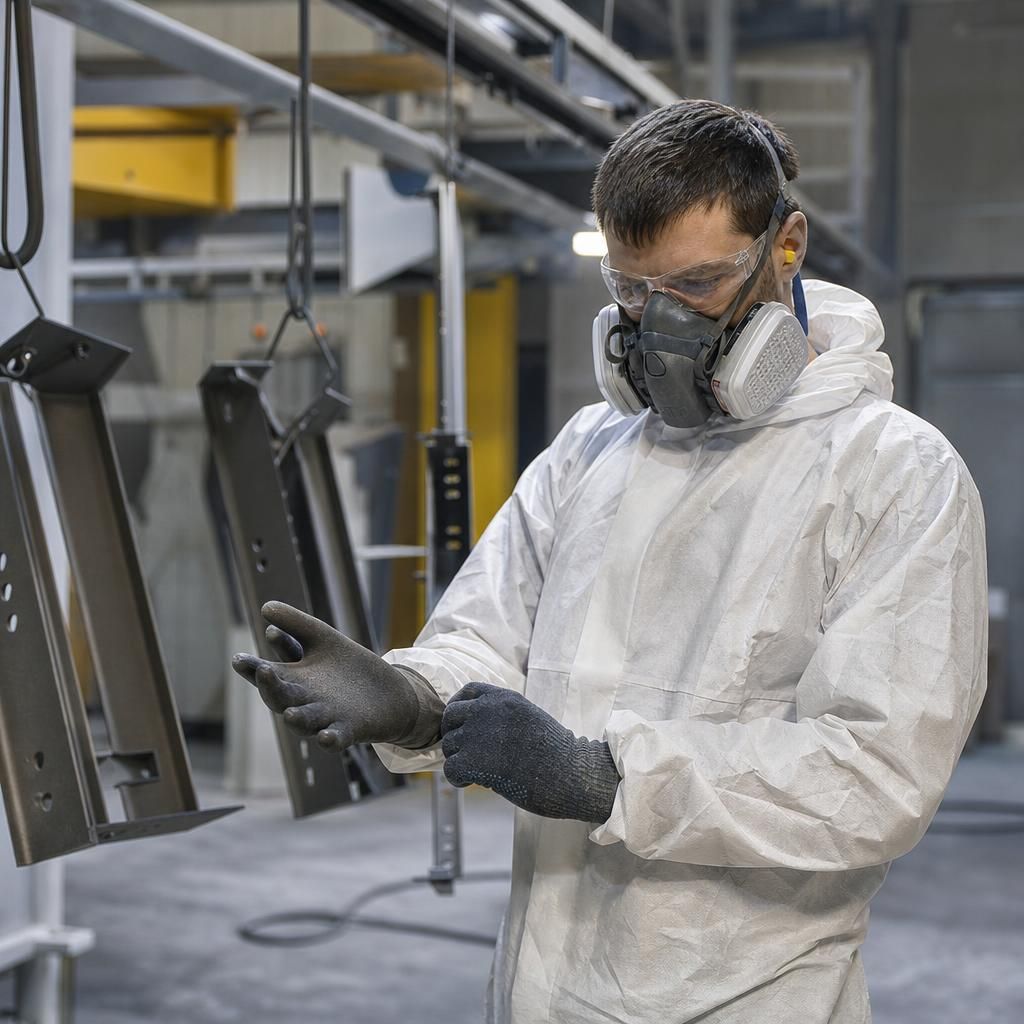
Personal protective equipment (PPE) provides a final layer of protection against powder, preparation residues, noise, impact and contact with contaminated surfaces. It should be selected from the risk assessment for each task rather than treated as a standard kit for every stage of industrial powder coating.
- Eye protection should suit the risk of airborne powder, abrasive media, chemical splashes and flying particles.
- Respiratory protective equipment (RPE) should be appropriate to the substance and exposure assessment. Tight-fitting RPE requires suitable face-fit testing and must be compatible with other PPE.
- Protective clothing and gloves should prevent skin contact without creating entanglement or reducing safe grip when handling components.
- Safety footwear should provide suitable protection for heavy, sharp-edged or unstable metalwork.
- Hearing protection may be necessary in areas affected by blasting, extraction or other high-noise equipment.
PPE must be maintained, stored hygienically and replaced when damaged, contaminated or no longer effective. Operators also need instruction on correct fitting, limitations and removal, since incorrectly worn equipment can give a false sense of security.
Discuss your industrial powder coating safety requirements
Discuss your component details and any specific safety requirements with our industrial powder coating team before processing begins. This allows the proposed coating method, preparation and handling arrangements to be reviewed for suitability.