

What steps are involved in the pretreatment process to ensure the metal surface is ready for powder coating application?
Powder coating pretreatment typically involves inspecting the metal, removing oils and contaminants, rinsing, applying a suitable conversion coating, completing a final rinse and drying the surface. These stages create a clean, chemically receptive base that supports powder adhesion and helps protect the finished coating from corrosion.
Pretreatment is a controlled combination of chemical preparation, rinsing, surface conditioning and handling that gives powder coating a clean, stable and suitably receptive substrate. The exact sequence depends on the base metal, its previous use, the level of oxidation and the environment in which the coated component will be used.
1. Establish the substrate and contamination profile
Before selecting the chemistry, the metal should be identified and its condition assessed. Mild steel, galvanised steel, aluminium and mixed-metal assemblies can require different cleaners and conversion systems. The process may also need to deal with mill scale, welding residues, marking ink, adhesive, cutting fluid, storage oil, corrosion products or remnants of an earlier coating.
The component’s design is relevant as well. Crevices, folded sections, threaded holes and enclosed tubes can retain chemicals or moisture. Drainage and access should therefore be considered before treatment begins. Parts that cannot drain properly may require additional processing, revised racking or design adjustments to prevent residue remaining beneath the powder film.
2. Select a compatible cleaning and conditioning system
Alkaline cleaners are commonly used for general oils and workshop contamination, while acidic products can be used where oxidation, scale or mineral deposits need to be addressed. Aluminium may require deoxidising and desmutting to remove its oxide layer and residues left by alloying elements. Galvanised surfaces may need treatment that respects the zinc layer rather than aggressively attacking it.
The chemistry must be strong enough to produce a consistent surface without excessive etching, pitting or dimensional change. Concentration, temperature, contact time and spray pressure all influence the result. These variables should be controlled according to the chemical supplier’s technical instructions and the coating specification, rather than judged only by the appearance of the wet part.
3. Control the movement between treatment stages
Transfer time and drainage are important parts of the process. A component should not remain wet with an active solution while waiting for the next stage, as this can cause staining, uneven attack or chemical carry-over. Racking should allow solution to reach the required faces and should minimise shadowing, pooling and contact marks.
Rinse quality also requires ongoing control. Contaminated rinse water can transfer cleaner or treatment chemicals to the next tank and gradually reduce process stability. Conductivity, pH, temperature and tank condition may be monitored where the specification requires it. Rinse stages should remove residual chemistry rather than simply dilute it on the component.
4. Match the conversion coating to the metal and service conditions
A conversion coating changes the outer surface into a more suitable base for the powder film. Zinc phosphate systems are often associated with ferrous substrates, while aluminium and other metals may need a different conversion treatment. The choice should consider the alloy, expected corrosion exposure, required appearance and any environmental or customer requirements affecting the process.
Uniform coverage is more important than simply applying a visible deposit. An uneven or excessive conversion layer can contribute to inconsistent appearance, poor intercoat adhesion or powder defects. The treatment should therefore be validated on representative components, including difficult areas such as edges, recesses and weld zones.
5. Protect areas that must remain uncoated
Threads, earth points, precision bores, bearing seats and mating faces may need suitable plugs, caps or masking materials. Masking must withstand the pretreatment chemistry and subsequent oven conditions without shedding residue or leaving an unwanted imprint. It should be applied in a way that allows the surrounding metal to receive consistent treatment while maintaining the required dimensional tolerances.
6. Confirm the surface is ready for powder application
Readiness is assessed after the treatment cycle, not just when the component leaves the final tank. The surface should be visibly uniform, free from staining, powdery deposits, flash rust, water marks and retained liquid. A properly prepared surface should not show areas where contamination has repelled the treatment or where drainage has left concentrated residues.
Process checks can include visual examination, water-break assessment, chemical bath records and, where specified, coating-weight or adhesion testing. Test panels and sample parts can help identify gradual changes in the line before they affect a production batch. If a surface shows poor wetting, patchy conversion or early corrosion, the cause should be corrected before powder is applied rather than concealed beneath the finish.
7. Handle the prepared metal without recontamination
Once the surface has been prepared, clean gloves, suitable racking and controlled handling are needed. Touching the metal with bare hands can transfer salts and oils; dirty hooks can introduce contamination at contact points. Components should be moved into the powder application stage without unnecessary delay and protected from workshop dust, moisture and contact with unclean surfaces.
In practice, a successful pretreatment process is defined by repeatable control of chemistry, contact, drainage, rinsing, conversion and handling. The powder coating stage can only perform consistently when the substrate specification, pretreatment system and inspection criteria have been considered together.
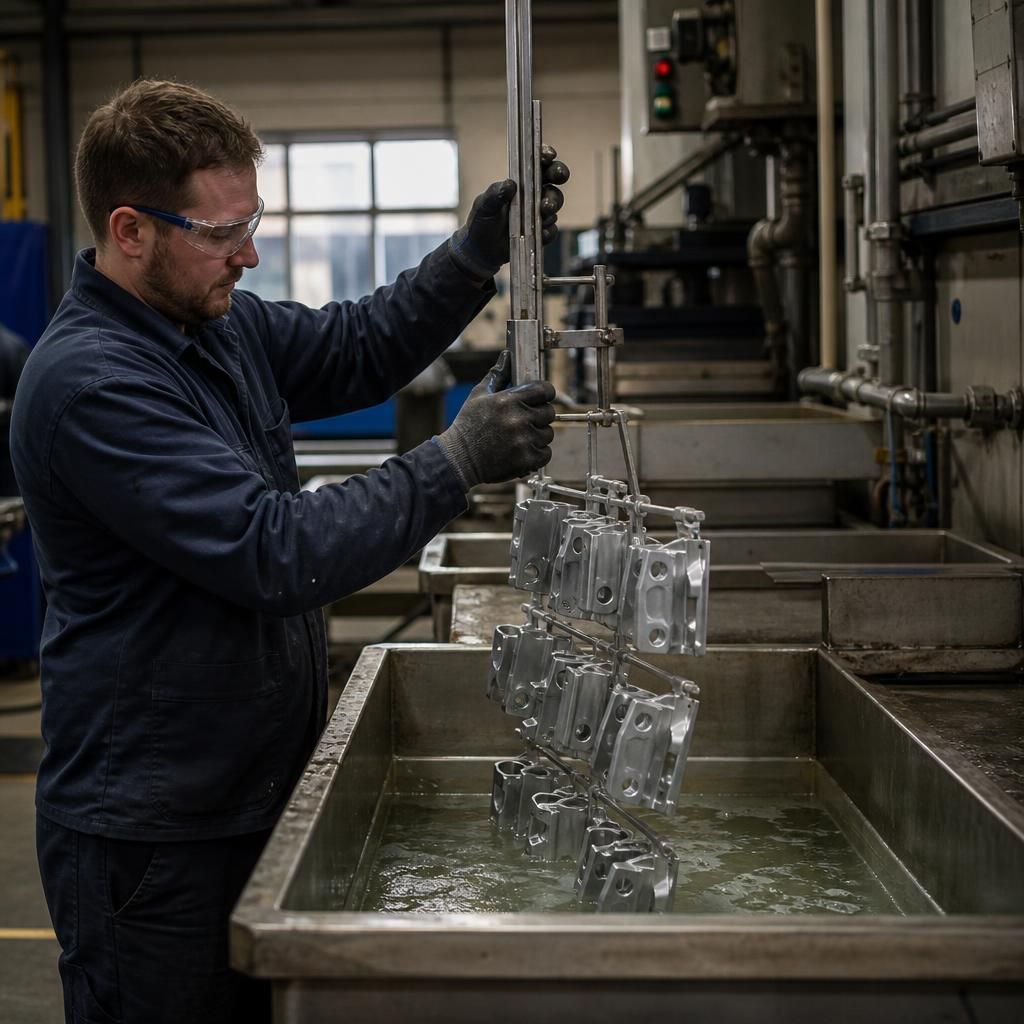
Porous and cast components may need an additional preparation stage. Cast aluminium and other porous metal parts can retain oil, moisture or processing residues below the visible surface. These contaminants may emerge during powder curing and cause pinholes, blisters or loss of adhesion, even when the exterior appears clean after chemical pretreatment.
Where the component’s material and manufacturing history indicate this risk, a controlled pre-bake or outgassing stage can draw trapped contaminants to the surface. The part should then be cleaned again before conversion treatment, because the released residue can compromise the prepared surface. This requirement is best established using representative samples rather than assuming that all castings will respond in the same way.
Discuss Your Powder Coating Pretreatment Requirements
If you are planning a powder coating project, discuss your component material, manufacturing history and required service conditions with the powder coating team. This information helps establish a suitable pretreatment approach before coating begins.