

What pre-treatment options enhance the effectiveness of electrostatic powder coating for steel surfaces?
Steel pre-treatment options that enhance electrostatic powder coating include degreasing, abrasive blasting and chemical conversion treatments such as iron or zinc phosphate. These processes remove contaminants, create a suitable surface profile and improve powder adhesion, corrosion resistance and long-term coating durability.
The most effective pre-treatment for steel is a controlled, multi-stage process selected according to the steel’s condition, the intended service environment and the powder coating system. In addition to preparing the surface for coating, the process must prevent recontamination, control flash rust, treat welds and edges correctly, and leave a chemically compatible surface for the powder film.
Alkaline cleaning and rinsing. Steel may carry machining fluids, drawing compounds, handling residue or workshop contamination that is not always visible. An alkaline cleaning stage can break down these residues before subsequent treatment. Thorough rinsing is equally important: cleaner carry-over, salts and loose reaction products can interfere with coating performance. Where the process permits, a final low-contamination rinse helps reduce water spotting and residue on the prepared surface.
Acid pickling for mill scale and oxidation. Pickling uses a controlled acidic treatment to dissolve oxidation and mill scale where mechanical preparation alone is unsuitable or impractical. It can be useful for heavily oxidised components, intricate sections and parts with areas that are difficult to reach mechanically. Acid treatment must be carefully controlled, followed by appropriate rinsing and neutralisation, because residual acid or salts can contribute to under-film corrosion and poor adhesion.
Alternative conversion technologies. Traditional phosphate systems are not the only chemical option. Zirconium-based and other thin-film conversion treatments can provide a suitable bonding layer with lower sludge generation than some conventional processes. Silane-based treatments may also be selected for certain steel and multi-metal applications. The correct chemistry depends on the substrate, the powder formulation, the required corrosion performance and the equipment used to apply and rinse the treatment. A process should be validated rather than selected solely because it is described as a newer technology.
Final sealing and passivation. Some pre-treatment lines include a final seal or passivation stage. This can stabilise the prepared surface, reduce the effect of residual moisture and support corrosion resistance before the powder is applied. The sealer must be compatible with the conversion layer and powder system; an unsuitable residue can act as a barrier between the steel and the coating.
Attention to welds, joints and edges. Weld spatter, heat tint, sharp edges, fabrication debris and trapped abrasive material can create local weaknesses in the finished coating. Welds should be inspected and cleaned, while sharp corners may need suitable edge preparation because powder films tend to be thinner over pronounced edges. Crevices, boxed sections and drain points also require consideration so that cleaning and rinsing fluids do not remain trapped inside the component.
Drying and flash-rust control. Prepared steel should be dried promptly and consistently before powder application. Water retained in seams, hollow sections or threaded features can cause flash rust or interfere with the coating process. Drying temperature and air movement need to suit the component, since excessive heat before coating may affect the substrate condition or leave contamination concentrated on the surface. Parts should be handled with clean equipment after preparation to avoid fingerprints and renewed contamination.
Matching treatment to the end use. A basic indoor application may require a different preparation route from steel exposed to moisture, road salts, chemicals or changing temperatures. The specification should therefore consider:
- the steel grade, surface condition and amount of mill scale or oxidation;
- whether the component is fabricated, machined, welded or assembled from different metals;
- the expected exposure conditions and required corrosion resistance;
- the powder type, curing schedule and any masking or assembly requirements; and
- the required appearance, including the risk of stains, pinholes or visible surface irregularities.
Process verification. Pre-treatment effectiveness is assessed through a combination of visual inspection and process checks. These may include monitoring cleaner and conversion-bath conditions, confirming rinse quality, checking surface cleanliness and examining coating adhesion after curing. Where corrosion resistance is critical, the complete coating specification should be tested as a system rather than judging the pre-treatment in isolation.
For steel components, the strongest results come from treating preparation as part of the coating specification rather than as a fixed cleaning step. A suitable route removes contamination, manages fabrication defects, establishes a compatible surface and keeps that surface protected until powder application. This approach improves the consistency of adhesion and helps the finished coating perform as intended in its working environment.
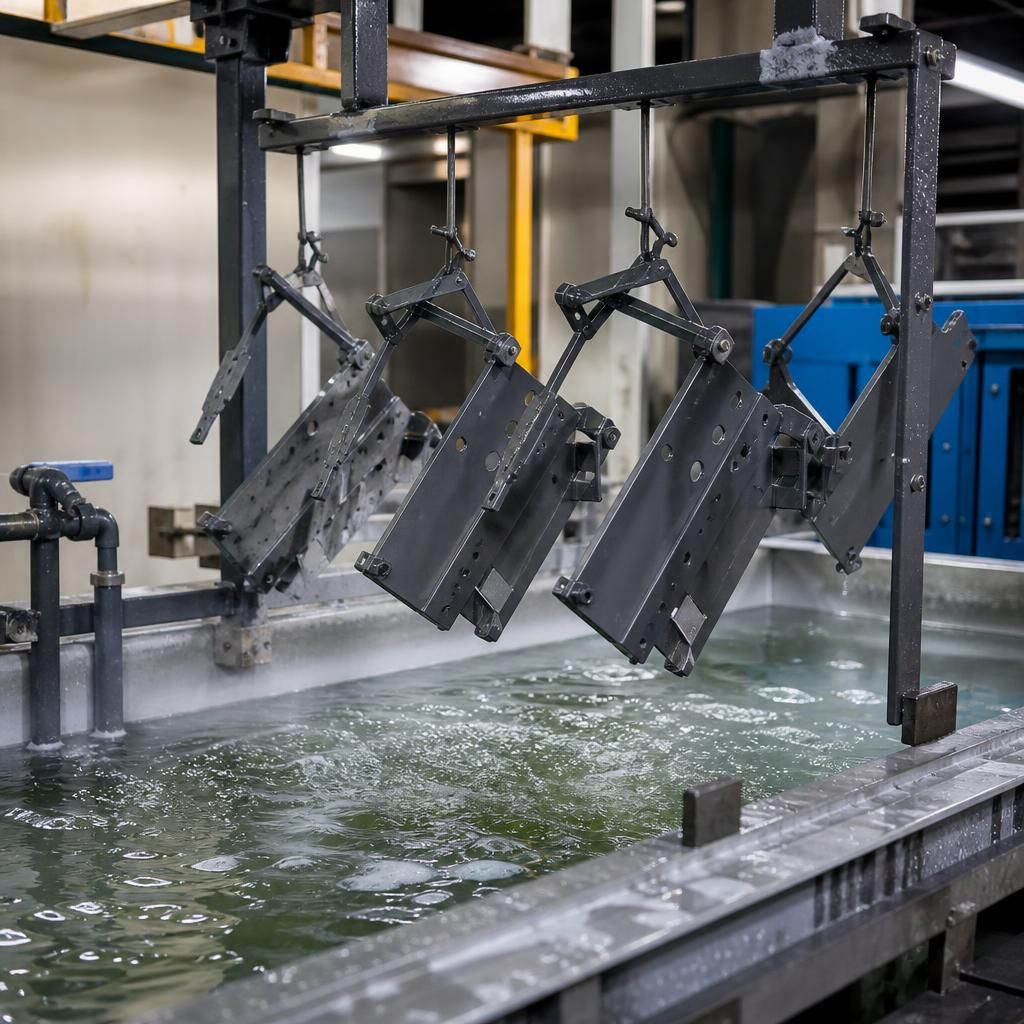
Phosphate conversion treatments enhance powder coating by forming a thin, insoluble layer on the steel rather than simply leaving a cleaned metal surface. This conversion layer provides a chemically suitable interface for the powder film and helps slow the movement of moisture and corrosion beneath areas where the coating may later be damaged.
Iron phosphate is commonly used where a controlled conversion layer is required for general industrial work, while zinc phosphate may be selected when greater corrosion protection is needed. The correct choice depends on the exposure conditions and the complete coating specification. Bath control, rinsing and drying remain essential, because an uneven or contaminated conversion layer can reduce the benefit of the treatment.
Discuss steel pre-treatment for your electrostatic powder coating project
Discuss your steel components with our powder coating team to identify a suitable pre-treatment route for the substrate, fabrication condition and intended service environment. Powder-coatings.co.uk supports manufacturers and fabricators across the Midlands with collection and delivery options.