

Which advanced anti-corrosion coatings offer the best resistance for high-temperature environments?
For high-temperature environments, silicone-resin and ceramic-based anti-corrosion coatings generally provide better heat resistance than standard epoxy powder coatings. The most suitable system depends on the continuous and peak operating temperatures, chemical exposure, substrate, and required corrosion protection, with zinc-rich primers sometimes used as part of a compatible coating system.
The best high-temperature anti-corrosion protection is usually a coating system rather than a single universal product. Selection should be based on the metal substrate, the temperature profile, the surrounding chemicals, moisture levels, thermal cycling and the required service life. A coating that performs well on a hot, dry enclosure may be unsuitable for equipment exposed to condensation, salts or process chemicals during cooling.
Silicone-resin and ceramic-based systems are commonly selected where the coating must retain adhesion and protective properties at elevated temperatures. Silicone-resin coatings are suitable for many hot metal surfaces and can be formulated for resistance to heat, weathering and some chemical exposure. Ceramic-based coatings are used where a hard, heat-resistant surface is required, although their performance still depends on correct preparation, application and curing.
Other coating technologies can be appropriate in specific conditions:
- Inorganic zinc systems can provide sacrificial protection to prepared steel and are considered where galvanic protection is important. Their compatibility with the finish coat and the operating environment must be checked, particularly where the surface will experience condensation or immersion.
- High-temperature aluminium or silicone-aluminium coatings can be used on components exposed to heat, especially where resistance to oxidation and repeated heating is required. They are not automatically the best choice for every corrosive atmosphere.
- Heat-resistant epoxy or epoxy-phenolic systems may be suitable for moderate-temperature duties and chemical exposure, but their temperature limits must be confirmed rather than assumed from their general corrosion resistance.
- Fluoropolymer-based finishes can offer useful chemical and weathering resistance in some applications. Their suitability depends on the substrate, preparation method and the temperature range stated for the particular formulation.
Temperature rating should be assessed against the complete operating cycle. A component may remain within its nominal limit during steady operation but experience more demanding conditions during start-up, shutdown, cleaning or fault conditions. Repeated expansion and contraction can place stress on the coating and its bond with the metal. A system that tolerates a constant temperature may therefore perform differently when exposed to frequent thermal cycling.
The type of corrosion hazard is equally important. Dry heat, humid heat, salt contamination, acidic vapours, alkaline deposits and solvent exposure create different demands. Some coatings retain their film at high temperature but offer limited protection against a particular chemical. Others may provide good chemical resistance but become brittle, soften or lose adhesion when repeatedly heated. The coating specification should therefore identify the actual atmosphere, not simply describe the application as high temperature.
Surface preparation is critical. Oil, mill scale, rust, welding residues, salts and existing loose coatings can prevent proper adhesion and create corrosion cells beneath the new finish. Preparation may include degreasing, abrasive cleaning and removal of sharp edges or weld spatter. The required preparation standard should be agreed before work begins, because a high-temperature coating cannot compensate for contamination or an unstable substrate.
Coating thickness also needs control. An excessively thick film can develop internal stress, trap contaminants or cure unevenly. An insufficient film may leave pinholes, weak coverage at edges or inadequate barrier protection. Complex fabrications require particular attention around welds, corners, recesses, fastener areas and other locations where coating coverage can be inconsistent.
For multi-coat protection, every layer must be chemically and thermally compatible. A primer, intermediate coat and topcoat may each have different curing requirements and maximum service temperatures. The specification should confirm:
- the temperature limit for continuous and intermittent exposure;
- compatibility between primer, intermediate layer and finish coat;
- the required surface preparation and cleanliness;
- dry-film thickness tolerances and inspection methods;
- curing conditions, including any post-curing requirements;
- resistance to the chemicals, moisture and salts present in service; and
- repair procedures for damage caused during transport, assembly or maintenance.
Powder coating can be effective for suitable metal components because it produces a consistent, bonded finish when the substrate and coating are processed correctly. However, not every powder formulation is intended for high-temperature service. The product data and application specification should take precedence over a general description such as “heat resistant”. Particular care is needed where the component has inserts, seals, bearings or other materials that could be affected by the curing process.
Testing should reflect the real duty of the part. Useful evaluation may include adhesion testing, visual inspection, dry-film thickness checks, thermal cycling, chemical exposure and corrosion testing on representative prepared panels or components. Laboratory results are most meaningful when the test conditions resemble the actual temperature changes and contaminants encountered in service.
In practice, the strongest choice is the coating system that preserves adhesion and corrosion protection throughout the complete operating cycle, rather than the one with the highest quoted temperature alone. Manufacturers and fabricators should provide details of the substrate, dimensions, previous coating, peak and sustained temperatures, heating pattern, contaminants and any post-coating machining or assembly. A coating specialist can then assess whether a single high-temperature finish or a compatible multi-layer system is more appropriate.
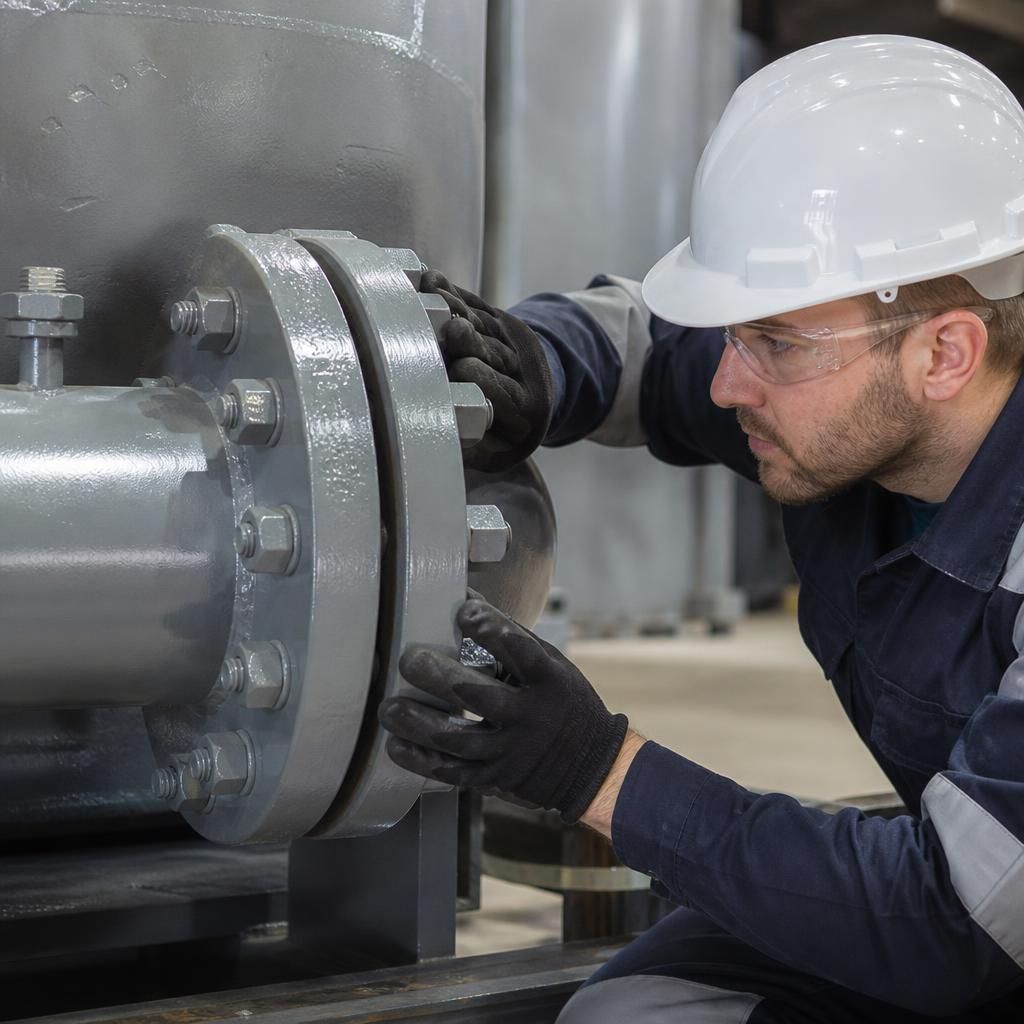
High-temperature anti-corrosion protection must also account for joints between dissimilar metals. Steel, aluminium and stainless steel can expand at different rates, placing stress on the coating at fasteners, flanges and other interfaces. If moisture or process residue becomes trapped in these areas, corrosion may develop beneath or beside the coating even when the main surface remains intact.
The specification should identify dissimilar-metal contacts, exposed fasteners and crevices before coating begins. Compatible primers and finishes, suitable edge coverage and appropriate isolation at metal interfaces can reduce localised corrosion risks. Where possible, accessible surfaces should be coated before assembly, with drainage and inspection access included in the component design.
Discuss Your High-Temperature Anti-Corrosion Coating Requirements
Discuss your high-temperature anti-corrosion coating requirements with a coating specialist, providing the component material, operating conditions and required finish. This information helps determine whether a specialist powder coating or another compatible coating system is appropriate.