

What pre-treatment processes are essential for ensuring high-quality results in aluminium powder coating?
Essential pre-treatment for aluminium powder coating includes surface inspection, removal of oil and contaminants, controlled cleaning or etching, thorough rinsing, and complete drying before application. Where required, light abrasive blasting or a chemical conversion treatment improves coating adhesion and helps protect the aluminium from corrosion.
For aluminium, effective pre-treatment is a controlled surface-conditioning system matched to the alloy, component design and intended service environment. Its purpose is not simply to make the metal look clean: it must create a chemically stable surface that allows the powder film to bond consistently and reduces the risk of blistering, filiform corrosion, peeling and premature breakdown.
Assess the aluminium and its manufacture. Different aluminium alloys, castings, extrusions and fabricated assemblies can respond differently to treatment. The process should take account of alloy composition, surface porosity, oxidation, welds, heat-affected areas, machining marks and any previous coating. Cast parts may require particular attention to trapped residue or outgassing, while welded assemblies can contain residues from fabrication that are not present on an unprocessed extrusion.
Control the chemical stages rather than relying on appearance. Aluminium is covered by a naturally forming oxide layer, and this layer can vary across the part. Cleaning and activation chemistry therefore needs to be controlled for concentration, temperature, contact time and solution condition. Excessively aggressive treatment can attack the substrate or create an uneven surface, while insufficient treatment may leave a chemically inactive layer beneath the powder. Process records and routine bath checks help keep treatment consistent between batches.
Use a suitable deoxidising or activation stage where required. After the initial preparation, a deoxidising stage can help remove residual oxide and improve surface uniformity. This is particularly relevant where the aluminium has been stored, exposed to weathering or affected by fabrication. The correct chemistry depends on the alloy and the required performance; a process suitable for one aluminium component should not automatically be applied to every product.
Select the conversion treatment for the service conditions. A conversion coating forms a thin protective layer that improves the bond between aluminium and the powder coating and provides additional corrosion protection beneath the film. The choice between available conversion systems depends on specification, exposure, environmental requirements and any restrictions on the chemicals used. Coverage must include edges, recesses and complex profiles, not only the easily visible faces.
Design the preparation around the component. Holes, box sections, overlapping joints and recessed areas can retain treatment solution or rinse water. Components should be positioned so liquids can drain, with suitable hanging points that provide secure electrical contact during later coating operations without creating unacceptable uncoated marks. Where masking is needed, it should be compatible with the preparation process and removed without leaving adhesive or residue.
Prevent recontamination after treatment. Once the surface has been prepared, handling becomes part of quality control. Clean gloves, suitable racks and protected transfer areas reduce the risk of fingerprints, dust, oil or metal particles being deposited before powder application. Prepared aluminium should not be handled in a way that rubs or damages the conditioned surface, and any delay before coating should be managed to prevent renewed oxidation or contamination.
Verify the preparation before coating. A robust inspection regime can include checks for:
- uniform appearance across faces, edges, welds and recesses;
- residual chemical deposits, staining or powdery oxide;
- complete drainage from cavities and joints;
- clean, dry contact points for hanging and electrical connection; and
- evidence that the treatment has remained within its specified operating conditions.
For work subject to a project or industry specification, the pre-treatment route should be agreed before production begins. The specification may define the conversion system, corrosion category, inspection method, allowable handling marks and records required for traceability. Sample panels or trial components can be useful where the alloy, geometry or end-use exposure presents an unusual combination of risks.
Pre-treatment should also be considered alongside powder selection and curing. A sound surface cannot compensate for an unsuitable coating system or incorrect cure, but an appropriate coating will still perform poorly if the aluminium has been chemically inconsistent, contaminated or inadequately conditioned. For that reason, the most reliable approach is to treat pre-treatment as a controlled part of the complete aluminium powder coating process, rather than as a one-off cleaning operation.
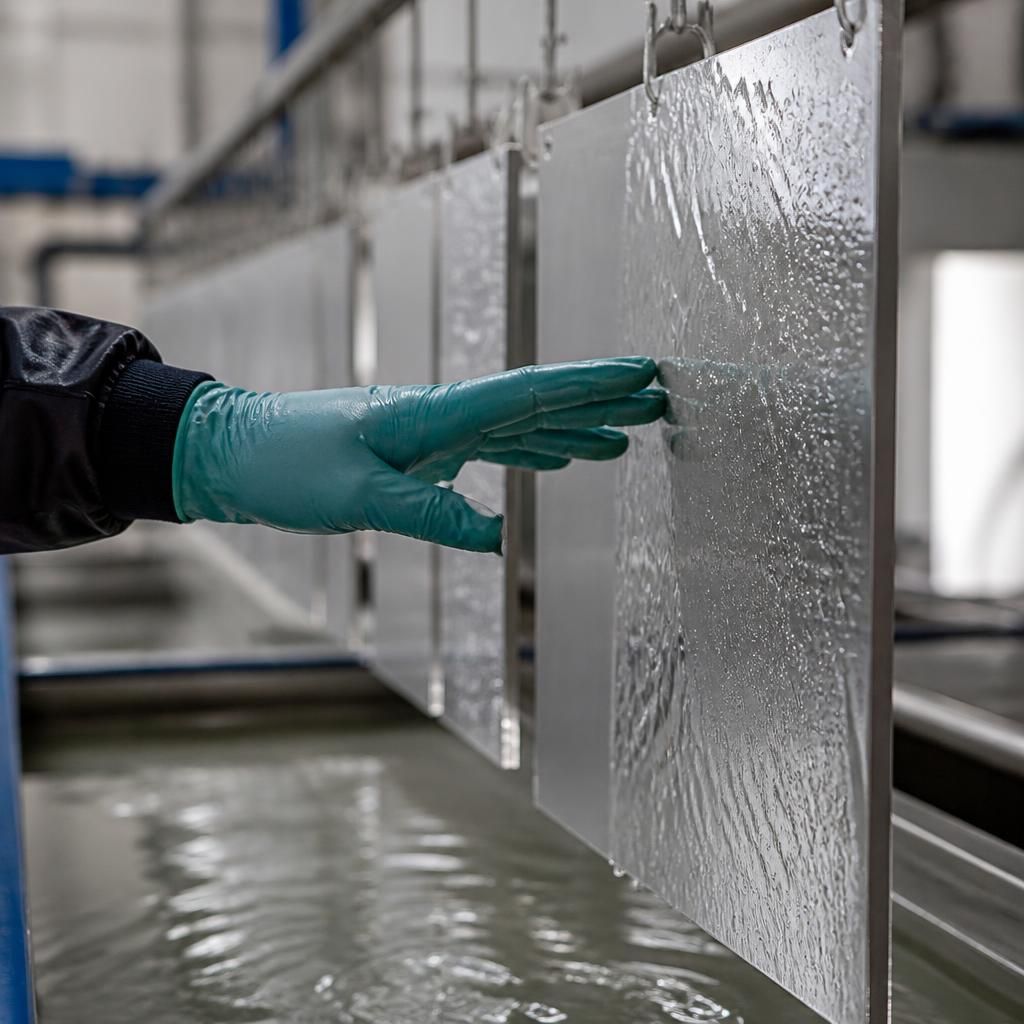
A water-break check can help confirm that cleaning has removed surface oils before conversion treatment or powder application. When a clean aluminium surface is rinsed, water should form a continuous film; isolated beads or patches that repel water may indicate remaining grease, handling residue or uneven cleaning. The test is a practical process check rather than proof that the complete pre-treatment system is suitable, so it should be used alongside the agreed specification and production controls.
Where contamination is identified, the part should return to the appropriate cleaning stage rather than being coated. This is especially useful for fabricated components that may have picked up cutting fluid, polishing compound or workshop residue during manufacture, even when the metal appears visually clean.
Discuss Your Aluminium Powder Coating Pre-Treatment Requirements
Discuss your aluminium components, alloy details and intended service conditions with the powder-coating team to identify a suitable pre-treatment specification. Sharing drawings or sample parts can help clarify preparation requirements before production begins.