

What distinguishes epoxy primer from other types of primers in terms of preparation for powder coating?
Epoxy primer requires particularly thorough preparation before powder coating: the metal must be cleaned of oil, grease, rust and contaminants, then suitably abraded or pre-treated to provide a sound key. Unlike simpler primers, its two-part formulation also requires accurate mixing, controlled application and correct curing before the powder coat is applied, helping form a durable barrier and strong bond.
Epoxy primer differs from many other primers because it is less forgiving of substrate condition and application errors, but provides a dense, chemically resistant foundation for the powder coating system. Preparation is therefore treated as a controlled part of the coating specification rather than a simple preliminary cleaning step.
Before an epoxy primer is considered, the metal is normally assessed for:
- oil, grease, fingerprints, machining fluids and other residues;
- mill scale, rust, weld discolouration, oxides and loose material;
- surface damage, sharp edges, pits and areas of poor previous coating;
- moisture or contamination that could interfere with adhesion; and
- the metal type, because steel, galvanised steel, aluminium and stainless steel may need different preparation methods.
This assessment matters more with epoxy than with a basic general-purpose primer. A thin contaminant layer can prevent the primer from wetting the metal properly, while inadequate abrasion or pre-treatment can leave a weak interface beneath an otherwise sound-looking finish. Degreasing, rinsing where appropriate, drying and visual inspection must be completed in the correct sequence; simply applying primer over visible dirt or oxidation does not provide reliable preparation.
Compared with some single-component primers, epoxy systems also place greater emphasis on material control. The components must be combined in the specified proportions, mixed thoroughly without introducing unnecessary air, and used within the product’s working life. The applied film must then reach the required cure before the powder coat is added. If the primer is still chemically active, contaminated or under-cured, the subsequent coating may show poor intercoat adhesion, blistering, wrinkling or other finish defects.
Another distinction is that epoxy primer is selected as part of a coating system. The powder formulation, primer chemistry, film thickness and curing schedule need to be compatible. A primer that performs well beneath one powder coating may not be suitable where the topcoat requires a different bake condition or where appearance, flexibility or chemical resistance has priority. The specification should therefore identify both the primer and the powder coat, rather than treating either product as universally interchangeable.
Other preparation routes can have different characteristics. A conversion treatment may chemically modify a suitably cleaned surface and provide a thin bonding layer. A self-etching primer can assist adhesion on certain substrates by reacting with the surface. A zinc-rich system may be chosen where sacrificial corrosion protection is required. These alternatives do not remove the need for cleaning and inspection, and they are not automatically substitutes for an epoxy primer. The appropriate choice depends on the substrate, the expected service conditions and whether the primer is intended mainly to improve adhesion, isolate the metal or add corrosion protection.
Epoxy is particularly useful where the primer must act as a barrier between the metal and the surrounding environment. That benefit depends on continuity: pinholes, thin spots, uncoated edges and damage around welds can become weak points. Parts should be arranged and coated so that recesses, joints, edges and difficult-to-reach areas receive appropriate coverage without creating runs or excessive build. Sharp edges may need attention because liquid coatings tend to pull away from them, while excessive thickness can affect curing and the fit of assembled components.
Preparation also differs according to the condition of the workpiece. New, clean steel may need degreasing and mechanical or abrasive preparation, whereas weathered or previously coated metal may require removal of unsound material before any primer is applied. Galvanised surfaces and aluminium can contain surface layers that reduce adhesion, and stainless steel can require a suitable mechanical key despite appearing clean. The process should be selected for the actual surface rather than its appearance alone.
After priming, inspection should cover coverage, uniformity, visible contamination, runs, sags, pinholes and damage caused by handling. Any defect should be corrected in accordance with the coating system’s requirements before powder application. Masking, racking and transport also form part of preparation, since contact points and handling marks can expose the substrate or prevent complete coating.
In practical terms, epoxy primer demands more disciplined preparation than a primer chosen only as a basic adhesion promoter. Its advantages are realised when the metal is suitably conditioned, the system is compatible and the primer is fully cured and carefully inspected before powder coating. For Midlands manufacturers, fabricators, construction firms and automotive businesses, a coating specification or preparation service can help determine whether epoxy is appropriate for the metal component and the conditions in which it will be used.
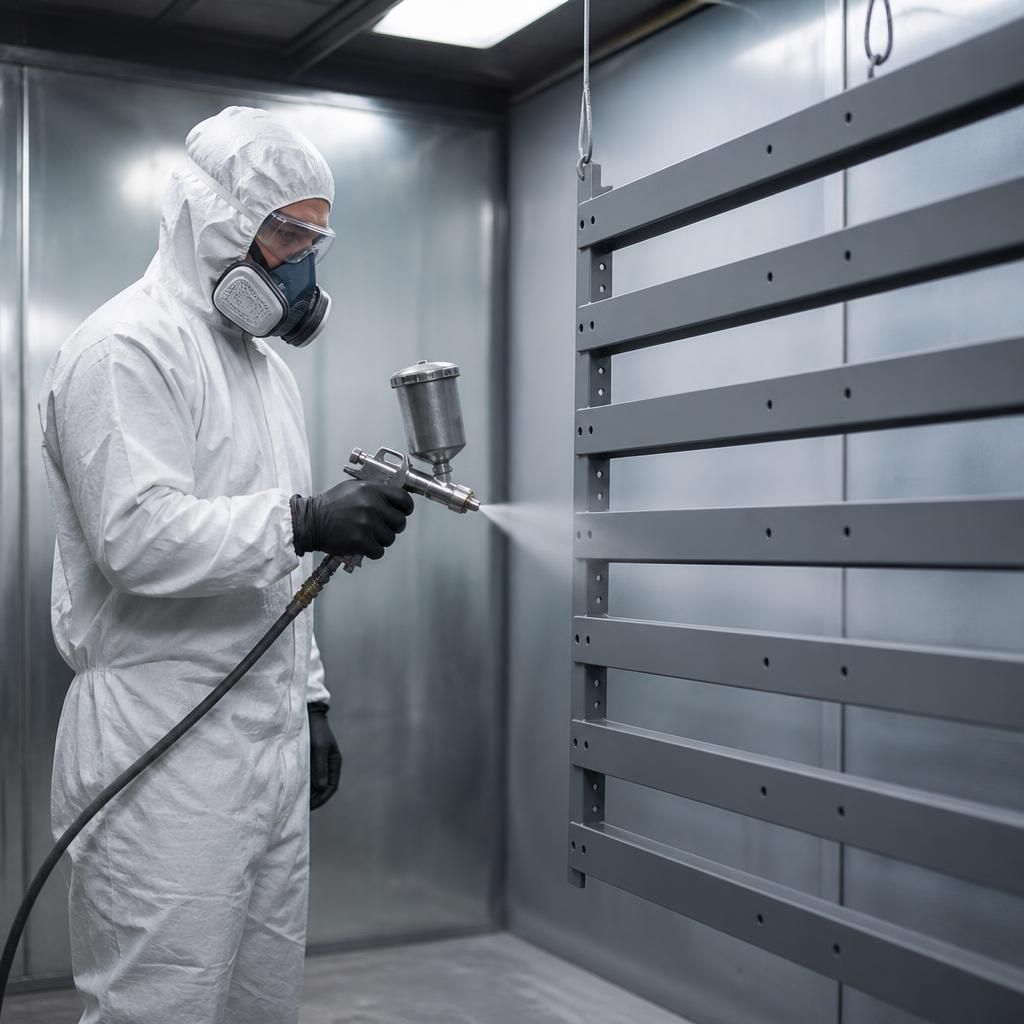
For epoxy primer, preparation includes controlling moisture and application conditions as well as cleaning the metal. The substrate must be dry and free from condensation before priming; a surface that appears clean can still develop adhesion problems if moisture forms during preparation or application. Temperature, humidity and ventilation therefore need to be considered alongside the condition of the metal.
This is an important distinction from primers used mainly as basic adhesion promoters. Epoxy is intended to form a continuous protective layer, so moisture trapped beneath the film or introduced during application can compromise the coating system from within. Checking the workpiece and surrounding conditions before priming helps confirm that the prepared surface is suitable for the epoxy layer and the subsequent powder coating.
Discuss Your Epoxy Primer Preparation Requirements
Discuss your epoxy primer preparation requirements with the powder-coating team, providing details of the metal substrate, component design and intended service conditions. This allows the preparation and coating system to be considered together before work begins.