

How does the application process for clear and black powder coatings ensure durability and aesthetic quality?
Clear and black powder coatings achieve durable, attractive results through thorough metal preparation, controlled powder application and correct oven curing. These stages promote strong adhesion, an even finish and consistent colour or transparency, while final inspection identifies surface defects before the coated components are returned for use.
Durability and aesthetic quality are achieved by treating clear and black powder coating as a controlled finishing specification rather than simply a colour choice. The coating system, surface condition, film build, cure schedule, component design and required appearance must all be suitable for the metal part and its intended environment.
Specification begins with the substrate and the service conditions. Steel, galvanised steel and aluminium can require different preparation and coating approaches, particularly where the component will face moisture, chemicals, abrasion or outdoor exposure. The required level of protection, gloss, texture and colour is established before processing so that the finish is judged against defined requirements rather than visual preference alone.
Clear powder coating needs especially careful consideration because it does not conceal the underlying metal in the same way as black coating. Marks, discolouration, weld features and variations in the substrate may remain visible through a clear finish. Black coatings provide a more opaque appearance, but the selected gloss level and surface texture still affect how noticeably scratches, handling marks and uneven areas appear under light.
Component geometry also influences the result. Corners, recesses, holes, folded edges and joints can affect how powder reaches the surface and how heat moves through the part. Masking is used where coating must not interfere with threads, electrical contact points, bearing seats, mating faces or other close-tolerance areas. Correct racking and spacing help prevent contact marks and allow the coating to reach the required surfaces without creating unwanted build-up.
Film thickness must be suitable for the coating system and the part’s use. Insufficient build can reduce protection and produce weak-looking colour coverage, while excessive build may soften detail, affect fit or alter the intended texture and gloss. Particular care is needed around edges and complex profiles, where coverage can differ from that on broad, flat faces.
Curing is verified against the powder manufacturer’s requirements and the component itself, not only the temperature of the oven atmosphere. Metal thickness, mass and geometry affect how quickly the part reaches the necessary curing condition. Under-curing can leave the coating with inadequate hardness or chemical resistance; over-curing may affect colour, gloss or the clarity of a transparent finish. Controlled records and repeatable settings are therefore important for batch consistency.
Appearance checks consider more than whether the component looks black or clear. They can include colour uniformity, gloss, texture, coverage, edge definition, transparency and the absence of visible contamination, pinholes, runs or impact damage. Components intended to be installed together should be assessed consistently, as differences in viewing angle, substrate or batch conditions can otherwise make nominally identical finishes appear different.
Handling after coating is part of maintaining the finished quality. Parts should be supported and packed in a way that avoids rubbing, pressure marks and contact between coated faces. Any masking is removed carefully, and functional areas are checked so that the coating does not prevent assembly or alter the performance of the component.
For industrial work, these controls are particularly relevant where parts are supplied in batches or form part of a larger assembly. Clear and black finishes can then provide a consistent combination of protection and appearance, provided the coating specification reflects the metal, the operating environment and the visual standard required. A specialist powder coating service can review those requirements before processing and advise on the most appropriate finish for the components involved.
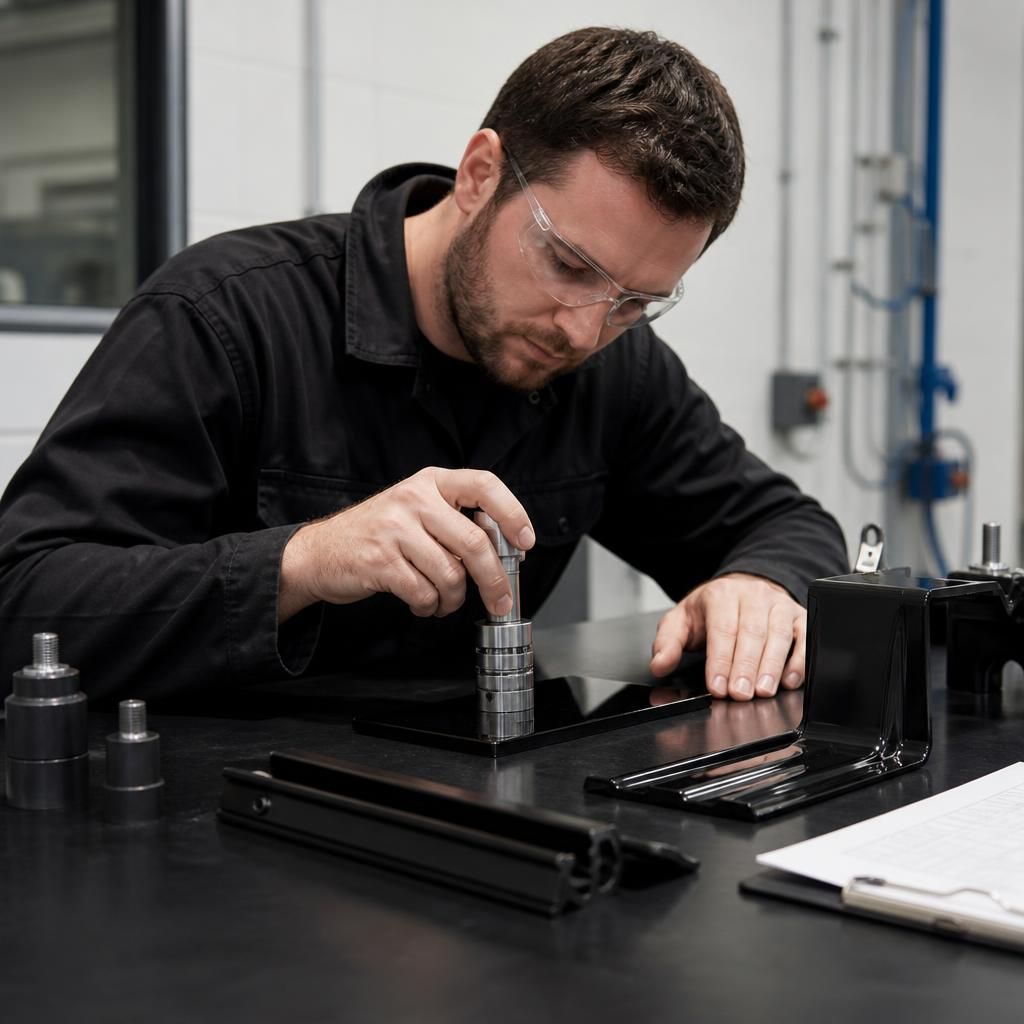
Durability should be assessed through performance checks as well as visual inspection. Where the specification requires additional validation, a representative coated part or test panel can be examined for adhesion, impact resistance, flexibility and resistance to the chemicals or cleaning products expected in service. These checks help confirm that the finish is not merely attractive immediately after curing, but suitably bonded and resilient for its intended use.
The results should be considered alongside the appearance standard for the clear or black finish. A coating that passes a visual assessment but fails to adhere correctly, withstand handling or resist the relevant environment may not provide dependable service. Using agreed acceptance criteria makes it easier to identify whether a variation relates to the powder system, the metal substrate or the processing conditions, supporting consistent quality across repeat production batches.