

What maintenance is required for metal components finished with primer, epoxy, and nylon coatings?
Maintenance involves regular inspection, gentle cleaning with a mild detergent, and prompt repair of chips, scratches, corrosion or coating damage before it spreads. Avoid abrasive tools and incompatible solvents, and pay particular attention to edges, joints, fixings and high-wear areas; epoxy finishes may need closer monitoring outdoors because prolonged UV exposure can affect appearance, while nylon coatings should be checked for abrasion and impact damage.
Effective maintenance for primer, epoxy and nylon-coated metal components combines planned cleaning, control of the service environment, checks on coating performance and correctly specified remedial work. The aim is not simply to preserve appearance: maintenance should prevent moisture, chemicals, impact and friction from reaching the metal substrate or reducing the component’s intended performance.
Start with the service conditions. The maintenance interval and inspection method should reflect how each component is used. Metal exposed to road salt, condensation, industrial dust, process chemicals, outdoor weather or repeated handling generally needs more frequent attention than a component installed in a clean, dry indoor area. Records should identify the coating system, installation location, exposure conditions and any substances that routinely contact the finish. This information helps distinguish normal wear from a coating failure caused by unsuitable service conditions.
Control contamination before it becomes embedded. Deposits such as oil, cutting fluid, salts, cement dust and process residue can hold moisture against the coating or alter its surface. Remove them using a method compatible with the finish and the substrate. Use clean water where appropriate, a neutral or coating-compatible detergent for more persistent contamination, and soft cloths or non-abrasive equipment. Rinse away cleaning residues and allow the component to dry fully, particularly around overlaps, recesses and joints. Do not use a cleaning chemical merely because it is effective on bare metal; solvents, strong alkalis and aggressive degreasers can soften, stain or embrittle some finishes.
Pay attention to interfaces and concealed areas. Coating damage is often associated with contact points rather than broad, exposed faces. Examine holes, folded edges, weld zones, brackets, threaded fixings, hinges and areas where components rub together. Check that water and debris are not being trapped against the finish by seals, washers, clamps or accumulated material. Where the design permits, improve drainage and prevent persistent contact with wet debris. Any movement between parts should be investigated, because repeated rubbing can gradually expose the underlying metal even when the surrounding coating remains intact.
Use coating-specific checks.
- Primer systems: confirm that the primer remains protected by the specified subsequent coating or finish. If the primer becomes exposed, do not assume that its presence alone provides a complete long-term barrier. The repair should restore the full compatible system rather than applying an unrelated touch-up product over the affected area.
- Epoxy coatings: assess changes in surface condition alongside the component’s environment. Loss of gloss or a change in colour may be an appearance issue, whereas softening, blistering, lifting or loss of adhesion indicates a more significant problem. Chemical contact should be reviewed against the coating specification, especially where exposure is repeated rather than incidental.
- Nylon coatings: check areas subject to sliding contact, repeated loading and contact with sharp or rough materials. A nylon finish can be useful where a resilient, wear-resistant surface is required, but maintenance should still identify thinning, gouging, separation at edges and damage caused by excessive friction or heat.
Repair damage according to its cause. A superficial mark may require only cleaning and assessment, while a chip, delamination or exposed substrate calls for a controlled repair. First remove contamination and any loose coating, then assess whether corrosion has developed beneath or around the damaged area. The repair material must be chemically and mechanically compatible with the existing primer, epoxy or nylon system, and the prepared area must be dry and free from oil, dust and loose particles. Follow the product manufacturer’s requirements for preparation, application, curing and film build; an unsuitable aerosol or household paint is not automatically an acceptable industrial repair.
Where damage is widespread, recurring or located on a safety-critical component, local touch-up may not be adequate. Recoating should be considered when adhesion is failing across a larger area, corrosion is spreading beneath the finish, the surface has been repeatedly worn through, or the coating no longer matches the required chemical, weather or wear resistance. Before recoating, establish why the original system deteriorated. Repeating the same process without correcting contamination, poor drainage, excessive abrasion or chemical incompatibility can lead to another premature failure.
Keep a maintenance record. Record the inspection date, component identification, exposure conditions, observed defects, cleaning method and repair materials used. Photographs can help track whether a defect is stable or expanding. Trend information is particularly useful for batch-manufactured parts, as repeated damage in the same location may indicate a handling, packaging, assembly or design issue rather than a coating problem alone.
For components supplied for industrial use, the coating specification should remain available throughout their service life. It should state the intended environment, preparation requirements, coating sequence, curing expectations and any restrictions on cleaning chemicals or operating temperature. When a component requires specialist assessment or recoating, provide this information to the powder-coating provider so that the existing system and the proposed remedial treatment can be evaluated together.
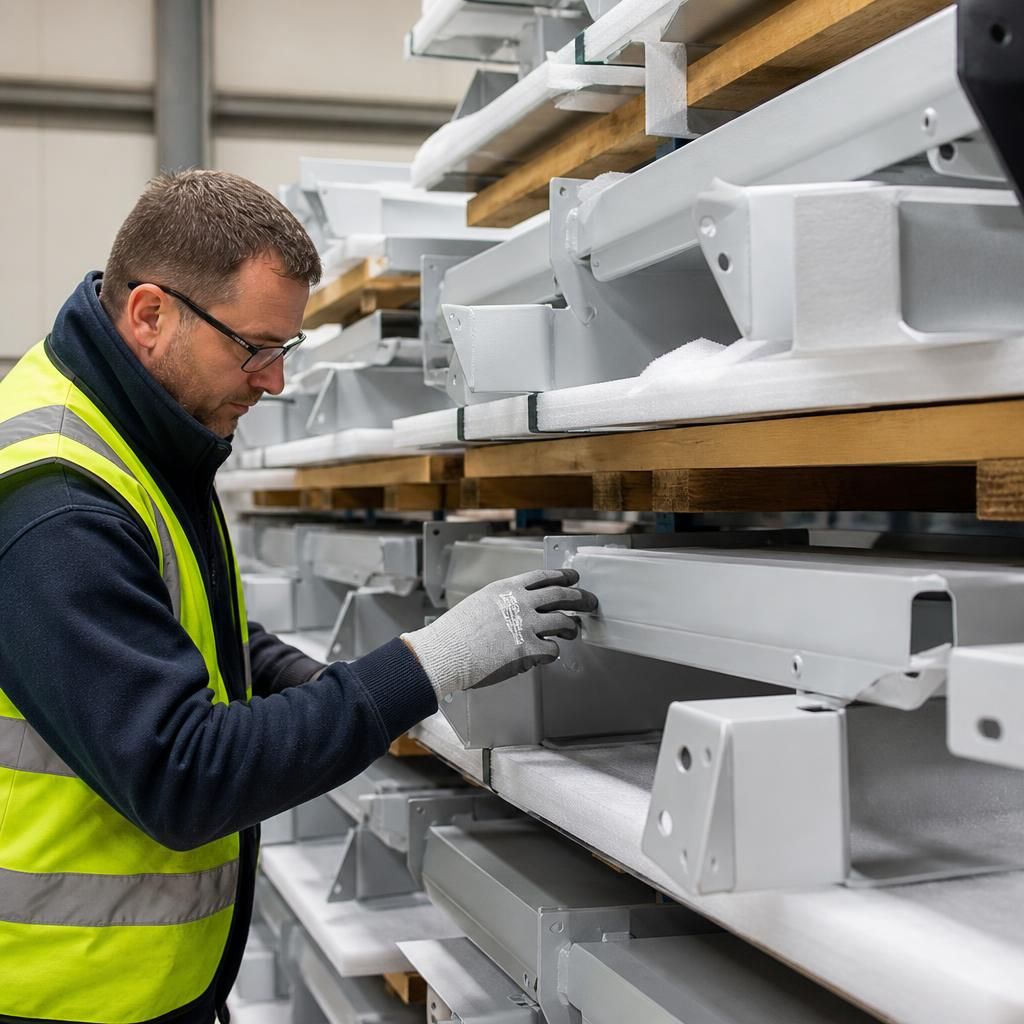
Protective handling and storage are part of maintaining a primer, epoxy or nylon finish because damage can occur before the component enters service. Store coated parts on clean, dry supports, keep them separated where surfaces could rub, and avoid dragging, dropping or stacking them in a way that places pressure on edges and corners. Packaging materials should not retain moisture or transfer chemicals to the coating.
Inspect components after transport, assembly and any major handling operation. Look for scuffing, compression marks, chipped edges and damage around contact points before the part is put into use. Correcting these defects at this stage prevents assembly-related wear from being mistaken for normal coating ageing and allows the repair method to be matched to the affected coating system.
Discuss Maintenance for Your Coated Metal Components
If a coated metal component needs remedial work, ask a powder-coating specialist to assess the existing system and recommend compatible preparation, repair or recoating. Provide the coating specification, service conditions and details of any damage to support an accurate maintenance decision.