

What are the advantages of using powder coated aluminium in outdoor applications?
Powder coated aluminium is well suited to outdoor applications because its bonded finish helps protect the metal from weathering, corrosion and everyday wear. It also provides a consistent, durable appearance with a broad choice of colours and surface finishes.
Powder coated aluminium is advantageous outdoors because it combines aluminium’s low weight and resistance to red rust with a hard, factory-applied surface finish. This makes it suitable for components that must remain light, dimensionally stable and visually controlled while exposed to rain, sunlight, handling and changing temperatures.
Key advantages include:
- Low structural weight: Aluminium is considerably lighter than many steel alternatives, which can simplify handling, installation and support requirements. Powder coating adds a protective finish without requiring a heavy additional cladding or paint system.
- No red rust: Aluminium does not form the same flaky iron-oxide corrosion associated with unprotected steel. Its natural oxide layer provides a degree of protection, while the coating acts as an additional barrier against contaminants and moisture.
- Good dimensional stability: Aluminium is suitable for profiles, panels, frames, trims and fabricated parts that need to retain their shape outdoors. Correct detailing remains important, particularly where components are exposed to repeated heating and cooling.
- Controlled appearance: Powder coating is applied as a defined finish across prepared metal surfaces, helping outdoor assemblies achieve a more uniform appearance than untreated aluminium. The available finish can be selected to suit the intended environment and the visual requirements of the project.
- Resistance to routine handling: A properly prepared and cured coating can withstand normal contact during installation and use better than an untreated metal surface. This is useful for railings, architectural components, equipment housings and other parts that may be touched, moved or cleaned regularly.
- Simple routine care: Outdoor powder coated aluminium generally needs regular removal of dirt and deposits rather than repeated repainting. Cleaning methods should be appropriate to the coating; harsh abrasives, aggressive solvents and unsuitable pressure-washing practices can damage the surface.
- Design flexibility: Aluminium can be formed into profiles, sheets, frames and bespoke parts before coating. Powder coating then allows the finished component to be coordinated with surrounding materials, while the choice of gloss level, texture and colour can support different architectural or industrial requirements.
- Efficient material use: Powder coating is a dry application process, so it does not rely on the same liquid carrier system as conventional wet paint. Overspray can also be collected in suitable production systems, although the environmental performance of a finish still depends on preparation, curing, energy use and how waste is managed.
Outdoor performance depends on specifying the coating system for the actual exposure rather than choosing a finish by colour alone. Ultraviolet exposure, coastal salt, industrial pollutants, standing water, abrasion and contact with other metals can all affect the result. A suitable pretreatment and an exterior-grade powder coating help the aluminium and finish work as a complete system.
Design and fabrication details are equally important. Water should be able to drain rather than collect in recesses, cut edges and fixings should be protected where necessary, and dissimilar metals should be separated if galvanic corrosion could occur. Coating performance can also be compromised if the aluminium is contaminated, inadequately pretreated or damaged during transport and installation.
Powder coated aluminium is therefore particularly practical for external architectural parts, signage supports, balustrade components, window and door elements, equipment covers, fabricated enclosures and selected automotive or industrial parts. It offers the greatest value where low weight, a controlled finish and reduced routine maintenance are needed together. For severe marine, chemical or high-abrasion conditions, the specification should be reviewed carefully so that the pretreatment, powder type, application and component design match the exposure.
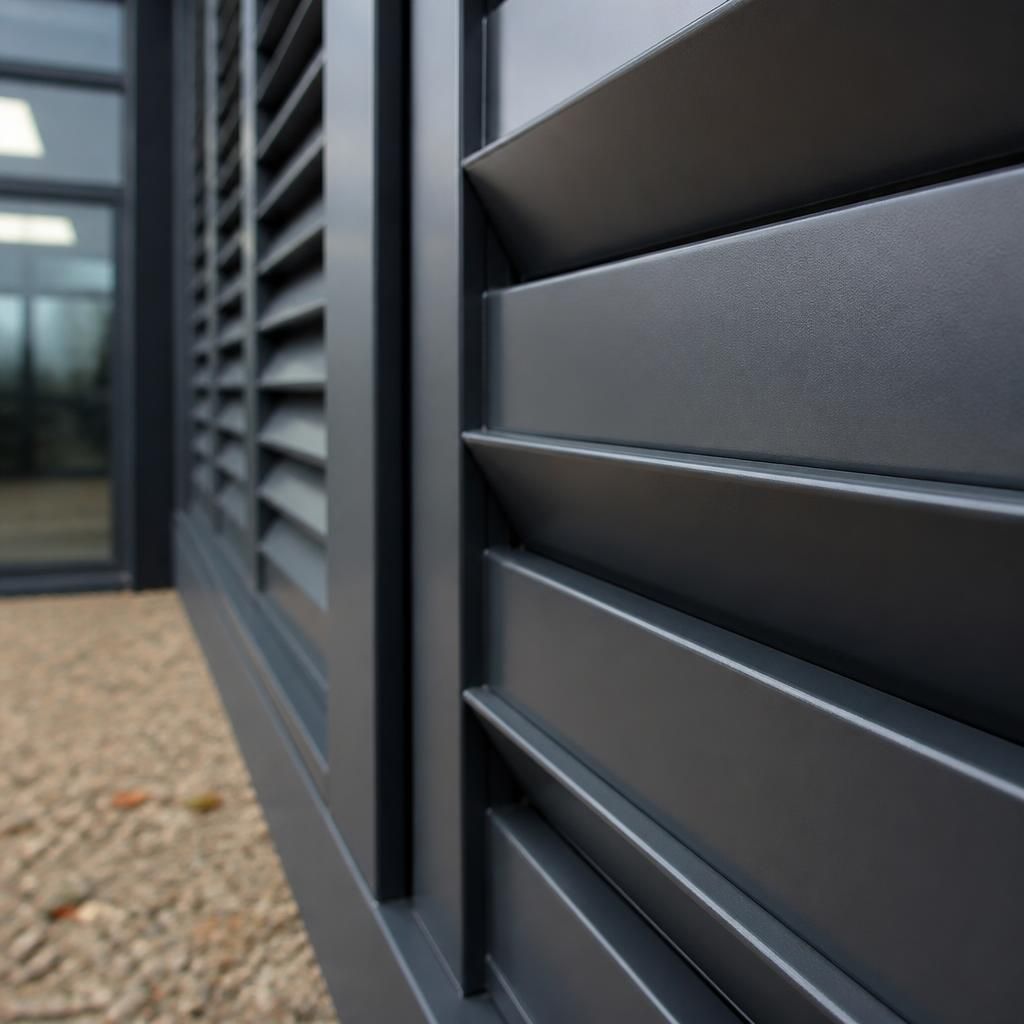
Another advantage of powder coated aluminium outdoors is the clean, sealed surface it provides when the coating is intact. This limits the exposed metal surface where dirt, grit and airborne deposits can lodge, making the component easier to wipe down than unfinished or heavily textured material. This can be useful for external equipment housings, public-facing panels and architectural elements that require a controlled, presentable surface.
The surface should still be inspected for scratches, chips or damage around fixings and contact points. Prompt cleaning and suitable touch-up or repair advice can help prevent a small defect from allowing moisture and contaminants beneath the coating. The result depends on selecting a coating system and finish that suit the component’s location, use and cleaning requirements.